
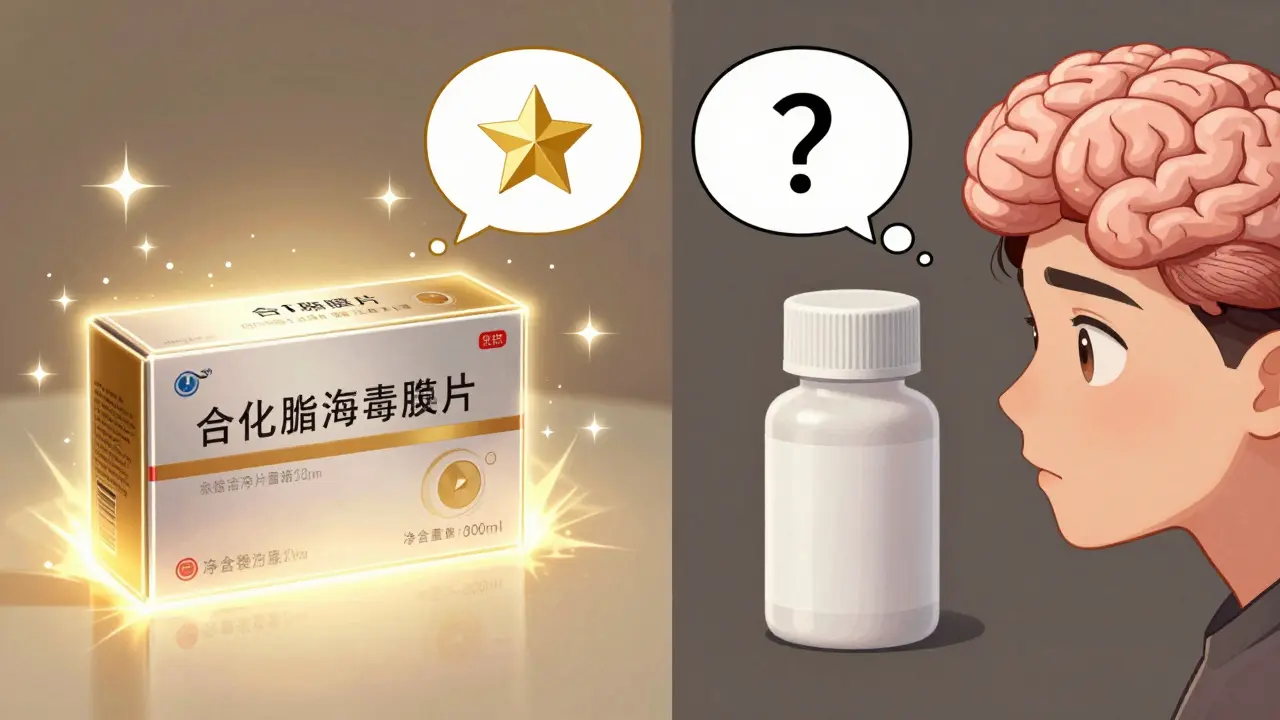
Imagine taking two pills that are chemically identical. One comes in a fancy box with a famous brand name and a high price tag. The other comes in a plain plastic bottle with a generic name and costs a fraction of the price. Even though the active ingredients are exactly the same, there is a very real chance you'll feel more relief from the expensive one. This isn't magic or a failure of the medicine; it's your brain playing a trick on you. This phenomenon is the placebo effect is a psychological phenomenon where a patient experiences a perceived or real improvement in their condition due to their expectations rather than the treatment itself.
When it comes to generic drugs, this psychological loop can actually hinder recovery. While regulatory bodies like the FDA ensure that generics are bioequivalent to brand-name versions, our brains don't read lab reports. Instead, they use "shortcuts" like price and packaging to judge how well a medicine will work. If you believe a cheaper drug is "inferior," you might actually feel fewer benefits-or worse, you might experience side effects that aren't actually caused by the drug at all.
The Brand Name Brain Game
Why does a label change how we feel? It comes down to expectation. A landmark study led by Dr. Kate Faasse at the University of Auckland proved this with a group of college students suffering from headaches. The researchers gave them placebo pills-meaning they contained no actual medicine-but labeled some as a brand name and others as a generic. The result? People who thought they were taking a brand-name drug reported a pain reduction of 2.3 points on a scale of 10. Those who thought they were taking a generic only felt a 1.1-point drop. The medicine was non-existent in both cases, but the brand label did half the work.
This happens because your brain associates brand names with quality and reliability. When you see a trusted logo, your brain may trigger the release of feel-good chemicals like dopamine, which can actually dampen pain signals. In the world of brand psychology, the brand isn't just a logo; it's a promise of effectiveness that your subconscious believes.
The Price of Pain Relief
It's not just about the name on the bottle; the price tag also acts as a psychological trigger. We often assume that "you get what you pay for." This logic is so ingrained that it can physically change our brain chemistry. A study from the University of Cincinnati looked at Parkinson's disease patients and found that those given a placebo injection labeled at $1,500 showed a 28% greater improvement in motor function compared to those given an identical injection labeled at $100.
Using fMRI scans, researchers found that the expensive placebo caused a 53% greater release of dopamine in the substantia nigra. This proves that the price conditioning effect isn't just "in your head"-it creates a measurable physiological response. Your brain perceives the high cost as a signal of high potency, which then triggers the body to produce its own healing chemicals.
| Factor | Brand-Labeled Placebo | Generic-Labeled Placebo | Psychological Impact |
|---|---|---|---|
| Pain Reduction (Scale 0-10) | ~2.3 points | ~1.1 points | Higher expectation of relief |
| Reported Side Effects | Lower | Higher | Increased anxiety/skepticism |
| Dopamine Release | Significant | Minimal | Price/Brand as quality heuristic |

When Expectations Turn Sour: The Nocebo Effect
While the placebo effect helps us feel better, its evil twin, the nocebo effect, can make us feel worse. This happens when a patient has negative expectations about a treatment, leading them to experience adverse effects that have no pharmacological cause. For people skeptical of generics, this is a major hurdle.
Take statins, for example. A meta-analysis of 12 trials showed that people taking generic-labeled placebos reported muscle pain 2.1 times more often than those taking brand-labeled placebos. There was zero difference in the ingredients, but the fear that the generic was "lower quality" manifested as actual physical pain. This is particularly dangerous in psychiatric care, where some studies show discontinuation rates are 18-24% higher for generics because patients "feel" the side effects more intensely.

The Science of Bioequivalence
To fight these psychological hurdles, it's important to understand bioequivalence. The FDA and WHO require that generic drugs provide the same active ingredient in the same amount and be absorbed by the body at a similar rate. Specifically, they must fall within a strict 80-125% pharmacokinetic parameter. This means that in 98.5% of cases, the therapeutic effect is identical.
So why the discrepancy? While the active drug is the same, generics use different inactive ingredients-fillers, binders, and dyes. Some experts, like Dr. Beatrice Golomb, suggest that these inactive ingredients can cause real differences in how some people tolerate a drug. However, for the vast majority of people, the difference is purely psychological. When you know the science of bioequivalence, the nocebo effect weakens. In one survey, the percentage of people who found generics just as effective as brands jumped from 67% to 82% once they were educated on how bioequivalence works.
Overcoming the Mental Gap
If you're a patient or a healthcare provider, how do you stop your brain from sabotaging your treatment? The key is "expectation engineering." Instead of simply saying "this is the generic version," framing the conversation around value and science can change the outcome. When doctors explain that a drug is chemically identical but simply more affordable, patient adherence increases significantly.
Some newer approaches are even looking at packaging. A trial at the University of Wisconsin found that giving generics "premium" packaging-making them look as professional as brand-name drugs-reduced nocebo complaints by 37%. It turns out that if we trick the brain into thinking the drug is "high-end," the brain allows the medicine to work better.
Are generic drugs actually less effective than brand names?
Pharmacologically, no. The FDA requires generics to be bioequivalent, meaning they have the same active ingredient and work the same way in the body. Any difference in effectiveness is usually due to the placebo or nocebo effect-your brain's reaction to the brand name or price rather than the chemistry of the drug.
What is the nocebo effect in the context of generics?
The nocebo effect occurs when you experience negative symptoms because you expect them. If you believe a generic drug is inferior, you may "feel" side effects or a lack of efficacy, even if the drug is chemically identical to the brand version you previously used.
Why do some people feel real differences with generic medications?
While the active ingredients are identical, the inactive ingredients (fillers, dyes, and binders) can vary. For a small percentage of patients-especially those with severe allergies or sensitivities-these inactive ingredients can cause a real physiological difference in how the drug is tolerated.
Can the price of a drug affect how well it works?
Yes, psychologically. Research shows that higher prices act as a cue for quality. This can trigger the brain to release more dopamine and other neurotransmitters, which can actually enhance the perceived and sometimes the physical effectiveness of a treatment.
How can I make sure my generic medication works effectively?
The best way is to educate yourself on bioequivalence. Understanding that the active chemistry is the same helps remove the negative expectations that trigger the nocebo effect. Talking with your doctor about the specific science of your medication can also increase your confidence in the treatment.