
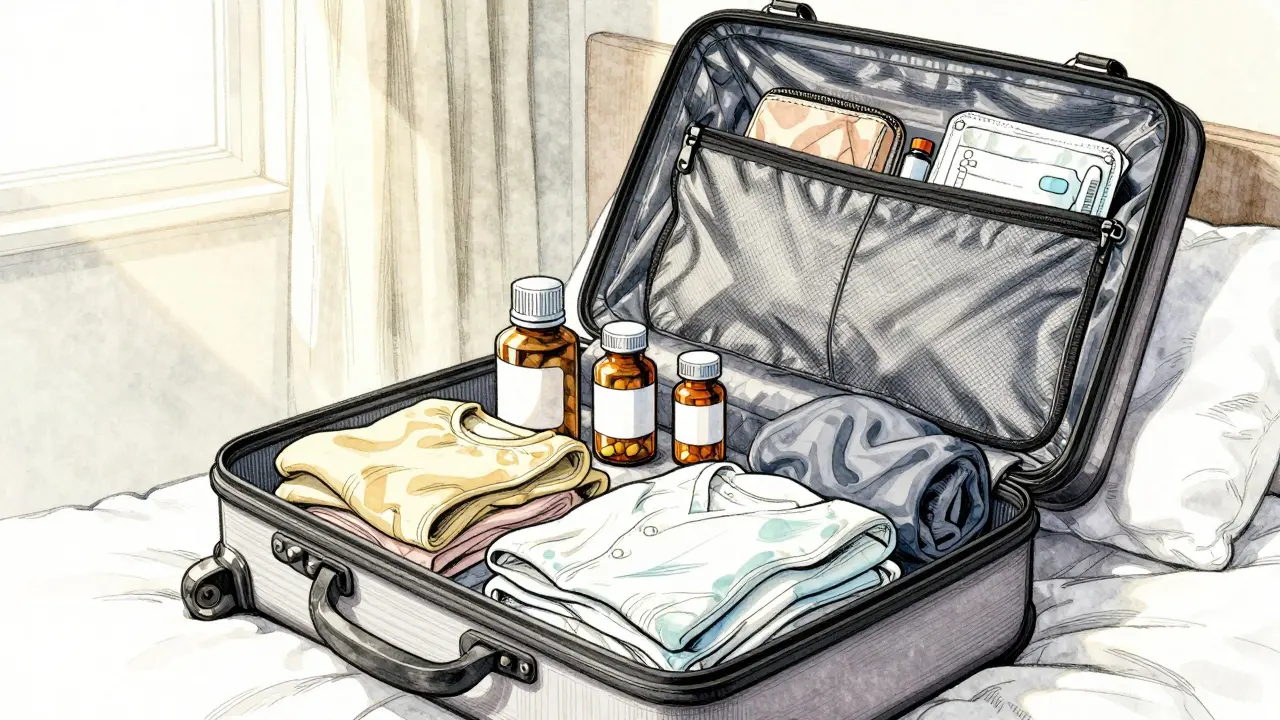
Blood Thinner Travel Planner & Checklist
Crossing time zones requires careful adjustment for Warfarin to keep your INR stable.
- Adjust one hour per day until you reach destination time.
- If Flying East-West (Gaining Time): Take your dose as scheduled on local time. Do not double up if less than 12 hours have passed since your last dose.
- If Flying West-East (Losing Time): Wait at least 12 hours since your last dose before taking the next one.
- Set alarms on your watch synced to home time as a backup reminder.
With DOACs (like Eliquis or Xarelto), strict adherence to intervals is more important than the clock time.
- Protection wears off quickly (12-24 hours) if skipped.
- Golden Rule: Never take two doses less than 12 hours apart.
- It is generally safer to skip a dose than to risk an overdose while confused about time changes.
- Transition to local time once at your destination.
Packing your suitcase feels different when you're managing a chronic condition. You have clothes, chargers, and toiletries, but there is that extra bottle of pills that dictates your entire schedule. For anyone taking blood thinnersmedications that prevent abnormal clotting of the blood, international travel can feel like navigating a minefield. One missed dose or a sudden change in diet could throw off your levels, potentially leading to dangerous clots or bleeding events. However, millions of people take these medications every year and fly overseas without incident. The secret lies in preparation and understanding exactly how your body handles these drugs in new environments.
The Basics: Warfarin Versus Newer Options
Not all blood-thinning medications work the same way, and this distinction matters when you cross borders. Historically, most patients relied on WarfarinCoumadina vitamin K antagonist anticoagulant requiring regular blood monitoring. While effective, Warfarin demands a lot of attention from you. You need regular blood tests to check your International Normalized Ratio, often called INR. This number tells your doctor if your blood is thin enough to prevent clots but thick enough to stop bleeding. When you travel to a foreign country, finding a lab that speaks your language and understands your target range can be stressful.
In contrast, modern travel often favors Direct Oral Anticoagulants. These drugs work faster and stay consistent in your system regardless of what you eat for dinner.
| Feature | Warfarin | DOACs (e.g., Apixaban) |
|---|---|---|
| Blood Tests Needed | Yes, Regular INR Monitoring | No Routine Testing |
| Food Interactions | High (Vitamin K affects levels) | Low to None |
| Time Zone Adjustment | Critical for Testing Schedule | Simple Timing Alignment |
| Availability Abroad | Widely Available Globally | Variable by Country |
When you look at ApixabanEliquisa factor Xa inhibitor approved for preventing blood clots or RivaroxabanXareltoa daily oral anticoagulant medication, the logistics shift. You do not need a lab visit in Paris or Tokyo to know if you are dosed correctly. They are predictable. That said, they come with their own rules. If you skip a dose, the protection wears off quickly because they leave your system within 12 to 24 hours. This reliability is why many doctors now switch frequent flyers to these newer agents before a big trip.
Managing Time Zones and Dosing Schedules
One of the biggest headaches for travelers is figuring out when to take their pills after crossing a line that shifts the clock by six hours. If you take Warfarin, the timing isn't just about convenience; it helps keep your INR stable. Inconsistent intake can spike or drop your results unexpectedly. For those on Warfarin, a common strategy is to adjust one hour per day until you reach your destination time, then switch to local time. However, if you are on a DOAC, strict adherence to intervals is more important than the specific hour on the clock face.
If you are flying west to east (losing time), wait at least 12 hours since your last dose before taking the next one. Conversely, if you are gaining time, do not take two doses less than 12 hours apart. This prevents overdosing. Setting alarms on your watch synced to your home time zone can serve as a backup reminder, though eventually, you want to sync with local life to avoid waking up at odd hours just for medication. Always carry your med kit in your hand luggage. Checked bags go into the hold where temperatures fluctuate wildly, which can degrade the potency of your liquid or pill forms.

Preventing Clots During Long Flights
Even if you are already on medication to prevent clots, sitting still for eight hours in economy class increases your risk of Deep Vein Thrombosis. Think of your legs like plumbing; if the pump stops moving, sediment settles. Your veins pool blood when you sit motionless, creating a perfect environment for clots to form despite the drugs in your system. The medical community worldwide agrees on a simple fix: movement. Dr. Coogan from UT Physicians recommends getting up to walk the aisle every two to three hours on flights longer than six hours.
You cannot always walk around the cabin due to turbulence or sleep schedules. In those cases, perform seated exercises. Flex your ankles repeatedly, point your toes away and toward you, and rotate your calves. These movements activate the calf muscle pump, pushing venous blood back toward the heart. Compression socks are another tool many travelers overlook. They provide gentle external pressure that reduces vein diameter and encourages circulation. Combining mechanical compression with chemical protection gives you a layered defense against VTE (Venous Thromboembolism).
Dietary Discipline and Hydration Strategies
If you stick with Warfarin, you must respect the relationship between leafy greens and your medication. Foods high in Vitamin K, like spinach, kale, and broccoli, interfere with Warfarin's ability to thin blood. In your home kitchen, you might maintain a steady intake. On vacation, a buffet of salads or unfamiliar green vegetables can cause a sudden drop in your INR, making your blood too thick. The goal isn't to eliminate these foods entirely but to keep your intake consistent. Don't eat zero greens one week and a massive salad the next.
Hydration plays a massive role, especially in the dry air of airplane cabins and hot climates. Dehydration causes your blood volume to decrease, effectively thickening the remaining fluid. This increases viscosity and clotting risk. Skip the alcohol and sugary sodas at the airport lounge. Choose water consistently. It sounds obvious, but jet lag often leads to fatigue-induced dehydration. If you are on a DOAC, food interactions are less critical, but hydration remains universal advice. Water keeps the kidneys flushing waste and maintains blood volume, ensuring the medication circulates properly.

Essential Documents and Emergency Prep
Medical systems vary globally. Some countries have excellent emergency care; others rely on outdated infrastructure. You must be your own advocate. For Warfarin users, carrying a yellow booklet documenting your recent INR results and dosage history is non-negotiable. This allows a local doctor to understand your baseline immediately without running unnecessary tests. Translate a short summary of your medical history into the local language of your destination. Mention allergies and conditions simply.
Keep a copy of your prescription in your bag and one on your phone. Do not rely solely on physical bottles if they get lost. Many travelers worry about bringing liquid medication through security. Clear liquids are subject to limits, but medically necessary liquids exceeding 100ml are often allowed if declared. Always pack a letter from your physician stating you require the medication. If you run low, having digital proof speeds up the process of getting a refill from a local pharmacist. Insurance documents should be checked beforehand to confirm coverage for medical emergencies abroad. Knowing you have financial support reduces stress, which is beneficial for your overall recovery potential.
Swimming, Scuba, and Physical Risks
Beach vacations bring different questions. Swimming in general is safe and healthy. However, scuba diving presents unique dangers. Pressure changes underwater can cause decompression injury. For someone on blood thinners, even minor trauma to the ear or sinus membranes can lead to severe bleeding that normal physiology would absorb. Divers Alert Network warns that difficulty equalizing pressure could cause spinal cord bleeding in anticoagulated patients. Stick to surface activities or snorkeling unless you have specific clearance from a dive medicine specialist who knows your full case history.
Hiking and walking are generally great. But remember that fall risk exists everywhere. Rough terrain increases the chance of cuts and bruises. On a beach trip, a sharp shell cut might bleed more heavily than you expect. Pack a basic first aid kit with extra bandages. If you are in a remote area, consider a personal locator beacon. Getting help early has a low likelihood of interrupting your trip and may prevent a far worse problem.
Can I fly immediately after starting blood thinners?
If you have had a blood clot recently, the recommendation is to wait at least four weeks before flying. Your body needs time to stabilize, and the initial post-clot period carries the highest risk of recurrence. Consult your physician to confirm it is safe for you to travel.
What happens if I miss a dose while traveling?
If you realize you missed a dose, take it as soon as you remember. However, if the next scheduled dose is within 6 hours, skip the missed one and continue with your regular schedule. Never double up on doses. For Warfarin, missing a dose affects your INR for days; contact your doctor if you miss multiple doses.
Do I need to tell airport security about my pills?
Keep medication in original packaging. Security checks primarily focus on prohibited items. Liquid medicine over 100ml requires declaration. Having a doctor's note available smooths the process, but for standard pill containers, you usually just place them in a bin like electronics.
Is alcohol dangerous while on anticoagulants?
Excessive alcohol consumption increases bleeding risk and can interact with liver metabolism. Moderate drinking might be tolerated, but alcohol dehydrates you. Dehydration combined with antithrombotic meds increases strain. It is safer to limit intake significantly during your trip.
Should I buy travel insurance?
Absolutely. Standard policies often exclude pre-existing conditions. You must purchase a policy that specifically covers travel with chronic illnesses. Look for coverage that includes repatriation to your home country in case of serious complications.
Can I get blood tests done in another country?
Many major tourist hubs have international clinics. For Warfarin, call ahead to see if they can read your INR targets. Private hospitals in cities like London, Dubai, or Bangkok are accustomed to expat patients. Carry a translated card explaining your condition to facilitate testing.
11 Responses
The pharmacodynamics here are complex because INR targets shift based on vitamin k intake variability that most travelers fail to calculate accurately in foreign cuisines without prior dietary mapping of local flora consumption patterns and we see significant deviations in supratherapeutic ranges when crossing international borders due to inconsistent lab calibration standards between domestic and overseas hematology departments affecting your coagulation profile stability
Just stay hydrated and move your legs constantly while flying to keep everything moving right.
Life is like a river and our veins are the banks holding back the chaos of existence during transit through the clouds above earth so we must respect the flow of nature when we travel far from home waters.
Most people read guides like this and immediately assume they are experts now without understanding the nuance involved. They think packing pills is the only hurdle rather than managing their own biology. Nobody mentions how airlines handle temperature variations in cargo holds versus cabin pressure issues. You really believe compression socks stop thrombosis better than movement does. It is amusing that insurance companies are always listed as a solution to prevent financial ruin during emergencies. People rarely check their policy exclusions for pre-existing conditions until they are bleeding out in a strange hospital bed. Doctors here write notes like poetry that get lost in translation abroad without legal backing. You think a digital copy on a phone survives a crash landing or water damage easily enough. Pharmacists in tourist traps often sell counterfeit medications that look identical to the real brand name products online. Security officers are trained to spot drugs not medical necessity letters which causes unnecessary delays and stress for passengers. You might feel invincible taking those modern daily anticoagulants but forgetting one dose changes the risk calculation dramatically overnight. Hydration advice is generic fluff unless you measure urine output consistently during the journey which nobody tracks properly. Medical evacuation coverage is useless if you are not near a suitable extraction zone in remote wilderness areas globally. Most emergency rooms require proof of solvency before releasing patients even if you have coverage documentation ready in hand. It would be wise to carry cash reserves specifically earmarked for medical bribes in certain regions of the world you visit frequently.
I hope everyone stays safe on thier trips and remembers to drink plenty of water 🥤✈️
traveling is fun and staying healthy is super important dont worry about it too much
Great points on the meds storage safety (:)
I nearly diied once because of this exact issue in mexico ciyt last year and the doctors were screeming
Hospital triage protocols differ significantly depending on whether the facility has access to rapid reversal agents for acute anticoagulant toxicity events. Emergency care requires immediate assessment of bleeding risk stratification scores alongside coagulation factor activity levels. Standard of care involves consulting hematology specialists before administering thrombolytics to prevent hemorrhagic transformation of existing clots.
i am plaining my trip soon and i will keep all this stuff in mind becuse saftey maters
you got this and remember to pack extra bandages just in case something happens on the road