

Statin Exercise Safety Calculator
How to Use This Tool
Enter your statin type, age, and exercise intensity to get personalized guidance on safe exercise levels. Based on current research, this tool helps you avoid muscle injury while maintaining heart health.
Your Safe Exercise Recommendation
Enter your information above to see personalized guidance.
Important Notes
Moderate exercise (Borg Scale 5-6) is generally safe for statin users. If you experience severe pain, dark urine, or weakness lasting more than 72 hours, stop exercising and contact your doctor immediately.
Many people take statins to lower their cholesterol and reduce the risk of heart attacks and strokes. But if you’re also active-whether you walk daily, cycle on weekends, or lift weights-you might have heard rumors that statins can cause muscle damage during exercise. The truth? It’s more complicated than that. Statins don’t automatically wreck your muscles when you work out. In fact, staying active while on statins is one of the best things you can do for your heart. The real issue isn’t exercise itself-it’s how you do it, and what kind of statin you’re taking.
What Statins Actually Do to Your Muscles
Statins work by blocking an enzyme in your liver called HMG-CoA reductase. This lowers cholesterol, which is great for your heart. But here’s the catch: that same enzyme is also involved in making coenzyme Q10 (CoQ10), a compound your muscles need to produce energy. When statins cut CoQ10 levels, some people feel more muscle fatigue or soreness, especially after intense workouts. That doesn’t mean your muscles are being destroyed-it just means they’re working harder to recover. Research shows that muscle injury markers like creatine kinase (CK) can rise after exercise in statin users. One 2010 study of Boston Marathon runners found that those on statins had 42% higher CK levels than non-users. But here’s what no one talks about: those same runners didn’t lose strength or performance. Their muscles recovered just fine. So elevated CK? It’s a lab number. It doesn’t always mean pain, damage, or danger.Not All Statins Are the Same
There are seven statins approved in the U.S.: atorvastatin, simvastatin, pravastatin, rosuvastatin, fluvastatin, pitavastatin, and lovastatin. But they’re not created equal when it comes to muscle effects. Lipophilic statins-like simvastatin and atorvastatin-easily slip into muscle cells. That’s why they’re more likely to cause muscle symptoms. Hydrophilic statins-like pravastatin and rosuvastatin-stay mostly in the liver. Studies show people on these have 23% fewer muscle complaints during exercise. If you’re struggling with soreness, talk to your doctor about switching. Switching from simvastatin to pravastatin, for example, often reduces muscle pain without losing cholesterol control. Some patients even do fine on rosuvastatin every other day instead of daily-keeping benefits while cutting side effects.Exercise Intensity Matters More Than You Think
Here’s the key insight from recent studies: moderate exercise is safe. Really safe. A 2023 study in the Journal of the American College of Cardiology had 100 people aged 55-73 cycle at 60% of their maximum effort for 45 minutes. That’s brisk walking or easy cycling. No one lost strength. No one had worse muscle soreness. Even those who complained of muscle pain before the workout didn’t get worse. But push too hard? That’s where trouble starts. The Boston Marathon study showed spikes in CK after a 26.2-mile race. Older athletes, especially those over 65, saw the biggest rises. HIIT, heavy weightlifting, and endurance races? These stress your muscles more than your body can handle if you’re on a lipophilic statin. You don’t need to stop them-but you do need to ease into them.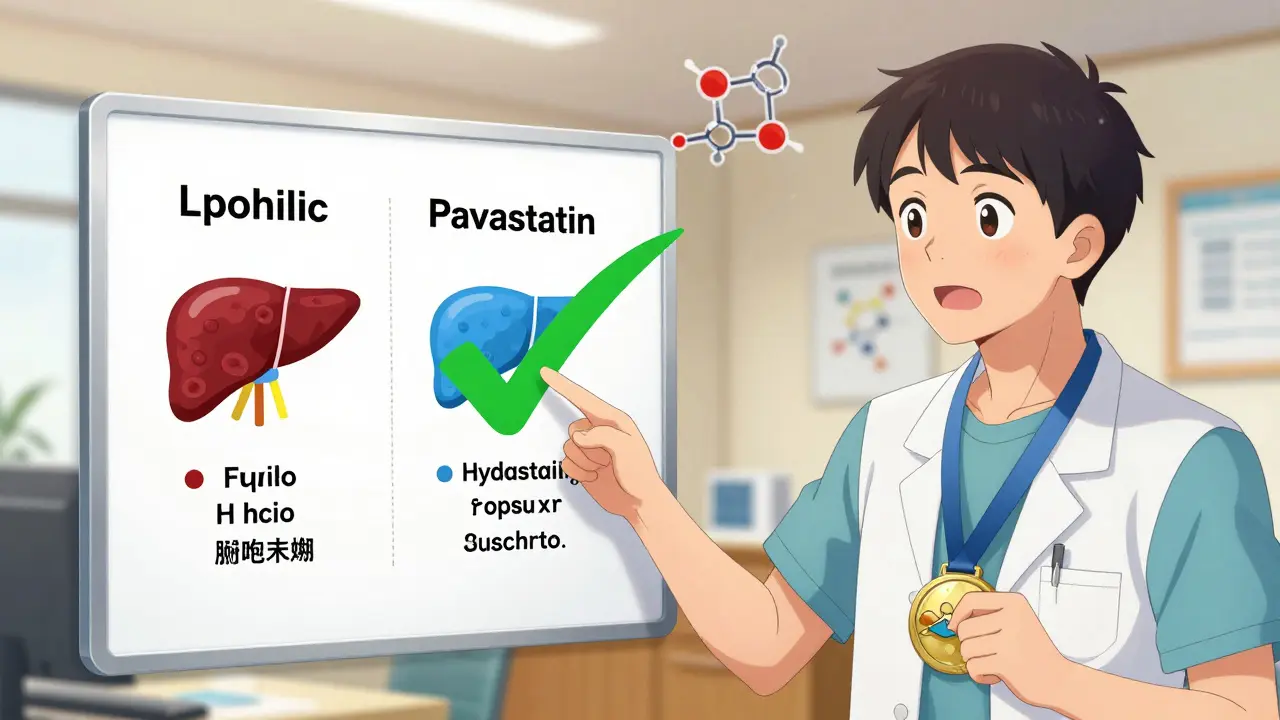
7 Proven Prevention Tips
- Stick to moderate intensity-keep your effort at 5-6 on the 10-point Borg scale. That’s where you can talk but not sing. Walk, swim, cycle, or do light resistance training. This is where the data is strongest.
- Progress slowly. If you want to start running or lifting heavier weights, increase your workload by no more than 10% per week. A 2010 mouse study showed that animals trained for two weeks before taking statins didn’t lose muscle strength at all. Your body adapts.
- Time your workouts. Most statins peak in your blood 2-4 hours after taking them. If you take your pill in the morning, try exercising in the afternoon. It won’t eliminate risk-but it might reduce it.
- Check your vitamin D. Low vitamin D is linked to worse statin muscle side effects. Get your levels tested. If you’re below 30 ng/mL, supplementing can help. Many people in the UK are deficient, especially in winter.
- Avoid fibrates. If you’re on a fibrate like fenofibrate for triglycerides, the risk of muscle injury jumps 3-5 times. Talk to your doctor about alternatives.
- Watch for red flags. Muscle soreness that lasts more than 72 hours? Dark, tea-colored urine? That could mean rhabdomyolysis-a rare but serious condition. Call your doctor immediately if you see this.
- Don’t quit exercise. The biggest danger isn’t statins. It’s quitting movement. People who stop exercising because they’re scared of muscle pain increase their heart attack risk more than those who keep going. Exercise lowers heart disease risk by 20-30%. Statins lower it by 25-35%. Together? That’s a powerful combo.
What Real People Are Doing
Online forums are full of stories. One man in Manchester switched from atorvastatin to pravastatin after months of leg pain during his weekly runs. Within three weeks, the pain faded. Another woman, 68, stopped doing HIIT classes and started swimming instead. She says she feels stronger now than she did five years ago. A survey of over 1,200 statin users found that 72% who stuck with moderate exercise-like walking 150 minutes a week-said their muscle symptoms improved over six months. The same group that avoided exercise? Their pain got worse.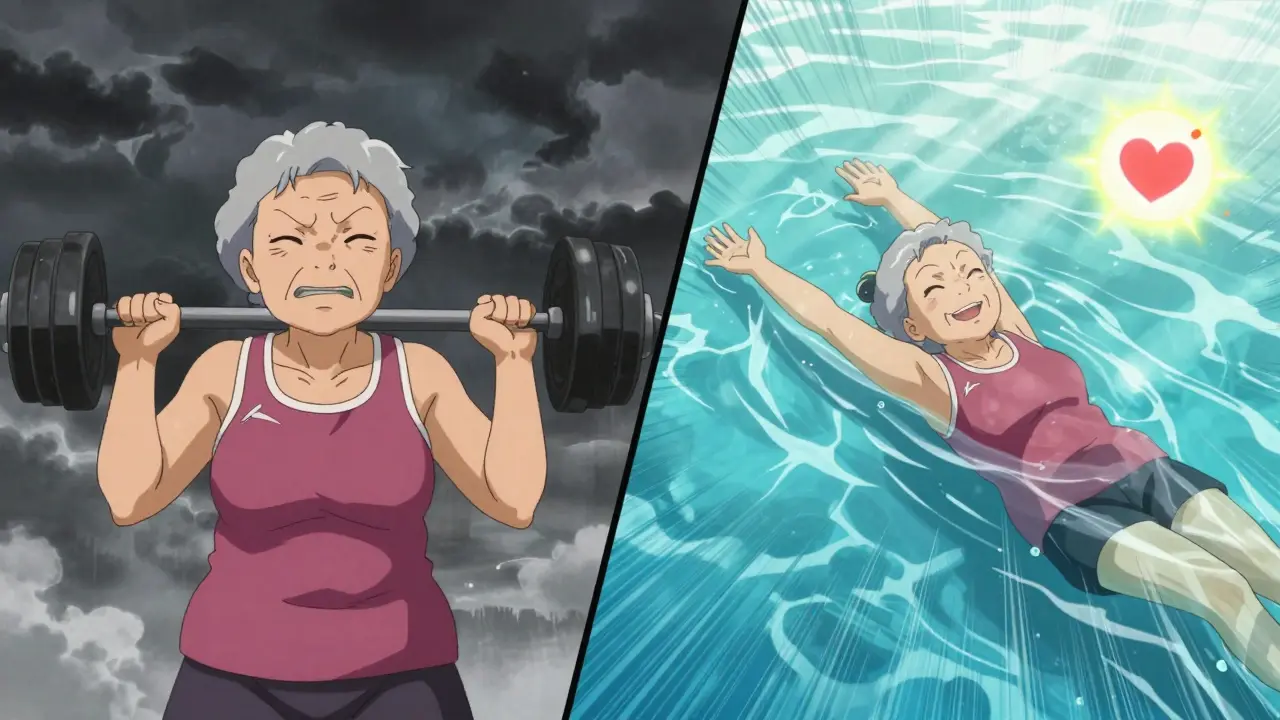
What’s Next?
Researchers are now looking at genetics. Some people have a gene variant called SLCO1B1 that makes them more sensitive to statin muscle side effects. Testing for it isn’t routine yet-but if you’ve had problems before, it might be worth asking about. The European Atherosclerosis Society is expected to update its guidelines in 2024, likely recommending hydrophilic statins for active people. And the STATIN-EX trial, running until late 2025, is testing exactly how different exercise types affect muscle health in statin users. We’ll know more soon.Bottom Line
You don’t have to choose between a healthy heart and an active life. Statins and exercise aren’t enemies. They’re allies. The problem isn’t the drug or the workout-it’s mismatching intensity with your body’s capacity. Stick to moderate movement, pick the right statin, listen to your body, and don’t stop moving. Your heart will thank you.Do statins cause muscle damage during exercise?
Statins don’t cause direct muscle damage in most people. They can raise certain blood markers like creatine kinase (CK) after intense exercise, but this doesn’t always mean pain or injury. Studies show that moderate exercise-like brisk walking or cycling-doesn’t harm muscle function in statin users. The real issue is overdoing it, especially with high-intensity workouts. Most people can exercise safely with statins if they avoid extreme efforts.
Which statins are least likely to cause muscle pain?
Hydrophilic statins like pravastatin and rosuvastatin are less likely to cause muscle pain because they don’t penetrate muscle cells as easily. In contrast, lipophilic statins like simvastatin and atorvastatin enter muscle tissue more readily, increasing the chance of side effects. If you’re active and experiencing muscle discomfort, switching to pravastatin or rosuvastatin often helps without reducing cholesterol-lowering benefits.
Can I still run or lift weights if I take statins?
Yes-but with caution. Long-distance running, heavy weightlifting, or high-intensity interval training (HIIT) can increase muscle injury markers in statin users, especially if you’re over 65. You don’t need to stop, but you should build up slowly. Start with lighter weights and longer rest periods. Many people find they can still train hard, but they need to adjust their routines. If you feel unusual soreness that lasts more than three days, scale back.
Should I take CoQ10 supplements with statins?
Some people report less muscle soreness when taking CoQ10 supplements, but the evidence isn’t strong enough to recommend it for everyone. A few small studies show mild benefits, but large trials haven’t confirmed it. If you’re struggling with muscle pain and want to try it, talk to your doctor first. It’s generally safe, but it’s not a substitute for adjusting your statin type or exercise routine.
Is it safe to exercise if I have muscle pain from statins?
Yes-if the pain is mild and not worsening. If your muscle soreness is mild (like after a new workout) and improves within 48 hours, light activity like walking can actually help. But if the pain is severe, constant, or accompanied by dark urine, stop exercising and call your doctor. Don’t push through sharp pain or weakness. Moderate movement is safe; intense movement might not be.
How long does statin-related muscle pain last?
For most people, muscle discomfort improves within a few weeks of switching statins or lowering exercise intensity. If you’ve had pain for more than six weeks, it’s unlikely to get better without changes. Some people find relief by switching to a different statin, reducing the dose, or changing their workout routine. If pain persists, talk to your doctor about testing for vitamin D deficiency or genetic factors like SLCO1B1.
Can I stop statins if exercise makes my muscles sore?
No-not without talking to your doctor first. Stopping statins increases your risk of heart attack and stroke, especially if you’ve had prior heart disease. Muscle soreness is usually manageable with changes to your statin type, exercise routine, or lifestyle. Quitting statins for muscle pain is often more dangerous than continuing them. Most people who stick with statins and adjust their activity levels end up feeling better overall.
12 Responses
Love this breakdown. I’ve been on rosuvastatin for 5 years and cycle 4x a week-no issues. The key is consistency and listening to your body. If I feel off, I drop intensity for a few days. No drama, no panic. Just smart adjustments. Also, vitamin D levels saved me-was at 22 ng/mL, now 58 after supplementation. Game changer.
YES!! Just started swimming after years of HIIT because of statin leg cramps. Now I feel stronger than ever. 💪✨
This is one of the most balanced, evidence-based takes I’ve seen on statins and exercise. I’m an Aussie lifter in my late 50s, on atorvastatin, and yeah-I used to feel like my legs were full of sand after squats. Switched to pravastatin, cut my volume by 30%, started doing mobility work before workouts, and now I’m back to lifting heavy without fear. The 10% weekly progression rule? Absolute gold. Also, the CoQ10 thing? I tried it. Felt like a placebo, but hey-free vitamins, right? The real win was ditching the HIIT and sticking to moderate, consistent effort. Your heart doesn’t need to be on fire to be healthy.
Wait… so you’re telling me Big Pharma doesn’t WANT us to know that statins are secretly destroying our muscles? 😳 I’ve been reading forums and people are saying the CK levels are just the tip of the iceberg-like, they’re hiding the real damage with ‘normal recovery’ nonsense. And what about that SLCO1B1 gene? Why isn’t everyone tested before they’re prescribed? They’re just profit-driven. My cousin’s husband’s neighbor’s dog had to go to the ER after a statin + marathon. It’s a conspiracy. 🤫
Interesting. I’ve been on simvastatin for 8 years. Still run 5Ks. Never had pain. Maybe I’m just lucky? Or maybe the article overstates the risk? I’ve seen people quit exercise over this and it’s tragic. I’d rather be active and slightly sore than sedentary and ‘safe’.
I’m 69. Took simvastatin. Started having leg pain after walks. Switched to pravastatin. Pain gone in two weeks. Now I walk 45 minutes daily. No supplements. No drama. Just a different pill. Why is this not common knowledge? My doctor didn’t mention it. Maybe I should’ve asked sooner.
so i been on atorva for 3 yrs and i do weights 4x a week. i thought i was just getting old but turns out my doc said switch to rosuvastatin. no more cramps. also vitamin d was low. i took 5000iu for 2 months. my energy is back. idk why no one talks about this. also i typo a lot sry
As someone from India where statin use is rising fast and gym culture is exploding, this is so needed. Many young men here push hard with heavy lifting and don’t realize the risk. I tell them: start slow, pick hydrophilic statins if possible, and never ignore dark urine. Also-yes, CoQ10 might help, but don’t waste money if you’re not symptomatic. Exercise > supplements. And yes, vitamin D deficiency is rampant here too. Test it. Simple fix.
Wow. So you’re saying it’s okay to lift weights if you’re on a statin? As long as you’re not ‘overdoing it’? I’ve seen people collapse from rhabdo. This feels dangerously irresponsible. Maybe we should just all stop exercising and take pills? That’s the real solution, right? 😒
Thank you for this thoughtful, nuanced, and deeply researched piece. It is rare to encounter such a balanced perspective on a topic so often mired in fear and misinformation. The emphasis on individual variation, the distinction between biomarkers and clinical symptoms, and the clear advocacy for continued physical activity are all commendable. I shall share this with my colleagues in primary care.
So if CK levels go up but strength doesn’t drop, does that mean the muscle isn’t actually damaged? Or is it just not being measured right? Like, is the damage microscopic and we’re just not seeing it? I’m confused. Is there a study that looks at muscle biopsies in statin users after exercise? Just wondering.
Replying to @ScottConner: Good question. There’s one 2021 MRI study on statin users after resistance training-showed no structural muscle damage, just mild inflammation markers. Think of it like delayed soreness from a new workout, not tearing. Your body’s just working harder to clear debris. CK is a leaky bucket, not a broken one. Also, no biopsies show necrosis unless you’re doing a marathon on simvastatin with low vitamin D and a fibrate. Then yeah-rare but real. Most of us? Just sore. Not doomed.