
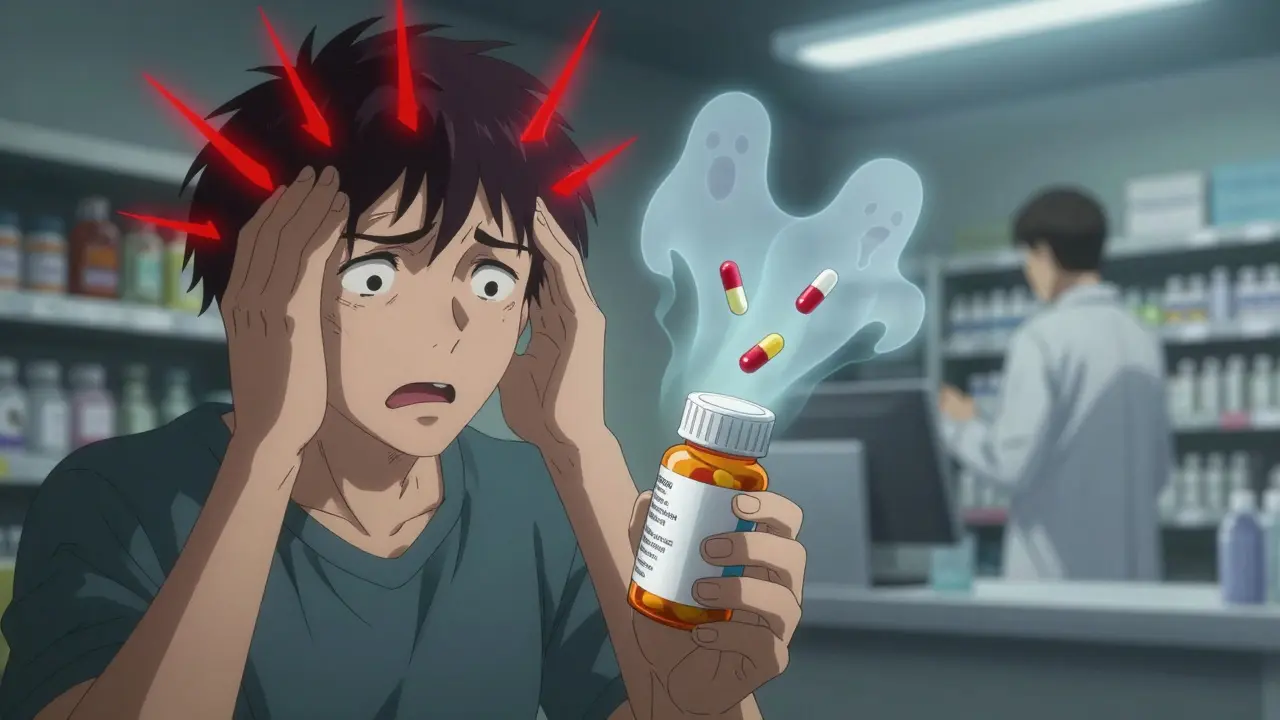
When your pharmacist hands you a new pill bottle and the color, shape, or imprint is different, it’s easy to assume it’s the same drug-just cheaper. But for some people, that small change can trigger headaches, anxiety, seizures, or worse. Switching between generic versions of the same medication isn’t just a paperwork shuffle. For certain drugs and certain patients, it can be a medical risk.
Why Switching Generics Can Cause Problems
Generic drugs are required to have the same active ingredient as the brand-name version. That part is true. But what’s not always said is that they don’t have to be identical in how they’re made. The FDA allows up to a 20% difference in how quickly the drug is absorbed into your bloodstream compared to the brand. That might sound tiny, but for drugs where the difference between working and causing harm is razor-thin, it’s a big deal. Think of it like two identical-looking cars. One has a turbocharged engine, the other a standard one. Both go 60 mph on paper. But if you’re racing uphill, the turbo kicks in faster. Your body doesn’t always react the same way to that delay. That’s why some people feel fine on one generic version of their medication, then suddenly feel off after switching to another-same name, different maker, different release pattern.Which Medications Are Most Likely to Cause Issues
Not all generics are created equal when it comes to switching risks. The biggest red flags come from drugs with a narrow therapeutic index-meaning the dose that works is almost the same as the dose that causes toxicity. These include:- Antiepileptics like phenytoin, levetiracetam, and extended-release divalproex. A 2021 survey of neurologists found nearly 7 out of 10 believed switching generics increased seizure risk.
- Thyroid meds like levothyroxine. Even small changes in absorption can throw off your metabolism, leading to fatigue, weight gain, or heart palpitations.
- Anticoagulants like warfarin. A slight change in blood levels can mean the difference between clotting and bleeding.
- Immunosuppressants like tacrolimus. For transplant patients, this isn’t just about side effects-it’s about organ rejection.
- Extended-release psychiatric drugs like Adderall XR and bupropion XL. Different manufacturers use different bead systems to control release. One patient might get steady relief; the next might get a spike of anxiety or crash by afternoon.
A 2019 study in BMJ Open tracked over 2,800 patients switching between generic versions of the same heart medication. Those who switched had a 12.3% higher chance of being hospitalized within 30 days. That’s not a fluke. That’s a pattern.
What Patients Are Reporting
Behind the clinical data are real people. On Reddit’s ADHD community, a thread titled “Generic Adderall Switch Ruined My Life” has over 800 comments. Most describe the same thing: a sudden return of symptoms-brain fog, irritability, focus loss-within 24 to 72 hours of getting a new refill. Others report new side effects: headaches, nausea, insomnia, or panic attacks they’d never had before. A 2023 hospital study of 1,437 patients found that 63% noticed a drop in effectiveness after switching generics. Over 40% reported new side effects. One case involved a patient who accidentally took two different generics of the same antidepressant because they didn’t recognize the change in packaging. Result? Serotonin syndrome. Hospitalization. Nearly fatal. These aren’t anecdotes. They’re data points. And they’re happening because patients aren’t warned. Pharmacists aren’t required to tell you when the manufacturer changes. Unless you ask, you won’t know.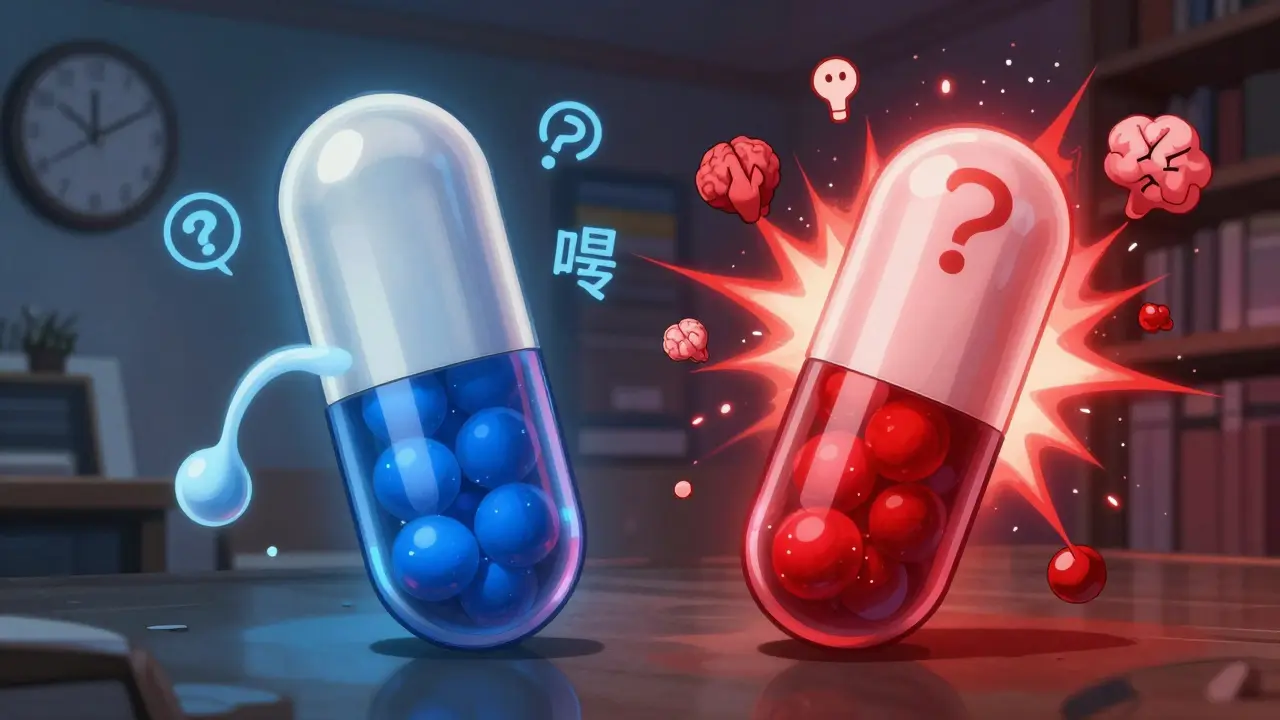
The Hidden Reason Generics Keep Switching
Why does this keep happening? It’s not about quality control. It’s about money. Pharmacy benefit managers-companies like CVS Caremark and OptumRx-control which generics pharmacies stock. They don’t pick based on patient outcomes. They pick based on rebates. The manufacturer that offers the biggest kickback gets the contract. And they change it often. On average, PBMs switch preferred generic manufacturers nearly five times a year per drug. That means you might get one version of your generic thyroid pill in January, a different one in March, another in June. And each time, your body has to adjust. No one tells you. No one checks in. And your doctor might not even know what you’re taking unless you tell them.What You Can Do to Protect Yourself
You don’t have to accept this as normal. Here’s what actually works:- Ask for the manufacturer name. When you pick up your prescription, ask: “What company made this?” Write it down. Keep a small log in your phone or notebook.
- Check the NDC code. That 11-digit number on the bottle is the National Drug Code. If it changes, the manufacturer changed. Note it down.
- Request “Dispense As Written” (DAW-1). If you’re on a high-risk medication, ask your doctor to write “DAW-1” on your prescription. That legally blocks substitution. It’s allowed for levothyroxine, tacrolimus, and other NTI drugs.
- Watch for changes in how you feel. If you notice new side effects or a return of old symptoms within 3 days of a refill, that’s a red flag. Don’t wait. Call your doctor.
- Don’t assume “same drug = same effect.” Even if it’s the same generic name, different makers = different delivery systems. Extended-release pills are especially tricky.
A 2021 study found that patients who got counseling from their pharmacist about switching risks were 37% less likely to have bad outcomes. That’s not a small number. That’s life-changing.
What Doctors and Pharmacists Should Be Doing
The American Society of Health-System Pharmacists updated its guidelines in January 2024 to explicitly recommend against automatic substitution for 17 specific drugs, including bupropion XL, tacrolimus, and phenytoin. That’s a major shift. But it’s not yet standard practice. Doctors need to know what’s in your bottle. Pharmacists need to be trained to flag high-risk switches. Until then, you’re the only one who can track it.
Is It Always Bad?
No. For many people-especially those on statins, blood pressure meds, or basic antibiotics-switching generics is perfectly safe. The body handles those variations without issue. The problem isn’t generics themselves. It’s the lack of awareness around when switching matters. The FDA says generics are equivalent. And for most people, they are. But “most” doesn’t mean “all.” If you’re one of the people who feels different after a switch, you’re not imagining it. You’re not being dramatic. You’re responding to real differences in how your body processes the drug.What’s Changing
There’s momentum for change. In 2023, Medicare Part D started limiting generic switches to no more than twice a year. The FDA is investing millions into better testing for complex generics like inhalers and topical creams. Researchers have identified genetic factors-like CYP2D6 poor metabolizers-that make some people far more vulnerable to switching effects. But until these systems catch up, the burden is on you. Keep track. Speak up. Don’t let cost savings become your health cost.Can switching between generic medications cause seizures?
Yes, especially for people taking antiepileptic drugs like phenytoin, levetiracetam, or extended-release divalproex. Even small changes in how the drug is absorbed can lower blood levels enough to trigger breakthrough seizures. Studies show neurologists observe this in practice, and patient reports confirm sudden seizure spikes after generic switches. If you’re on epilepsy medication and notice new or worsening seizures after a refill change, contact your doctor immediately.
Why do I feel worse after switching to a cheaper generic?
It’s not just in your head. Generic versions of the same drug can use different inactive ingredients or release mechanisms-especially with extended-release formulations. For example, one Adderall XR generic might release its beads slowly over 12 hours, while another releases them faster, causing a spike and crash. If you notice anxiety, brain fog, headaches, or mood swings after switching, it could be the formulation, not your condition worsening.
How do I know if my generic medication changed manufacturers?
Check the pill’s color, shape, or imprint-these often change with the manufacturer. But the most reliable way is to look at the NDC code on the bottle. It’s an 11-digit number. If it’s different from your last refill, the maker changed. You can also ask the pharmacist directly: “Who made this?” Write it down each time.
Can I ask my doctor to prevent generic switches?
Yes. Ask your doctor to write “Dispense As Written” or “DAW-1” on your prescription. This legally prevents the pharmacy from substituting a different generic version. This is especially important for drugs like levothyroxine, warfarin, tacrolimus, and extended-release ADHD meds. Some pharmacies may push back, but you have the right to request it.
Are all generic drugs unsafe to switch between?
No. For many medications-like statins, metformin, or basic antibiotics-switching between generics is safe and has no clinical impact. The risk is highest for drugs with a narrow therapeutic index, where small changes in blood levels can cause serious harm. If you’re unsure, ask your doctor or pharmacist whether your medication falls into a high-risk category.
Why don’t pharmacists tell me when the generic changes?
Pharmacists aren’t legally required to notify you of a manufacturer switch. Their job is to fill the prescription as written. Unless you ask, they won’t volunteer the information. That’s why it’s up to you to check the pill’s appearance and NDC code. Don’t wait for them to tell you-ask.
What should I do if I think a generic switch caused side effects?
Don’t ignore it. Contact your doctor right away. Bring your medication log (manufacturer, NDC code, dates, symptoms). If you’ve had a sudden return of symptoms or new side effects within 72 hours of a refill, it’s likely related. Your doctor can request your previous manufacturer or switch you to brand-name if needed. Also, report the issue to the FDA’s MedWatch program-it helps track these patterns.
15 Responses
Been on levothyroxine for 12 years. Switched generics last year and started crashing by 3pm. Felt like a zombie. Took me 3 weeks to connect the dots. Now I check the NDC every time. It’s not paranoia-it’s survival.
Doctors act like it’s magic. It’s not.
Oh please. You’re telling me your body can’t handle a different filler? Next you’ll say your coffee tastes different when the beans come from a different farm.
Meanwhile, my cousin’s kid had a seizure after switching generics. Guess what? She’s fine now. But thanks for the fear porn.
Also-seriously? You’re mad at PBMs? That’s like blaming the cashier for the price of milk.
Stop acting like you’re special. Most people don’t even notice the switch.
PS: I’m a pharmacist. I’ve seen it all. You’re not the first to cry wolf.
Hey, I get it. I’ve been there. Took me 6 months to figure out why my Adderall XR wasn’t working. I kept thinking I was just ‘burnt out.’ Turns out, the new generic had a different bead system-suddenly I was crashing by 2pm, jittery by 10am.
I started writing down the NDC code like it was my life’s mission. Now I have a little note in my phone: ‘DO NOT ACCEPT 123-45-6789.’
And yes, I asked my doctor for DAW-1. They rolled their eyes. But they did it. Took 3 calls. Worth it.
You’re not overreacting. You’re just paying attention. And that’s a superpower in this broken system.
Also-tell your pharmacist you’re not a number. They’ll remember you. I promise.
And if you’re on warfarin? Don’t even joke. Write it down. Every. Single. Time.
Wait so you’re saying the FDA lets companies make the same drug but with different absorption rates? That’s wild. So if I take two different generics of the same pill, I could be getting a ‘light’ version and a ‘strong’ version?
Why isn’t this on the news? I’m 24 and on antidepressants. I just assumed they were all the same. This is terrifying. I’m going to check my bottle right now.
Also-can someone explain what ‘NDC code’ is? I’ve never seen it. Is it on the label? Like, right next to the expiration date? I need to know before my next refill.
India makes 40% of the world’s generics. We know quality. You think your body is too delicate? We don’t have your luxury of brand-name drugs. We take what works. Your anxiety is not a medical condition-it’s privilege.
My uncle takes generic warfarin. He’s 72. Still walks 5km every day. No seizures. No crashes. Just life.
Stop making this about you. The system works for billions. You’re just not used to it.
Bro you’re overthinking this. My mom takes 8 meds. All generics. She’s 80. Still plays bingo. You think she checks NDC codes? No. She takes the pill. Period.
If you feel weird after a switch, maybe you’re just stressed. Or tired. Or eating too much sugar.
Stop blaming the system. Take responsibility.
Also-why are you so obsessed with pills? It’s medicine. Not a cult.
My dad switched generics for his heart med last year. Didn’t say anything until he got dizzy at the grocery store. Turns out his blood levels were all over the place.
Now he writes down the manufacturer name on a sticky note and sticks it on his pillbox.
It’s not complicated. Just… pay attention.
Also, pharmacists aren’t evil. They’re just busy. Ask nicely. They’ll help.
USA thinks it’s special because it has brand names. In India we have generics since 1970s. No one dies. No one has seizures. You are weak. Your body is weak. Your system is weak.
Stop crying. Take the pill. Move on.
Also your doctors are paid by pharma. They lie to you. We know. We saw it in 1990s. Now we don’t trust anyone. Just take the medicine.
The FDA has approved these generics. The data is public. The bioequivalence standards are rigorous. Your anecdotal experience does not constitute evidence. You are not a case study. You are a statistical outlier.
Stop weaponizing personal narratives to undermine a system that saves billions.
Also, if you are unable to distinguish between pill shapes, perhaps you should not be managing your own medication.
Professional advice: Consult your physician. Do not self-diagnose based on internet posts.
OMG I JUST REALIZED I’VE SWITCHED GENERICS 4 TIMES IN 6 MONTHS 😱 I THOUGHT I WAS JUST STRESSED 😭
My antidepressant made me feel like a robot-then suddenly I was crying at commercials. I thought it was my brain. Turns out it was the pill.
Now I take a pic of the bottle every time. And I ask the pharmacist: ‘Who made this?’
They look at me like I’m weird. But I don’t care. I’m alive. 🙏
Also-DAW-1? I’m asking my doctor tomorrow. If they say no, I’m going to the next one. My mental health > their rebate.
Okay but let’s be real-this whole post reads like a 10-page Reddit essay written by someone who just got kicked off their insurance and now blames generics for their life choices.
You’re not ‘special.’ You’re just someone who didn’t read the fine print. You thought ‘generic’ meant ‘same.’ It doesn’t. It means ‘cheaper.’ That’s it.
And now you’re mad because your Adderall XR doesn’t feel like a magic wand anymore? Honey, it never was. It’s a drug. Not a personality enhancer.
Also, you’re mad at PBMs? Sweetie, they’re middlemen. They don’t even touch the pills. The real villains are the pharmaceutical conglomerates that own the brand AND the generics. But you won’t say that because then you’d have to admit your ‘life-saving’ meds are made by the same company that made your old brand.
Also-serotonin syndrome from taking two generics? That’s not a switch. That’s a mistake. You took two pills. Not a conspiracy. A typo.
Just… take a breath. And maybe stop posting 2000-word rants on Reddit about your pill bottle.
I’ve been a nurse for 18 years. I’ve seen people have seizures after switching generics. I’ve seen transplants fail. I’ve seen elderly patients crash because their thyroid med changed.
This isn’t fearmongering. It’s clinical reality.
And yes-pharmacists should be trained to flag high-risk switches. They’re not. They’re rushed. Overworked. Underpaid.
But that doesn’t mean we ignore it.
Here’s what I tell my patients: ‘If you feel different, it’s not in your head. Write it down. Call your doctor. Bring your bottle.’
You’re not crazy. You’re just paying attention. And that’s the most important thing you can do.
USA always thinks they are better than rest of world. We in Nigeria take generics since childhood. No one dies. No one has anxiety. Your body is weak. Your mind is weak. You think medicine is magic? No. It’s science. And science works for everyone.
You want brand name? Pay 10x. But you cant afford. So shut up and take the pill.
Also your doctors are corrupt. They get paid by big pharma. We know. We saw it. You are just a victim of your own laziness.
Stop crying. Take the medicine. Move on.
Also-NDC code? What is that? Sounds like American nonsense.
Let’s be brutally honest: 90% of people who say they ‘feel different’ after a generic switch are either depressed, anxious, or just looking for an excuse to not take their meds.
Psych meds? You’re not ‘crashing’-you’re avoiding responsibility.
Thyroid? You didn’t take it at the same time every day.
Warfarin? You ate spinach.
It’s never the pill. It’s always you.
And the fact that you’re writing 500-word essays about your pill bottle? That’s the real problem.
Go therapy. Not a pharmacist.
So you’re telling me my body can’t handle a different coating? That’s cute.
Next you’ll say caffeine absorption changes if the coffee bean is roasted differently.
It’s a pill. Not a soul.