
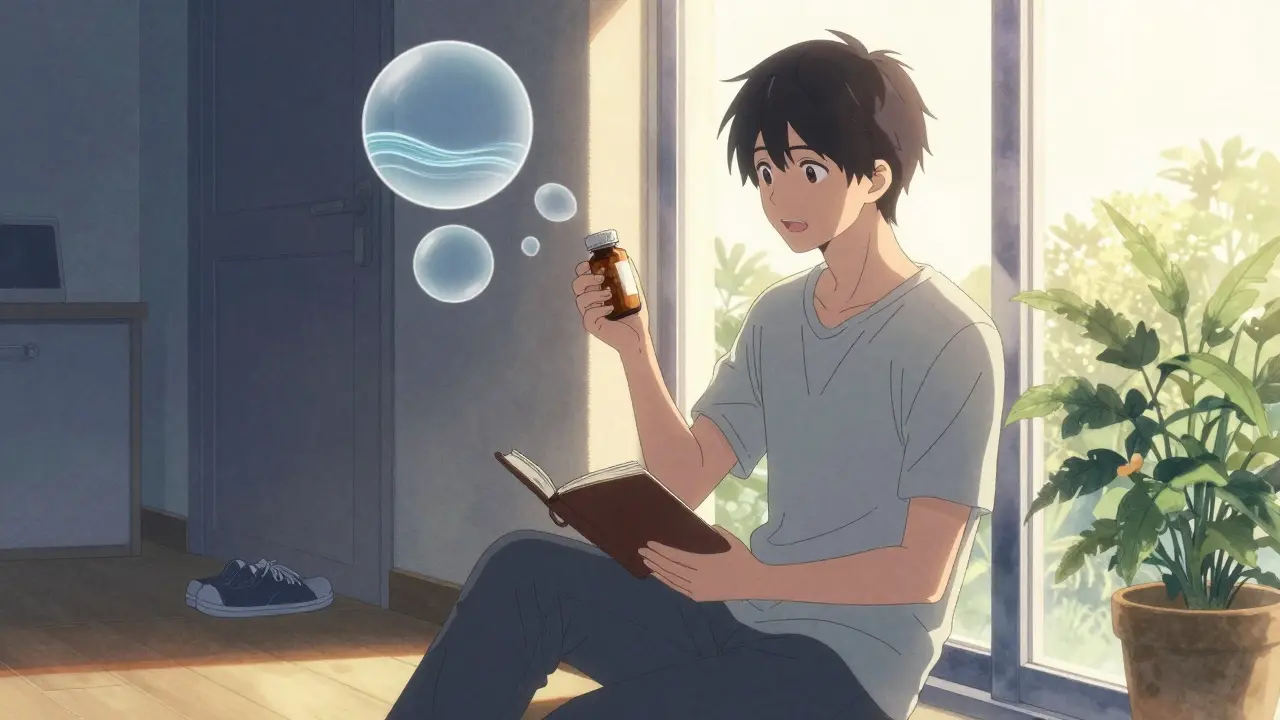
Depression doesn’t just disappear after a good week or two. For many people, it comes back-again and again. If you’ve had one episode, your risk of another is around 50%. After three episodes, that jumps to over 80%. The truth is, treating a depressive episode is only half the battle. Relapse prevention is what keeps you stable long-term. And it’s not just about popping pills. It’s about building a life that supports your mental health every single day.
Why Depression Keeps Coming Back
Depression isn’t like a cold you shake off. It’s a chronic condition that rewires how your brain responds to stress, sleep, and even routine setbacks. Studies tracking thousands of people over years show that without ongoing support, half of those who recover from depression will have another episode within two years. After five years, that number climbs to 80%. That’s not bad luck. That’s how the illness works. The brain doesn’t reset after one episode. It learns patterns-negative thoughts, emotional shutdowns, withdrawal from friends-that become automatic. These aren’t just feelings. They’re biological habits. And without intervention, they trigger the next episode before you even realize you’re slipping.Medication: The Long-Term Shield
Antidepressants aren’t just for getting out of a dark place-they’re a shield against falling back in. Research from the NIH analyzed 72 trials with over 14,000 participants. The results were clear: people staying on antidepressants after recovery were nearly twice as likely to stay well compared to those who stopped. Imipramine, one of the oldest antidepressants studied, showed the strongest long-term protection in landmark trials. But today, SSRIs like sertraline and escitalopram are more commonly used because they’re easier to tolerate. Still, the key isn’t which drug-it’s staying on it. The number needed to treat (NNT) for preventing relapse over two years is just 3.8. That means for every four people who stick with their medication, one avoids a recurrence. But here’s the catch: 30-40% of people stop because of side effects-weight gain, low libido, nausea, or just feeling "numb." If you’re struggling with side effects, don’t quit cold turkey. Talk to your doctor. Dosing adjustments or switching medications can make a huge difference. The goal isn’t to tolerate the drug-it’s to find the one that lets you live.Therapy That Lasts Beyond the Session
Medication helps, but it doesn’t teach you how to handle life when it gets hard. That’s where psychological therapies come in. Cognitive Behavioral Therapy (CBT), Mindfulness-Based Cognitive Therapy (MBCT), and Problem-Solving Therapy (PST) have been shown to cut relapse risk by 23-31%-just as effectively as medication for many people. MBCT, for example, combines mindfulness meditation with CBT techniques. It trains you to notice the early signs of a downward spiral-the racing thoughts, the urge to isolate, the self-criticism-before they take over. In one study, people with three or more prior episodes who did MBCT cut their relapse risk nearly in half. That’s not a small win. That’s life-changing. Unlike medication, these therapies give you tools you can use for life. You don’t need a therapist forever. Most programs run for 8 weeks, then include quarterly "booster" sessions. But the skills stick: recognizing thought traps, pausing before reacting, breathing through emotional waves. These aren’t just coping tricks-they’re mental immunity.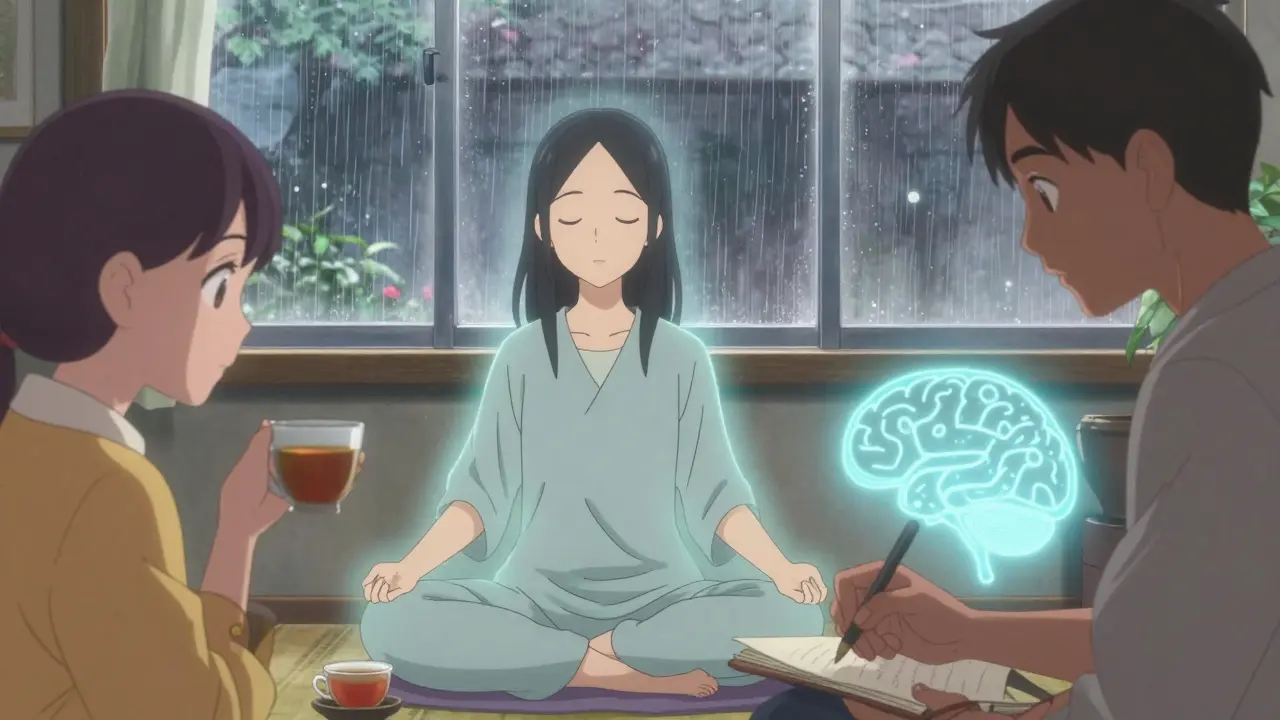
Lifestyle: The Invisible Treatment
You can take your pills and go to therapy, but if you’re sleeping five hours a night, drinking alcohol to calm your nerves, and sitting on the couch scrolling for hours, you’re fighting an uphill battle. Lifestyle isn’t a bonus-it’s part of the treatment plan. Sleep is non-negotiable. Poor sleep doesn’t just make you tired-it triggers inflammation, disrupts serotonin, and lowers your threshold for stress. People with depression who maintain regular sleep schedules cut relapse risk by nearly 40%. Movement isn’t about running marathons. Just 30 minutes of brisk walking five days a week has been shown to reduce depressive symptoms as effectively as medication in some studies. It’s not magic. It’s biology: exercise boosts BDNF, a protein that helps repair brain cells damaged by chronic stress. Light exposure matters more than you think. Even in Melbourne’s cloudy winters, getting 20 minutes of natural light before noon helps regulate your circadian rhythm. For seasonal depression, light therapy boxes are proven to prevent relapse. Alcohol and drugs are the silent relapse triggers. They might numb the pain for a night, but they worsen depression over time. Studies show people who drink heavily after recovery are twice as likely to relapse. Connection is the glue. Loneliness isn’t just sad-it’s toxic to your brain. Regular contact with even one supportive person-whether a friend, family member, or support group-can reduce relapse risk by up to 30%. You don’t need a crowd. You need one person who knows your story.Who Needs What? Matching Your Plan
There’s no one-size-fits-all. Your plan should fit your history, your life, and your preferences. - If you’ve had three or more episodes, therapy like MBCT or CBT is strongly recommended-even if you’re on medication. The combination works best. - If you have severe side effects from meds but respond well to therapy, psychological treatment alone can be enough. - If you’re still struggling with low energy, poor concentration, or guilt after remission (what doctors call "residual symptoms"), CBT is especially helpful. It targets those lingering thoughts before they grow. - If you live far from therapists or can’t afford regular sessions, digital CBT apps with proven results (like MoodGYM or Beating the Blues) can be a solid bridge. Studies show they reduce relapse by 20-30% when used consistently. The American Psychiatric Association’s 2022 guidelines say it clearly: choose based on your past episodes, your symptoms, and what you’re willing to stick with. Shared decision-making isn’t a buzzword-it’s the standard of care.What Happens When You Stop Too Soon?
Too many people stop treatment when they start feeling better. That’s the trap. Feeling better doesn’t mean you’re healed. It means you’re in remission-and remission is fragile. The first six months after stopping meds or therapy are the riskiest. Relapse often sneaks in quietly: you skip workouts, stop calling friends, start sleeping late, and tell yourself "I’m just tired." Then one morning, you can’t get out of bed. The thoughts come back. The heaviness returns. A study found that 25-30% of people stop their antidepressants within the first year. Half of them relapse within six months. That’s not weakness. That’s the illness winning because the support system disappeared. If you want to stop medication, do it slowly-over weeks or months-with your doctor’s guidance. Don’t just run out of pills and hope for the best.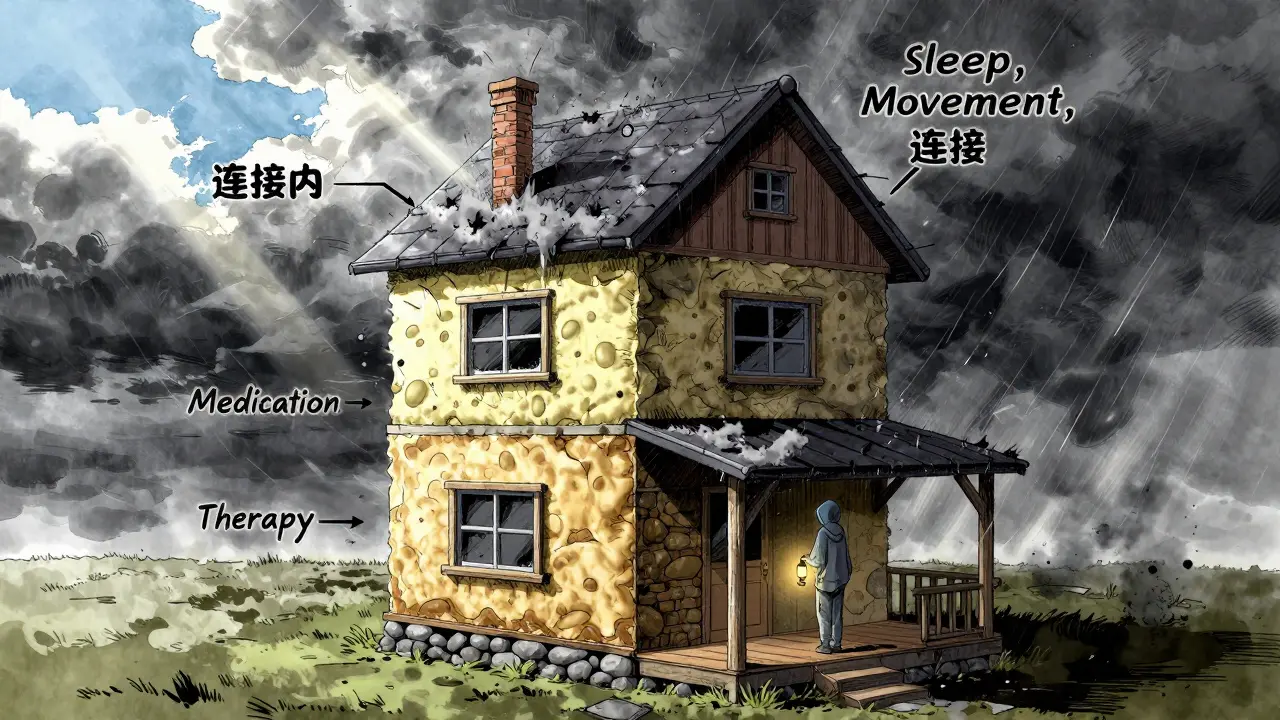
What Works Best Together
The strongest protection isn’t just medication or therapy. It’s both. And lifestyle. Together, they create layers of defense. Think of it like a house: - Medication is the foundation-it keeps the structure stable. - Therapy is the insulation-it helps you manage the cold spots. - Lifestyle is the roof and windows-it keeps out the rain and lets in the sun. When one part fails, the others can hold. But if all three are weak, the house collapses. A 2023 study tracking over 2,000 people found that those who combined medication, therapy, and healthy lifestyle habits had the lowest relapse rate-just 18% over two years. Those who did nothing? Over 70% relapsed.How to Build Your Relapse Prevention Plan
Start here:- Review your episode history: How many have you had? When did they start? What triggered them?
- Identify your early warning signs: What changes in your sleep, mood, or behavior come before a downturn?
- Choose your primary tool: Medication? Therapy? Both? Be honest about what you can sustain.
- Build your lifestyle anchors: Pick one sleep habit, one movement routine, one connection practice. Stick with them for 30 days.
- Set up check-ins: Monthly with your doctor. Quarterly with your therapist. Weekly with a trusted friend.
- Have a plan for slipping: Who do you call? What’s your first step when you feel the weight coming back?
When to Ask for Help
You don’t have to wait until you’re in crisis. If you notice: - Sleeping more than 10 hours or less than 5 - Avoiding people you used to enjoy - Feeling hopeless about small things - Thinking "I can’t do this anymore" That’s not just a bad day. That’s your body warning you. Reach out. Call your therapist. Text a friend. Email your doctor. Don’t wait for it to get worse. Relapse prevention isn’t about being perfect. It’s about being aware. It’s about having a plan so you don’t have to fight alone when the dark comes back.Can I stop my antidepressants once I feel better?
Feeling better doesn’t mean you’re out of danger. Stopping medication too soon is one of the biggest reasons people relapse. If you want to stop, work with your doctor to taper slowly-usually over several weeks or months. Never quit cold turkey. Even if you feel fine, your brain still needs time to adjust.
Is therapy really as effective as medication for preventing relapse?
Yes-for many people, especially those with three or more past episodes. Studies show therapies like MBCT and CBT reduce relapse risk by 23-31%, matching the effectiveness of antidepressants. Therapy doesn’t just treat symptoms-it teaches you how to handle stress, negative thoughts, and emotional triggers before they spiral. It’s skill-building, not just symptom-blocking.
How long should I stay on maintenance therapy?
For people with recurrent depression, guidelines recommend at least 2-5 years of maintenance treatment after remission. If you’ve had three or more episodes, many experts suggest continuing indefinitely or until you’ve been symptom-free for five years. This isn’t permanent unless you want it to be. It’s about giving your brain time to heal fully and build resilience.
Can lifestyle changes alone prevent depression relapse?
For mild cases or early-stage recovery, yes-but it’s risky as a standalone approach for moderate to severe depression. Lifestyle changes reduce risk significantly, but they work best alongside medication or therapy. Think of them as the foundation, not the whole house. Sleep, movement, light, and connection are powerful, but they’re not substitutes for professional care when you need it.
What if I can’t afford therapy or can’t find a therapist?
Digital CBT apps like MoodGYM, Beating the Blues, or This Way Up have been clinically tested and shown to reduce relapse by 20-30%. Many are free or low-cost. Community mental health centers, online support groups, and peer-led programs also offer structured support. You don’t need a private therapist to build skills-just consistency. Start with one app, one habit, one connection. Progress matters more than perfection.
8 Responses
Medication isn't the enemy. Stopping it because you feel better is. I've seen too many people crash after quitting cold turkey. Stick with it. Even if it's just to feel numb for a while, that numbness buys you time to build real habits.
Let me be clear-this whole relapse prevention framework is just a pharmaceutical industry marketing scheme wrapped in science-speak. Depression isn't a chronic disease, it's a response to systemic failure-poverty, isolation, toxic work culture. They want you to believe you're broken so you keep buying pills. Therapy? Sure, if you can afford it. But what about the people working three jobs just to keep their lights on? This isn't a personal failure-it's a societal one. And no amount of mindfulness is going to fix that.
I appreciate how this breaks down the layers. I used to think if I just tried harder, I'd be fine. Turns out, my brain needed structure-not willpower. Sleep, movement, one person who checks in-that’s my foundation now. Not perfect, but steady.
What’s interesting is how little we talk about the emotional labor of staying well. It’s not just about doing the right things-it’s about showing up for yourself when you don’t feel like it. That’s the real work. And it’s not glamorous. It’s quiet. It’s boring. But it’s the only thing that lasts.
They don’t want you to know this but SSRIs are designed to keep you docile. The real cause of depression is electromagnetic pollution from 5G towers and glyphosate in your food. The pharmaceutical companies fund all the ‘studies’ to hide the truth. Your ‘relapse prevention plan’ is just a trap to keep you dependent. Wake up. Go off meds. Eat organic. Ground yourself. The system doesn’t want you healthy-it wants you compliant.
Thank you for this thoughtful and deeply researched piece 🙏. As someone from India where mental health is still stigmatized, I find this clarity invaluable. I’ve seen friends suffer in silence because they believed depression was ‘weakness.’ Your emphasis on lifestyle and consistent support-not just medication-is exactly what our communities need to hear. Small steps, daily. That’s the path.
While the general framework is sound, there’s a critical omission here: adherence metrics. The NNT of 3.8 for antidepressants assumes consistent dosing, yet real-world adherence rates hover around 50% at 6 months. Furthermore, the efficacy of MBCT is contingent on therapist fidelity-many digital CBT platforms lack manualized protocols, leading to significant effect size attenuation. Without standardized implementation, the ‘layers of defense’ metaphor is statistically misleading. You need structural integrity, not just symbolic scaffolding.
Okay, real talk: I thought I was ‘fixed’ after my last episode. I stopped therapy, ditched my walks, started drinking wine to ‘chill out.’ Then one morning, I couldn’t even open my email. I cried for an hour in the shower. That’s not ‘just a bad day.’ That’s my brain screaming. I’m back on meds, back to my 7am light routine, and I text my friend every Sunday-no matter what. I’m not ‘cured.’ I’m just not letting it win anymore. And guess what? That’s enough. 💪