
Side Effect Risk Calculator
How do side effect descriptions impact your experience? This tool shows how presenting risks as absolute numbers (e.g., 3 out of 100) instead of percentages reduces nocebo effects by 15-25%.
Your Risk Visualization
Absolute number: patients
Expected nocebo reduction:
Based on 2021 study: When side effects presented as absolute numbers, reported symptoms decreased by 15-25%.
How you might perceive this:
""
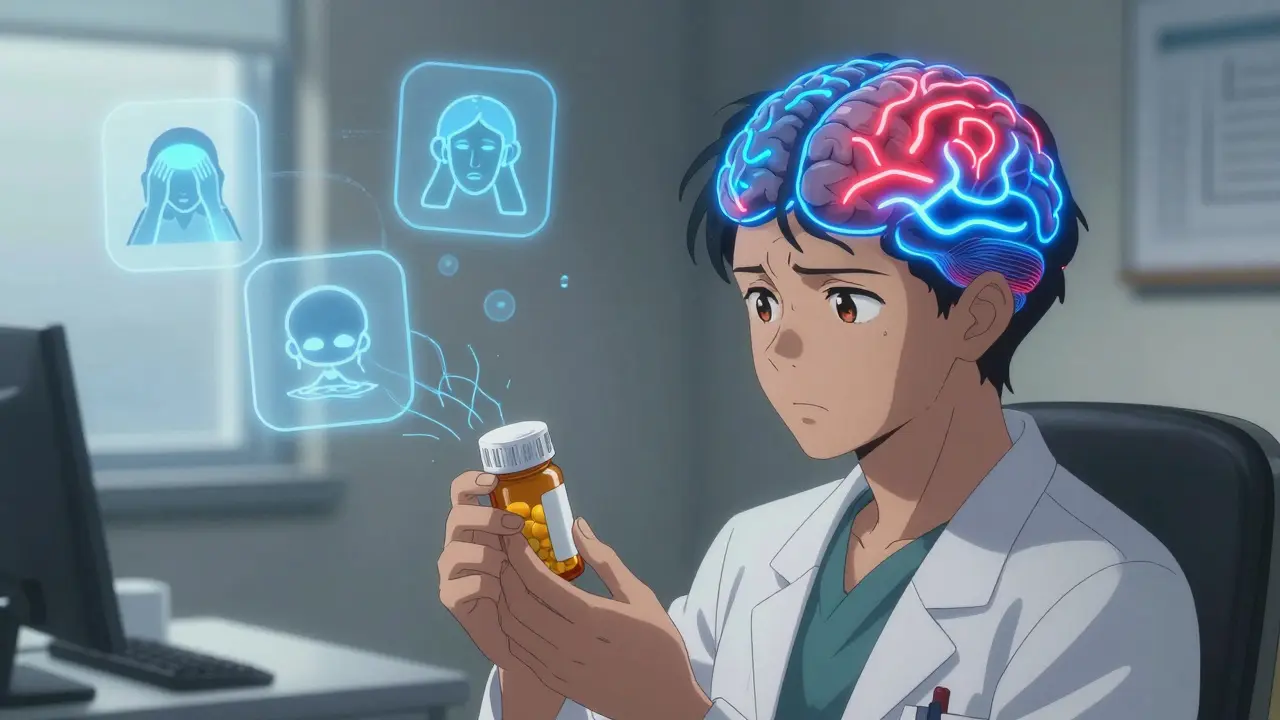
When you take a pill, your body doesn’t just react to the chemicals inside it. It reacts to what you expect to happen. That’s the quiet, powerful force behind placebo and nocebo effects - two sides of the same psychological coin that shape how you feel after taking medicine, even when the medicine does nothing.
Think about this: in clinical trials, up to 76% of people who get a sugar pill report side effects like headaches, nausea, or fatigue - the exact same symptoms listed for the real drug they’re supposed to be testing. These aren’t imaginary. They’re real physical reactions, triggered not by chemistry, but by expectation. And they’re called nocebo effects.
What’s the Difference Between Placebo and Nocebo?
Placebo and nocebo are both responses to inert treatments - things like sugar pills, saline injections, or fake procedures. But they go in opposite directions.
A placebo effect is when you feel better because you believe the treatment will help. It’s why some people with chronic pain report relief after taking a pill they think is a strong painkiller - even when it’s just starch and cellulose. Studies show placebo effects can improve subjective symptoms like pain, fatigue, or anxiety by 30-60% in conditions like migraines, depression, and irritable bowel syndrome.
A nocebo effect is the dark twin. It’s when you feel worse - or develop new symptoms - because you expect harm. This isn’t just anxiety. It’s measurable. Brain scans show areas like the anterior cingulate cortex and insula light up when someone expects pain or nausea. Cortisol levels rise. Heart rate increases. Immune markers shift. In one 2022 study, 76% of people who got a placebo during a COVID-19 vaccine trial reported headaches or tiredness - symptoms that matched the real vaccine’s side effect profile.
Here’s the kicker: recent research from 2025 shows nocebo effects are not only more common than placebo effects - they’re stronger and last longer. While placebo benefits often fade over time, nocebo symptoms stick around. That’s a game-changer for how we understand medication side effects.
How Do Nocebo Effects Actually Happen?
Nocebo effects don’t come out of nowhere. They’re built - often by the very people trying to help you.
Three main pathways trigger them:
- Verbal suggestions - This is the biggest one. When your doctor says, “This medication can cause dizziness, nausea, and insomnia,” you start noticing every little head buzz or stomach flutter. Studies show 70-80% of nocebo responses come from what’s said during consultations or in patient leaflets.
- Observational learning - You hear a friend say, “I took that drug and felt awful for weeks.” Suddenly, you’re primed to feel the same way. Social media amplifies this. A viral post about “horrible side effects” can trigger mass nocebo responses.
- Prior negative experiences - If you had a bad reaction to a drug before, even if it was unrelated, your brain files it as a warning. Next time you see a similar pill, your body goes on alert.
And it’s not just doctors. Pharmaceutical companies write side effect lists that are so long and alarming, they become self-fulfilling prophecies. One 2021 review found that when side effect information was rewritten using absolute numbers - “3 out of 100 people experience this” instead of “3% risk” - reported side effects dropped by 15-25%.

Real-World Impact: It’s Not Just in Trials
Nocebo effects aren’t just a research curiosity. They’re costing people their health - and the system billions.
Consider this: 25-35% of patients stop taking their prescribed medication because they believe they’re experiencing side effects - even when those symptoms appear in placebo groups. That’s not drug intolerance. That’s expectation.
In migraine patients, 20-30% report side effects like dizziness or fatigue from placebo pills - symptoms identical to those of the real drugs being tested. In cancer treatment trials, 25-40% of people on sugar pills report nausea. In menopause studies, 30-40% of women on placebos report hot flashes.
One 2023 survey of chronic pain patients found that 68% said they’d experienced side effects from their medication - until they learned it was a placebo. Then the symptoms vanished. That’s not coincidence. That’s proof that the mind is actively shaping physical experience.
The economic toll? In the U.S. alone, nocebo-driven visits, tests, and unnecessary medications add up to $1.2 billion a year. That’s not just waste. It’s harm.
What’s Being Done to Fight Nocebo?
Doctors and researchers aren’t ignoring this. There’s a quiet revolution happening in how treatments are explained.
Some clinics now use “expectation reframing.” Instead of listing every possible side effect, providers say: “Most people tolerate this well. A few might feel a bit tired or have a mild headache, but those usually pass. Many find their symptoms improve significantly within days.” This simple shift reduces nocebo responses by 30-40%.
Electronic health records now flag patients with high nocebo risk - those with anxiety disorders, past bad experiences, or a tendency to catastrophize. These patients get tailored communication: shorter side effect lists, positive framing, and follow-up check-ins.
Even more surprising: “open-label placebos.” These are pills patients know are inert - but they’re told, “This pill has been shown to help people feel better, even if they know it’s sugar.” In trials for irritable bowel syndrome and chronic pain, open-label placebos improved symptoms by 25-35%. The mind doesn’t need deception to heal. It just needs hope.
Pharmaceutical companies are investing $50-75 million per drug just to redesign patient information materials to reduce nocebo triggers. The FDA and EMA now require that adverse event reports separate true drug effects from nocebo responses. Clinical trials increasingly use “active placebos” - fake pills that mimic side effects - so patients can’t guess which group they’re in.
What This Means for You
If you’re taking medication and feeling side effects, ask yourself: Could this be in your head? Not in a dismissive way - but in a scientific one.
Are you reading the leaflet every night? Are you scrolling through forums where people describe worst-case scenarios? Are you comparing every twinge to a symptom list?
It’s not your fault. The system is designed to warn - sometimes too well.
Here’s what you can do:
- Ask your doctor to explain side effects using numbers: “How many people out of 100 actually get this?”
- Focus on the most common outcome: “What do most people feel?”
- Don’t self-diagnose side effects. Wait a few days. Symptoms triggered by expectation often fade as your brain adjusts.
- If you’ve had bad reactions before, tell your doctor - not to avoid treatment, but to help them tailor how they explain it.
The goal isn’t to ignore real side effects. It’s to separate what’s caused by the drug from what’s caused by fear. Because when you do, you give yourself a better chance to benefit from treatment - without unnecessary suffering.
The Future of Treatment Expectations
The science is moving fast. Researchers are now using AI to analyze how patients speak during consultations - tone, word choice, pauses - to predict who’s most vulnerable to nocebo effects. Early models at Massachusetts General Hospital are 82% accurate.
Genetic studies are also emerging. People with certain variants of the COMT gene - which affects dopamine processing - are 2.5 times more likely to experience strong nocebo responses. This could one day lead to personalized risk assessments before prescribing.
By 2025, international guidelines will likely require drug companies to report nocebo response rates alongside efficacy data. That means future drug labels won’t just say “side effects,” but “side effects vs. expected psychological responses.”
For patients, this could mean fewer unnecessary stops in the ER, less polypharmacy, and more trust in treatment. For doctors, it means better communication - not less honesty, but smarter honesty.
The truth is, medicine doesn’t just live in pills and injections. It lives in words, beliefs, and expectations. Understanding placebo and nocebo isn’t about dismissing symptoms. It’s about understanding the full picture - so you can take control of your healing, not just your dosage.
14 Responses
Man, I never thought about how much our brains just make up symptoms. I took that anxiety med last year and swore I felt my heart racing-turned out I was just nervous about taking it. My doctor didn’t even mention side effects, and I still freaked myself out. Mind’s wild.
Ohhh so THIS is why Big Pharma loves long side effect lists?? 😏 They want you to panic so you don’t question the price tag. Also, ‘open-label placebos’? That’s like telling someone ‘this placebo is magic’ and then charging $200 for it. Classic. I bet they’re already patenting ‘hope capsules’ next quarter.
Actually, the 76% statistic is misleading. That number comes from a single 2022 RCT with a small sample size and no control for pre-existing anxiety disorders. Most meta-analyses show nocebo rates between 28-42% when properly controlled. Also, cortisol spikes don’t prove causation-stress from waiting for side effects could explain it. Stop oversimplifying neuroscience.
Wait-so you’re telling me the FDA, WHO, and every doctor in America are lying to us? They’re all in on this ‘mind over matter’ scam? And you really think rewriting ‘3% risk’ to ‘3 out of 100’ will fix the problem? That’s like telling a drowning man ‘you’re not really sinking, you’re just imagining water.’
They’re hiding the truth. The drugs DO cause damage. The ‘nocebo’ label is just a cover-up for corporate negligence. I’ve seen people get hospitalized from ‘just expectation.’
Oh, brilliant. So now we’re blaming the British NHS for not explaining pills properly? And let me guess-Americans are just too sensitive? We’ve got the best healthcare system in the world, obviously, but apparently we’re all just hypochondriacs with too much free time. Meanwhile, in the UK, we just take our pills and shut up. No complaining. No ‘expectation reframing.’ Just stoicism.
And don’t even get me started on ‘open-label placebos.’ That’s not medicine-that’s a TED Talk with a pill bottle.
Really appreciate this breakdown. I’m a nurse, and I see this every day. Patients will read the leaflet, then Google every symptom, then come in convinced they’re having a reaction-even when they’re on a placebo. We started using the ‘most people feel fine’ script, and side effect reports dropped like crazy. It’s not about lying. It’s about framing. Hope is medicine too.
And yet… you still didn’t mention the real villain: the pharmaceutical industry’s marketing teams. They hire psychologists to design leaflets that maximize fear. They know exactly what words trigger panic. ‘Rare but serious’? That’s code for ‘we hope you don’t die.’ And now they’re using AI to predict who’ll crack first? That’s not science. That’s psychological warfare.
And you call this ‘smarter honesty’? It’s manipulation with a white coat.
Bro this is so real. I took that antidepressant last year and thought I was gonna lose my mind-sweating, insomnia, felt like my bones were vibrating. Then I found out I was in the placebo group. Just… vanished. Like my brain had been playing a horror movie on loop and the projector broke. I cried. Not because I was sad-because I realized I’d been scaring myself for weeks. My body believed the lie.
You got this! The mind is powerful. I used to think I was allergic to ibuprofen-headaches, nausea, the whole thing. Then I took a sugar pill and felt nothing. Now I just tell myself ‘this is safe, this is safe’ and boom-no issues. Your brain’s got a lot of power. Use it for good.
What’s fascinating is that nocebo effects correlate strongly with cultural narratives about medicine. In collectivist societies, where authority is revered, nocebo rates are lower. In individualist cultures like the U.S., where patients are encouraged to question everything, the opposite occurs. This isn’t psychology-it’s epistemology. We’ve turned healthcare into a marketplace of fear.
This gave me chills. I’ve been on meds for years and always blamed the drugs. But what if… I was just scared? Maybe I’ve been fighting my own mind this whole time. I’m gonna try reframing. Not because I don’t trust science-but because I finally trust myself.
So the solution is to lie to patients? That’s your big idea? ‘Most people feel fine’? That’s not honesty. That’s gaslighting with a prescription pad. If the side effects are real, say so. If they’re rare, say so. Don’t sugarcoat it. Patients aren’t children. We can handle the truth.
Man, I love how this flips everything. We think medicine is all about chemicals and biology-but half the battle’s in the brain. It’s like your body’s a video game and the side effects are just glitches in the UI. If you believe the game’s broken, it acts broken. But if you reload the save? It works fine. Maybe the real cure isn’t in the pill-it’s in the mindset.
Also, open-label placebos? That’s like telling someone ‘this magic wand is fake, but it still works.’ And somehow… it does. The universe is weird.
People are so careless with their health now. They blame their minds for everything. But real medicine is real. Sugar pills don’t fix cancer. You can’t think your way out of a tumor. This ‘mind over matter’ nonsense is dangerous. If you’re sick, take the medicine-even if you’re scared. Don’t let fear make you a fool.