
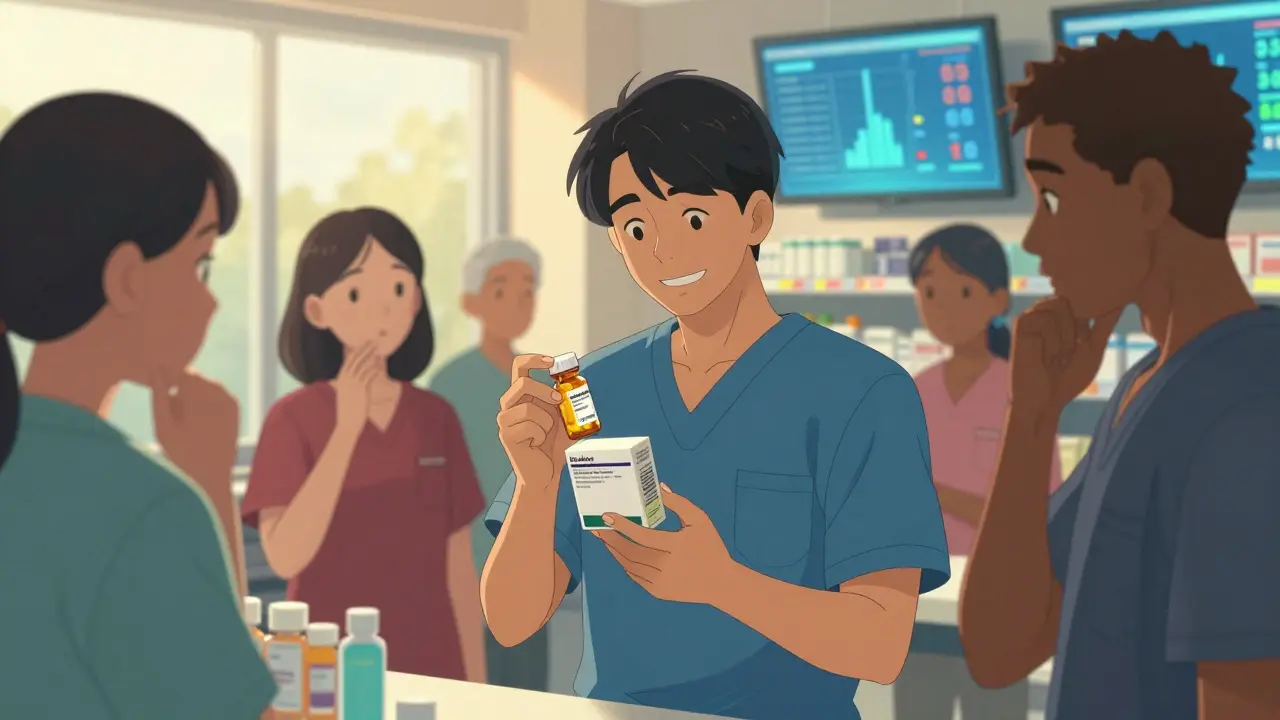
When you pick up a prescription, you might see two options: the brand-name drug you’ve heard of, or a cheaper generic version. It’s easy to assume the generic is just a cheaper copy. But what if choosing the generic actually saves the healthcare system money-while helping you stay healthier? That’s not guesswork. It’s outcomes economics-a real, data-driven way to measure what matters: not just price, but how well the drug works, how many people stick with it, and how many hospital visits it prevents.
What Outcomes Economics Really Measures
Outcomes economics isn’t about counting pills. It’s about counting lives. Specifically, it looks at three things: clinical outcomes (did the treatment work?), economic outcomes (how much did it cost?), and humanistic outcomes (how did it affect your daily life?).This approach is called HEOR-Health Economics and Outcomes Research. It’s not new. It started taking shape in the 1990s, when health systems began realizing that just lowering drug prices wasn’t enough. If a cheaper pill made people skip doses or led to more ER visits, the real cost went up. HEOR was created to find the full picture.
For generics, HEOR asks: Does switching from a brand-name drug to its generic version lead to the same health results? Or does it cause problems? The answer isn’t always obvious.
The Numbers Behind Generic Savings
Let’s start with the basics. In the U.S., generics make up 90% of all prescriptions-but only 22% of total drug spending. That’s a huge gap. Why? Because generics cost 80-85% less than their brand-name counterparts.But savings don’t stop at the pharmacy counter. When patients use generics, they’re more likely to keep taking their meds. A 2023 meta-analysis by ISPOR found that adherence rates jump 5-15% with generics. Why? Because cost is the biggest reason people skip doses. If a monthly pill costs $4 instead of $45, you’re far more likely to take it every day.
That small change has big ripple effects. For chronic conditions like high blood pressure or diabetes, better adherence means fewer heart attacks, fewer hospitalizations, and fewer complications. One study showed that when generic use hit 70% or more in a patient population, total treatment costs dropped 12-18%. That’s not just pharmacy savings-it’s fewer ambulance rides, shorter hospital stays, and less lost work time.
Payers noticed. Pharmacy Benefit Managers (PBMs) and Medicare Part D plans now use HEOR to shape their formularies. The result? Average savings of $1,200 to $1,800 per member per year. That’s money that can go toward mental health services, preventive screenings, or lower premiums.
When Generics Don’t Perform the Same
But here’s the catch: not all drugs are created equal.For most medications-antibiotics, statins, antidepressants-generics work just as well. The FDA requires them to be bioequivalent: meaning they deliver the same amount of active ingredient into your bloodstream within an 80-125% range of the brand. That’s tight enough to ensure safety and effectiveness.
But for drugs with a narrow therapeutic index-like warfarin, levothyroxine, or epilepsy medications-small differences matter. A 5% drop in blood levels might mean a clot. A 5% rise might mean a seizure.
That’s why only 47% of primary care doctors strongly support generic switches for these drugs. And it’s why HEOR studies for these medications require longer follow-up-often 12 to 24 months-to catch subtle changes in outcomes. Some patients report feeling different after switching, even when lab tests show no change. This isn’t always about the drug. Sometimes, it’s the placebo effect in reverse: if you think you’re on a cheaper pill, your brain expects it to work less well.
Studies have shown that when patients believe they’re taking a brand-name drug-even if they’re not-their reported symptoms improve. This “therapeutic misconception” can skew results. That’s why modern HEOR now includes patient-reported outcomes (PROs) using tools like the EQ-5D and SF-36. These questionnaires measure energy levels, pain, mobility, and mood-not just lab values.

What Patients Really Say
Real people have real opinions. Anlitiks analyzed over 12,850 reviews from Drugs.com, WebMD, and Amazon in early 2024. Generics got an average rating of 4.1 out of 5. Brand-name drugs got 4.3. That’s close-but the negative reviews tell a different story.68% of negative reviews for generics mentioned “different effectiveness.” Yet, bioequivalence standards say that shouldn’t happen. What’s going on? Often, it’s the inactive ingredients. Fillers, dyes, coatings-things that don’t treat your condition but help the pill hold together. Some people are sensitive to these. Reddit threads in r/Pharmacy show 42% of commenters reported side effects after switching: rashes, nausea, dizziness. Sometimes, it’s coincidence. Other times, it’s real.
But here’s what’s telling: GoodRx data shows 89% of patients prefer generics when the price difference is over $20. And 76% of them say they noticed no difference in how the drug worked. That’s the sweet spot: when cost is high enough to matter, but the drug isn’t one where tiny variations could be dangerous.
How HEOR Is Changing How Drugs Are Chosen
Before HEOR, formulary decisions were simple: pick the cheapest pill. Now, it’s more complex.Leading health systems use a four-step HEOR process:
- Define the question-Is switching to generic clopidogrel cost-effective for heart patients?
- Gather evidence-Pull data from claims, EHRs, and patient surveys.
- Analyze outcomes-Run cost-effectiveness models, calculate QALYs (quality-adjusted life years), and project budget impact.
- Implement-Change formularies, train staff, educate patients.
This takes time. A full HEOR dossier for a generic class can take 18-24 months and cost half a million to two million dollars. That’s why only 35% of physician practices use formal HEOR. But PBMs? 95% do. Medicare Part D? 100% require it.
Organizations with strong HEOR teams see 25-35% faster adoption of generics-and 15-20% greater savings than those relying on old-school cost-per-pill comparisons.

The Future of Generic Evaluation
The field is evolving fast. The FDA’s 2024 draft guidance now requires HEOR for complex generics-like extended-release pills or topical creams-where absorption can vary. ISPOR’s 2024 update demands longer follow-up (minimum 24 months) and standardized PRO collection at baseline, 30, 90, and 180 days.AI is stepping in. Machine learning models are now predicting which patients are most likely to respond well-or poorly-to a generic switch, based on their history, genetics, and even social factors like income or medication access.
By 2027, KLAS Research predicts 85% of U.S. health systems will require HEOR evidence before adding any new drug to their formulary. That’s up from 65% in 2023. Why? Because value-based care is here. Payers don’t just want cheap drugs. They want drugs that keep people out of the hospital.
For generics, that’s a win. They’re not just cheaper. When used right, they’re better-for your wallet, your health, and the system as a whole.
What You Should Do
If you’re on a chronic medication:- Ask your pharmacist: Is there a generic? How much will it save me?
- Don’t assume it’s the same. If you feel different after switching, tell your doctor. It might be the filler, not the drug.
- For high-risk drugs like warfarin or thyroid meds, stick with the same brand unless your doctor says otherwise.
- If cost is a barrier, use GoodRx or patient assistance programs. A $20 difference can mean the difference between taking your pill and skipping it.
For providers and payers: Don’t just cut costs. Measure outcomes. Track adherence. Listen to patients. The cheapest drug isn’t always the best value. The best value is the one that keeps people healthy-and out of the ER.
Are generic medications as effective as brand-name drugs?
Yes, for most medications. The FDA requires generics to deliver the same active ingredient at the same rate and extent as the brand-name version, within a tight 80-125% bioequivalence range. For drugs like antibiotics, statins, or blood pressure pills, clinical outcomes are nearly identical. But for narrow therapeutic index drugs-like warfarin or levothyroxine-small differences can matter, and some patients report feeling different after switching, even when lab results show no change.
Why do some people say generics don’t work as well?
There are two main reasons. First, inactive ingredients-fillers, dyes, coatings-can cause side effects in sensitive individuals. Second, psychological factors play a role. If a patient believes they’re on a cheaper drug, they may expect it to be less effective, which can influence how they feel. This is called the therapeutic misconception. Studies show patients report better outcomes when they think they’re taking the brand-name version-even if they’re not.
How much money do generics actually save?
Generics cost 80-85% less than brand-name drugs at the pharmacy. But the real savings come from better adherence. When patients can afford their meds, they take them. That leads to fewer hospitalizations and complications. Studies show that when generic use reaches 70% or higher, total treatment costs drop by 12-18%. For health plans, that translates to $1,200-$1,800 saved per member per year.
Should I always choose the generic version?
For most medications, yes. But for drugs with a narrow therapeutic index-like warfarin, levothyroxine, or seizure medications-it’s safer to stick with the same version unless your doctor advises otherwise. If you switch and feel different, report it. Your doctor may need to adjust your dose or switch you back. Cost matters, but safety matters more.
What is HEOR, and why does it matter for generics?
HEOR stands for Health Economics and Outcomes Research. It’s the science of measuring not just drug cost, but also how well it works, how many people take it, and how it affects quality of life. For generics, HEOR proves they’re not just cheaper-they can be better for the system. It helps payers, doctors, and patients make smarter choices by showing the full picture: lower prices, higher adherence, fewer hospital visits.
14 Responses
So let me get this straight - we’re supposed to trust a pill that costs $4 because the FDA says it’s ‘bioequivalent’? 😏 I’ve seen people switch to generics and turn into zombies. Not because of the drug - because of the fillers. I swear, some of these generics have more chalk than active ingredient. 🤢
Ugh. Another ‘generics are great’ PSA. 🙄
Let’s be real - the pharmaceutical industry doesn’t want you to know this, but generics are just the government’s way of making you a lab rat for their cost-cutting experiments. 🧪 They don’t test for long-term neurological effects, only ‘bioequivalence’ in a 12-hour window. What if your brain slowly forgets how to regulate serotonin because the coating dissolves 0.3 seconds slower? They don’t care. They just want you alive enough to keep paying premiums. 💸 #PharmaControl
My grandma switched to generic levothyroxine and started having panic attacks. She went back to brand and felt like herself again. Not a lab result - just how she felt. 🤍
There is a grammatical error in your third paragraph: ‘It’s not new. It started taking shape in the 1990s, when health systems began realizing that just lowering drug prices wasn’t enough. If a cheaper pill made people skip doses or led to more ER visits, the real cost went up.’ The second sentence is a fragment. It should be connected with a semicolon or conjunction. Minor, but it undermines credibility.
It is morally indefensible to prioritize financial efficiency over individual patient outcomes. You are reducing human health to a spreadsheet. If a person feels worse on a generic - regardless of bioequivalence metrics - their lived experience is valid. To dismiss this as ‘therapeutic misconception’ is to engage in medical gaslighting. The system is broken, and you are its apologist.
Hey - I get the math. Generics save money. But here’s what no one talks about: the emotional toll. My dad’s on warfarin. He switched to generic. His INR went haywire. He had to go to the ER twice. The ‘savings’? $12 a month. The trauma? Unmeasurable. I’m not anti-generic. I’m pro-patient. If you feel different - speak up. Your doctor isn’t a robot.
Why are you Americans so obsessed with generics? In India, we don’t even have brand names - everything is generic. And we don’t have your healthcare crisis. Maybe your problem isn’t the pill - it’s the system that charges $400 for a $4 drug. Fix that first. 🇮🇳
Just wanted to say I switched to generic statins last year. No difference. Saved me $180/month. My cholesterol’s down. I’m not a lab rat - I’m just someone who wants to live longer without going broke. 😊
So… i just reed this whole thing and i think… maybe we shud stop calling them ‘generics’? Like… they’re not ‘generic’ - they’re the same drug. Maybe call them ‘standardized’ or ‘equivalent’? The word ‘generic’ makes people think it’s cheap junk. Not fair. 🤔
One must question the integrity of a system that equates ‘cost reduction’ with ‘health improvement.’ This is not medicine - it is actuarial science masquerading as care. The FDA’s 80-125% bioequivalence range is not a standard - it is a loophole. A patient’s life is not a confidence interval. And yet, we allow it to be treated as such.
My pharmacist told me the generic version of my antidepressant had a different dye - turned my tongue blue for a week. 🤪 Not the drug. The filler. I switched back. Now I just use GoodRx. $20 difference? Worth it. No blue tongue. No drama.
My mom’s on levothyroxine. She tried generic once. Felt like she was dragging through molasses. Went back to brand. Instant energy. She’s 72. She doesn’t care about the ‘HEOR model.’ She cares about being able to walk to the mailbox without needing a nap. 💙
It’s not about the pill. It’s about the lie. The lie that money can buy health. The lie that a patient’s feelings are ‘psychological.’ The lie that we can quantify a human being’s quality of life with a SF-36 form. This isn’t economics. It’s dehumanization dressed in data.