
When you pick up a bottle of liquid amoxicillin for your child, it looks fresh. The label says 14 days to use it. But why 14 days? Why not 30? Why not forever? The truth is, this isn’t about quality control or manufacturing flaws-it’s about chemistry. Once you mix that powder with water, the clock starts ticking. And it ticks fast.
What Happens When You Mix Liquid Antibiotics?
Liquid antibiotics aren’t pre-made like syrup or pills. They’re powders mixed with water right before you take them home. This is done because antibiotics like amoxicillin and ampicillin break down quickly in water. The moment water touches the powder, chemical reactions begin. Beta-lactam rings-key parts of these antibiotics-start to unravel. Once that ring breaks, the drug loses its power to kill bacteria.It’s not that the medicine turns toxic. It just stops working. You might still see the same color, smell the same sweetness, and pour the same amount. But if you’ve gone past the discard date, you’re giving your child a placebo. And that’s dangerous.
How Long Do They Really Last?
The shelf life depends on three things: the type of antibiotic, how it’s stored, and what container it’s in.- Amoxicillin alone: Lasts up to 14 days in the fridge (2-8°C). At room temperature, it lasts only 7 days.
- Amoxicillin/clavulanate (like Augmentin): Only 10 days in the fridge. At room temperature? Just 5 days.
- Penicillin V potassium: More stable than amoxicillin. Can last up to 14 days refrigerated.
These aren’t guesses. They’re based on real lab tests. A 2010 study in the Journal of Applied Pharmaceutical Science showed amoxicillin/clavulanate drops below 90% potency after five days at room temperature. That’s the threshold regulators use to say a drug is still effective.
Here’s the catch: if you transfer the liquid from the original bottle to an oral syringe, stability drops even more. One study found clavulanate in syringes lost potency in under five days-even when refrigerated. That’s because the plastic interacts with the drug.
Temperature Is the Biggest Enemy
Every 10°C increase in temperature doubles how fast the antibiotic breaks down. That’s not a theory-it’s physics. The Arrhenius equation, used by pharmaceutical scientists since the 1900s, proves this.Leaving the bottle on the kitchen counter for a few hours? That cuts your shelf life in half. If your house hits 27°C (80°F), your 14-day window becomes 7 days. No one tells you that. But it’s true.
Refrigeration slows this down. But don’t freeze it unless you’re told to. Freezing can extend life-up to 60 days for some antibiotics-but thawing changes the texture and can cause clumping. It’s not recommended unless you’re in a hospital setting with proper protocols.
Why Do Some Last Longer Than Others?
Amoxicillin is stable. Clavulanate? Not so much. That’s why amoxicillin/clavulanate has a shorter shelf life. Clavulanate is added to fight resistant bacteria, but it’s chemically fragile. It breaks down faster than amoxicillin, even when stored perfectly.Penicillin V potassium is more stable than amoxicillin in cold storage. But it’s not used as often because it tastes worse and requires more frequent dosing. So even though it lasts longer, doctors choose amoxicillin for kids because it’s palatable-and that’s why the 14-day limit became standard.
What Does “Stable” Even Mean?
When the label says “stable for 14 days,” it doesn’t mean “still good.” It means the drug still has at least 90% of the labeled strength. That’s the FDA’s minimum standard for safety and effectiveness.After that point, potency drops slowly at first, then faster. By day 20, you might only have 60-70% of the original dose. That’s not enough to clear an infection. And worse-you could be training bacteria to resist antibiotics by exposing them to sub-lethal doses.
There’s no visual way to tell. The liquid might look clear. It might smell fine. But if it’s past the date, it’s unreliable. Cloudiness, strange odor, or particles mean it’s degraded. But even if it looks perfect? Still toss it.
Real Problems Parents and Pharmacists Face
A 14-day prescription for amoxicillin sounds great. But what if your child finishes the infection in 7 days? You’re stuck with 7 days of unused medicine. And now you’re racing against the clock.On Reddit, pharmacists report that 30% of parents return with half-used bottles after day 14, scared they might have used expired medicine. Others admit they’ve given their kids medicine past the date because “it looked fine.”
Worse: amoxicillin/clavulanate often comes in a 10-day supply. But many infections need 14 days of treatment. Parents end up throwing out medicine before the course is done. That means incomplete treatment-and higher risk of the infection coming back.
A 2023 survey found 22% of patients accidentally used expired liquid antibiotics. Most didn’t know the discard date. Some forgot to write it on the bottle. Others assumed “refrigerated” meant “lasts forever.”
How to Get It Right
Here’s what actually works:- Write the discard date on the bottle the second you get it. Don’t wait. Use a permanent marker.
- Store it in the fridge. Not the door. The back, where it’s coldest.
- Don’t pour it into syringes unless you have to. If you do, discard it after 5 days-even if the bottle says 10.
- Check for changes. If it smells sour, looks cloudy, or has chunks, throw it out.
- Use apps. CVS’s Script Sync and other pharmacy apps now send alerts when your liquid antibiotic expires. Turn them on.
Pharmacists are trained to do this. But most patients aren’t. A 2022 study found that 68% of parents didn’t know the difference between the prescription duration and the suspension’s shelf life. That’s not their fault. It’s a system flaw.
What’s Changing? What’s Next?
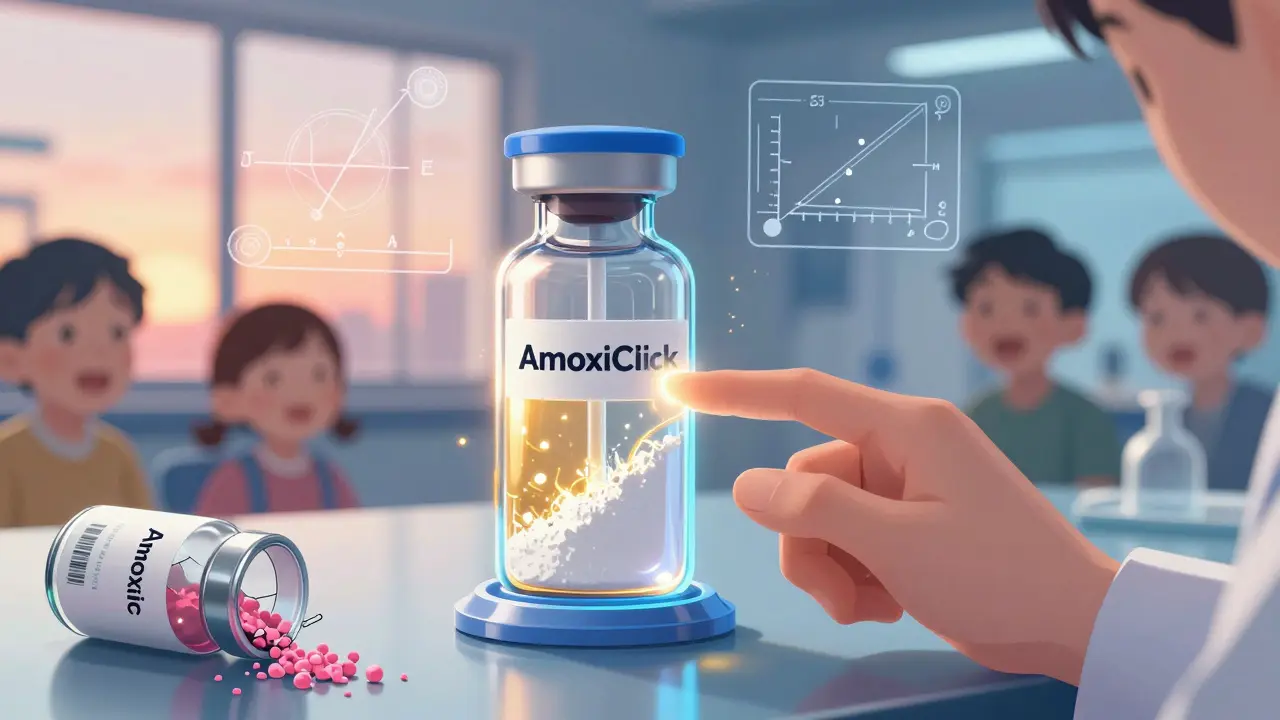
Scientists are working on fixes. One 2021 study used microencapsulation to keep amoxicillin/clavulanate stable for 21 days in the fridge. Another company, Pfizer, is testing a dual-chamber bottle called AmoxiClick that keeps the powder and liquid separate until you press a button. That could extend shelf life to 30 days.But these are still in trials. Right now, the 14-day rule for amoxicillin and the 10-day rule for amoxicillin/clavulanate are the law. And they’re not going away soon.
Why? Because beta-lactam antibiotics are inherently unstable in water. That’s just how they’re made. No amount of marketing can change that. The industry sets short dates not because they’re lazy-it’s because they’re legally required to guarantee safety.
What You Should Do Today
If you have liquid antibiotics at home:- Check the label. When was it mixed?
- Find the discard date. If it’s past that date? Toss it.
- If you’re unsure? Call your pharmacy. They’ll tell you.
- Don’t save it for next time. Antibiotics don’t work like painkillers. You can’t reuse them.
Using expired liquid antibiotics won’t make you sick from poison. But it might let the infection come back-and harder this time. That’s the real risk.
Stability isn’t about convenience. It’s about effectiveness. And when your child’s health is on the line, there’s no room for guesswork.
Can I freeze liquid antibiotics to make them last longer?
Freezing can extend the shelf life of some liquid antibiotics-like amoxicillin or penicillin V potassium-up to 60 days. But this is only recommended in hospital settings with proper thawing procedures. At home, freezing can cause clumping, uneven dosing, and texture changes that make it hard to give the right amount. Unless your pharmacist specifically tells you to freeze it, don’t. Stick to refrigeration.
What if I left my child’s amoxicillin on the counter overnight?
If it was left at room temperature (above 25°C) for more than 24 hours, the shelf life drops significantly. Amoxicillin that should last 14 days in the fridge may now only be good for 5-7 days total. If it’s been out for more than a day, check the discard date. If you’re past that, throw it out. Don’t risk underdosing.
Why does amoxicillin/clavulanate expire faster than plain amoxicillin?
Clavulanate is the part that fights resistant bacteria, but it’s chemically unstable. It breaks down faster than amoxicillin when mixed with water. Even under perfect refrigeration, clavulanate loses potency after 10 days. Amoxicillin alone can last 14 days. That’s why combination drugs like Augmentin have shorter expiration dates.
Can I still use the medicine if it looks normal?
No. Appearance doesn’t tell you if it’s still potent. The antibiotic can degrade without changing color, smell, or texture. The only reliable way to know is the discard date. If it’s past that date, even if it looks fine, it’s not safe to use. Potency loss happens at the molecular level-you can’t see it.
Is it dangerous to take expired liquid antibiotics?
It’s not toxic, but it’s ineffective. Taking expired antibiotics won’t poison you, but it won’t kill the bacteria either. That means the infection might not clear up, or it could come back stronger. Worse, low doses of antibiotics can lead to drug-resistant bacteria, making future infections harder to treat. Always follow the discard date.