
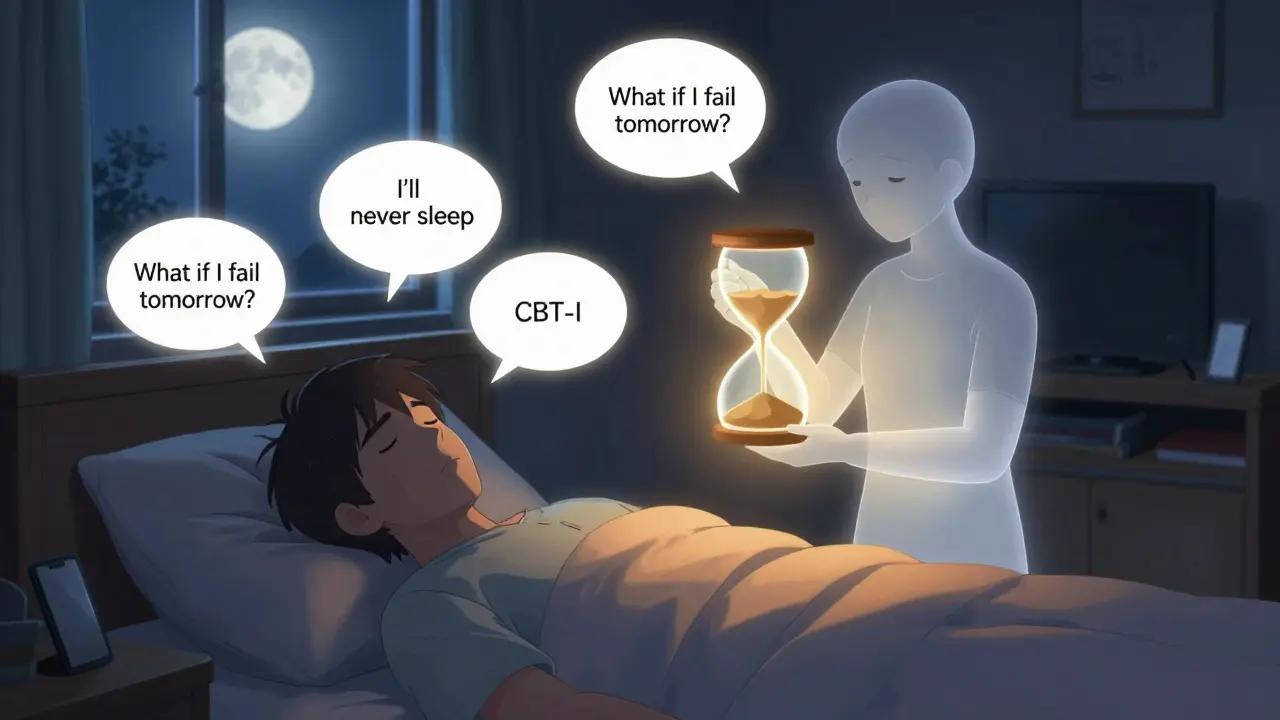
If you’ve ever spent hours staring at the ceiling, counting sheep that never arrive, you know insomnia isn’t just about being tired. It’s about frustration, anxiety, and the growing fear that sleep will never come again. For millions, the go-to solution has been a pill - zolpidem, eszopiclone, or a generic sleeping aid picked up with a quick prescription. But here’s the truth most doctors don’t tell you: sleep medications don’t fix insomnia. They mask it. And when the effect wears off, the problem comes back - often worse.
Enter cognitive behavioral therapy for insomnia, or CBT-I. It’s not a new fad. It’s not a app-based gimmick. It’s the most studied, most effective treatment for chronic insomnia we have - and it’s been the gold standard since 2016, when the American College of Physicians officially declared it the first-line treatment for adults. Yet, fewer than 1 in 5 people with insomnia ever try it. Why? Because it’s harder than popping a pill. But it works - and it lasts.
How CBT-I Actually Works (It’s Not Just ‘Sleep Hygiene’)
Most people think CBT-I is about drinking chamomile tea, turning off screens before bed, or keeping a consistent bedtime. Those things? They’re part of sleep hygiene - and they’re not enough. Real CBT-I is a structured, six- to eight-week program built on four core techniques, each backed by dozens of clinical trials.
The first is sleep restriction therapy. Sounds counterintuitive? It is. You’re told to spend less time in bed - not more. If you’re only sleeping five hours a night, you’re told to limit your time in bed to five hours. You go to bed later and wake up earlier. No naps. No lying around. The goal? To build up sleep pressure. Your body learns that bed = sleep, not worry. Studies show this single component accounts for about 40% of CBT-I’s success. A 2023 meta-analysis found patients who stuck with sleep restriction improved their sleep efficiency by nearly 19% in just six weeks.
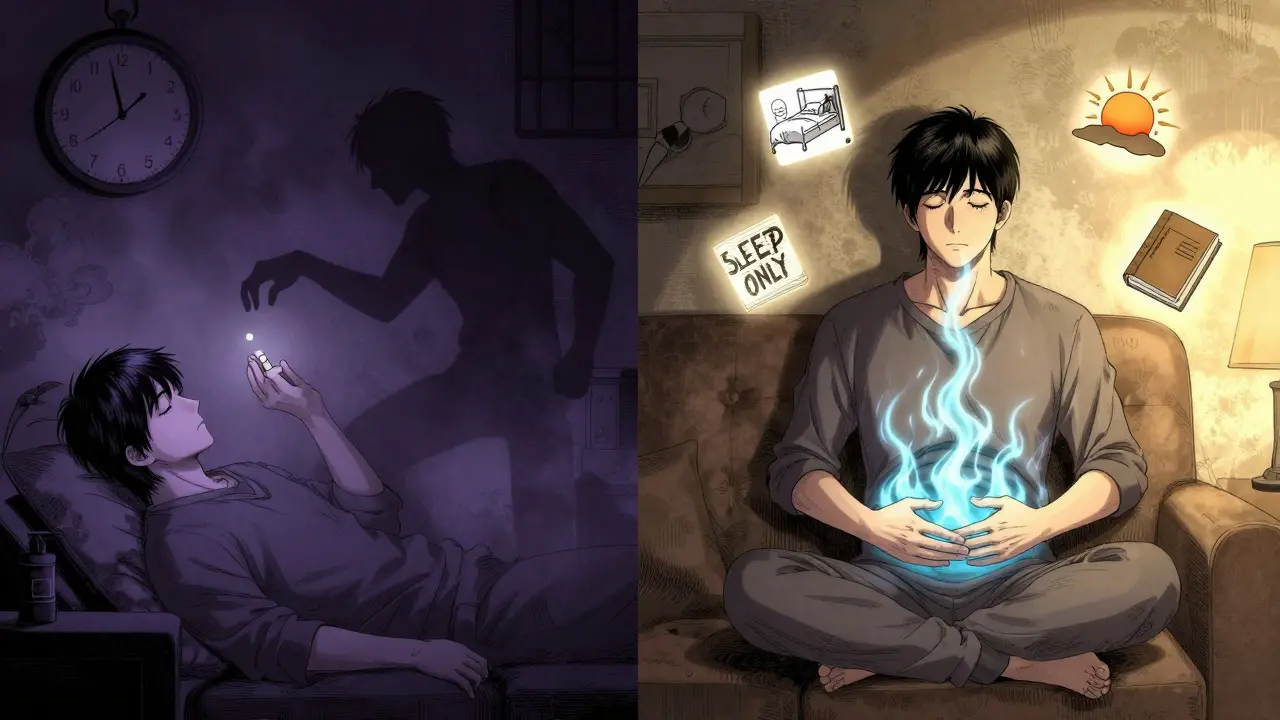
The second is stimulus control. Your bed is not a couch. It’s not a workspace. It’s not a place to scroll through your phone. You use it for sleep and sex - and nothing else. If you can’t fall asleep after 20 minutes, you get up. Go sit in another room. Read under dim light. Come back only when you’re sleepy. This retrains your brain to associate the bed with sleep, not frustration. One 2022 study found 78% of patients who followed this rule saw major improvement.
Then there’s cognitive restructuring. This is where the real mental shift happens. You start noticing the thoughts that keep you awake: “If I don’t sleep 8 hours, I’ll fail tomorrow.” “I’ve ruined my sleep for good.” “I’ll never recover.” CBT-I teaches you to challenge those thoughts. Not with positive affirmations - with evidence. You track your actual sleep, your actual performance, your actual energy levels. Over time, the fear loses its grip. A 2024 study in Nature Digital Medicine showed patients who completed 80% of these cognitive exercises reduced their insomnia severity by 62% more than those who didn’t.
The last piece? Relaxation training. Not meditation apps. Not YouTube breathing videos. Structured, daily practice - like tensing and releasing each muscle group from toes to forehead, or slow diaphragmatic breathing for 15 minutes. Polysomnography data from 2021 shows this reduces physiological hyperarousal - the body’s fight-or-flight state that keeps you wired - by 27% after just six weeks.
Why Medications Fail in the Long Run
Sleep aids like zolpidem (Ambien) work fast. You take them, you fall asleep. But here’s what they don’t tell you: 42% of people develop tolerance within eight weeks. That means you need more to get the same effect. And that’s when dependence starts.
The FDA flagged this in 2021. Long-term use of hypnotics is linked to increased risk of falls, memory problems, and even dementia in older adults. And yet, zolpidem alone made up 47% of all insomnia prescriptions in the U.S. in 2022. Why? Because it’s cheap. A 30-day supply costs $15. A full course of CBT-I? $120 per session. Many insurance plans don’t cover it well - or at all.
But here’s the data no pharmacy ad will show you: A 2023 JAMA Network Open study tracked over 4,000 insomnia patients. At six months, those on medication alone had worse sleep than those who did CBT-I. The difference? A 3.2-point drop on the Insomnia Severity Index - a clinically meaningful gap. And at 12 months? Only 32% of medication users still had improvement. For CBT-I? 68% did.
Even worse, sleep meds don’t change the underlying problem. They don’t fix the thoughts, the habits, the anxiety. They just sedate you. When you stop, your brain reverts to old patterns - because you never learned how to break them.
The Real Advantage: Results That Last
CBT-I doesn’t just help you sleep better this week. It helps you sleep better for life.
A 2023 study followed patients 10 years after they completed CBT-I. Their insomnia severity scores were still 56% lower than before treatment. That’s not a placebo. That’s rewiring. The brain learns new patterns. The body learns new rhythms. The fear of not sleeping? It fades.
And it works across age groups. Adolescents? CBT-I improved sleep onset by 28 minutes and total sleep time by 45 minutes - while medications showed no lasting benefit beyond four weeks. Older adults? Digital CBT-I platforms like Sleepio and Somryst helped 82% of people 65+ complete treatment successfully, even with minimal support. And for cancer survivors, pregnant women, shift workers - populations with high insomnia rates - CBT-I is the only treatment proven to be safe and effective long-term.
Combination therapy - CBT-I plus a short course of medication - can be powerful. A 2023 JAMA study found 74% of patients who did both maintained improvement at six months, compared to 58% for CBT-I alone and 41% for meds alone. But here’s the catch: the medication was only used for the first 2-4 weeks. Then, it was phased out. The real change came from the therapy.
Why Don’t More People Do It?
It’s not because CBT-I doesn’t work. It’s because it’s hard - and access is broken.
First, the initial weeks are rough. Sleep restriction means you’re tired. Really tired. For weeks 2 and 3, you might feel like you’re running on fumes. A 2022 study found 41% of people quit during this phase. But those who stuck with it? 78% said their sleep improved dramatically.
Second, there aren’t enough trained providers. Only 15% of U.S. primary care doctors feel confident delivering CBT-I. And even if they did, insurance reimbursement is a mess. A single session might cost $120 out-of-pocket. Meanwhile, a zolpidem prescription costs $15. It’s no wonder people choose the pill.
Third, misinformation is everywhere. Google “how to fix insomnia” and you’ll get 10,000 articles about lavender oil and weighted blankets. Very few mention CBT-I by name. Even some sleep clinics still lead with medication.

How to Get Started - Even If You’re Skeptical
You don’t need a therapist to begin. You need a plan.
- Start with a sleep diary. Track bedtime, wake time, time to fall asleep, night wakings, and how rested you feel. Do this for two weeks. You’ll be shocked at how little sleep you’re actually getting.
- Set a fixed wake time. Every day. Even weekends. This is non-negotiable. Your body needs consistency.
- Limit time in bed. If you’re sleeping 5 hours, go to bed 5 hours before your wake time. No more. No less.
- If you’re awake for more than 20 minutes, get up. Go to another room. Do something quiet. Come back only when sleepy.
- Stop using your bed for anything but sleep and sex. No phones. No TV. No work.
- Practice 15 minutes of diaphragmatic breathing daily - inhale for 4 counts, hold for 4, exhale for 6.
For digital support, try FDA-cleared platforms like Somryst or Sleepio. They’re prescription-based, covered by Medicare and some private insurers, and have 4.3-star ratings from over 1,800 users. Many offer 6-week programs with daily 15-minute sessions. No waiting rooms. No travel. Just structure.
And if you can - find a certified CBT-I provider. Look for someone with training from the American Board of Sleep Medicine. Ask if they use the 2021 CBT-I Academy manual. If they say yes, you’re in good hands.
Final Thought: Sleep Isn’t a Problem to Be Fixed - It’s a Habit to Be Rewired
You didn’t become an insomniac overnight. And you won’t fix it with a pill. Sleep is a biological rhythm, shaped by behavior, thoughts, and environment. CBT-I doesn’t force sleep. It removes the barriers you’ve built - the fear, the habits, the false beliefs.
It’s not easy. But it’s the only treatment that gives you back control. And once you do, you’ll realize you never needed the pill at all.
11 Responses
Yeah right, another sleep guru pushing therapy like it's magic. I tried CBT-I for two weeks, was exhausted, and went back to Ambien. It works. Period.
Of course the FDA flagged hypnotics. They're owned by the same pharma conglomerates pushing CBT-I as a ‘lifestyle upgrade.’
I cried after my third sleep restriction night. I was so tired I couldn't even cry properly. Then I remembered I used to sleep fine before I started overthinking it. I miss my old brain. 😭
People who say CBT-I is ‘hard’ are the same ones who think ‘just be positive’ fixes depression. You can’t out-think a body that’s been wired for anxiety for years. I did CBT-I for 8 weeks and finally slept without pills. No magic. Just work. And it’s worth it.
Let’s be real - CBT-I is just Big Sleep’s way of replacing pills with expensive therapy. Who even has $120/session? And don’t get me started on ‘digital platforms’ - they’re just apps with a lab coat. I’ve seen the data. The ‘68% success rate’? That’s with people who had no other health issues. What about the rest of us? The ones with chronic pain? PTSD? Diabetes? CBT-I doesn’t work for real life. It works for rich, white, 30-somethings with yoga mats and no rent.
I’ve been a shift worker for 17 years. I’ve tried everything. Pills? They made me sleepwalk. Meditation? I fell asleep on the couch and woke up with my cat in my lap. CBT-I? I did it through Sleepio. Six weeks. No therapist. Just a screen. I went from 4 hours a night to 6.5. Not perfect. Not glamorous. But real. And I didn’t have to beg my insurance for a ‘sleep miracle.’
Stop romanticizing therapy. It’s not a spa day. It’s a job. And if you’re too tired to do a job, you’re not lazy - you’re broken. And CBT-I? It’s the only thing that didn’t treat me like a problem to be fixed. It treated me like a person who needed to learn how to rest.
Of course CBT-I works. It’s just behavioral conditioning. Like Pavlov’s dogs, but instead of food, it’s sleep. And the fact that we call it ‘therapy’ instead of ‘training’ is why people think it’s some mystical cure. It’s not. It’s just discipline wrapped in jargon. But hey - if it helps, fine. Just don’t pretend it’s science.
Interesting how the article mentions ‘FDA-cleared’ platforms like Somryst. Cleared by whom? The same FDA that approved opioids for chronic pain? The same agency that let pharmaceutical companies market sleep meds as ‘safe’ for 20 years? This isn’t science. It’s corporate rebranding. CBT-I is just the new version of ‘exercise and eat greens’ - except now, they’re selling it as a premium subscription.
u/ScottEasterling said it best - i tried cbt-i and it made me more anxious. now i just take 10mg of zolpidem and sleep like a baby. why overthink it? also, my dog sleeps better than me. maybe i should try training him to be my therapist.
As someone from India, where mental health care is often inaccessible and stigmatized, I find this discussion deeply revealing. In my country, sleep medications are prescribed without hesitation - often without any psychological evaluation. Yet, I have seen patients who, after being referred to a certified CBT-I program (even via telehealth), report not just improved sleep, but reduced anxiety, better focus at work, and renewed hope. The issue is not whether CBT-I works - it is whether society is willing to invest in it. Pills are cheap. Healing is not. And that, perhaps, is the real barrier.
The article’s methodology is statistically sound, yet its framing is dangerously reductive. By positioning CBT-I as a binary alternative to pharmacotherapy, it ignores the nuanced reality of comorbid conditions - depression, chronic pain, circadian rhythm disorders - where polypharmacy and behavioral intervention are not mutually exclusive. Furthermore, the assertion that ‘sleep is a habit to be rewired’ is neurologically oversimplified. Sleep regulation is governed by homeostatic and circadian processes, not merely conditioned associations. While CBT-I is clinically effective for primary insomnia, its generalization as a universal solution risks pathologizing normal sleep variability. The true failure lies not in patient compliance, but in the reductionist narratives peddled by wellness industries - both pharmaceutical and therapeutic.