
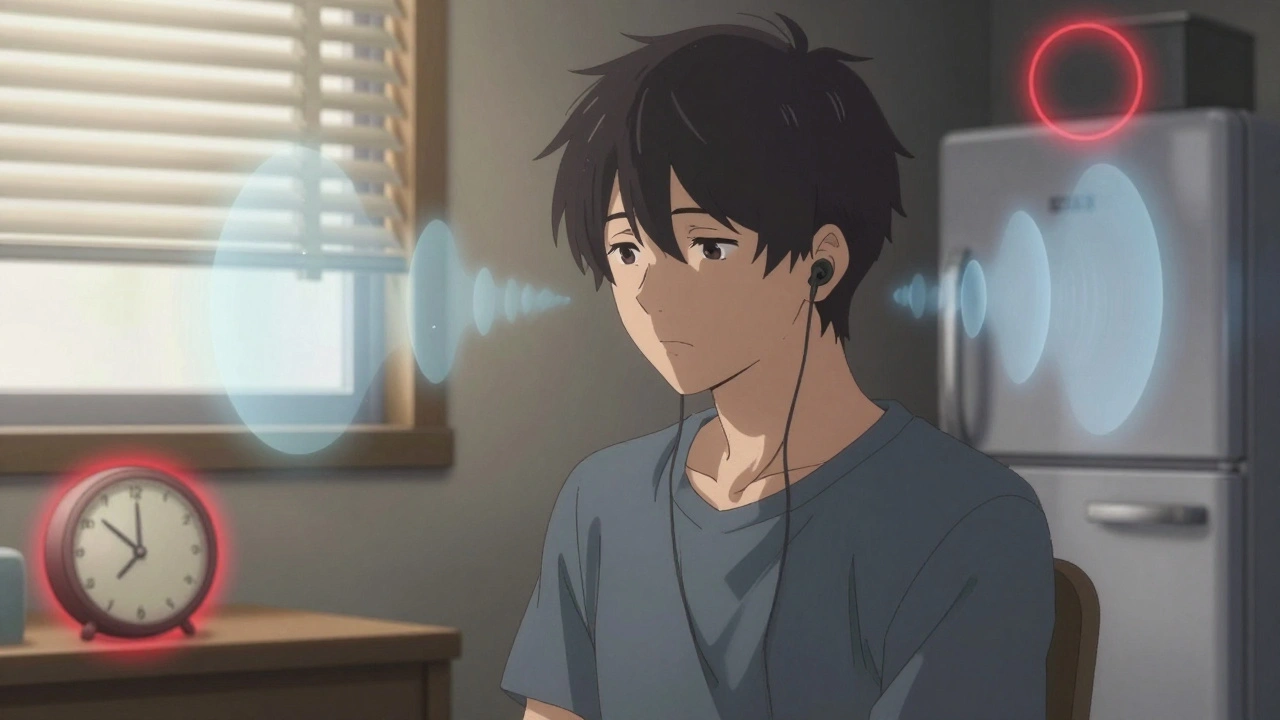
Imagine walking into a grocery store and the hum of the refrigerator feels like a jackhammer. Or hearing a child laugh in the next room and it makes your teeth ache. This isn’t just being sensitive to noise-it’s hyperacusis, a real and often misunderstood condition where everyday sounds become painful or overwhelming.
What Is Hyperacusis?
Hyperacusis isn’t about having better hearing. It’s about the brain misinterpreting sound. People with this condition hear normal environmental noises-like dishes clinking, traffic, or even a door closing-as unbearably loud, sharp, or even physically painful. It’s not a hearing loss issue. In fact, most people with hyperacusis have perfectly normal hearing on standard audiograms.
Studies show that about 1-2% of the population has clinically significant hyperacusis, which means roughly 17 million Americans are affected. It can strike anyone-musicians, office workers, veterans exposed to loud noises, or even kids after an ear infection. Unlike tinnitus (ringing in the ears), which is about phantom sounds, hyperacusis is about real sounds that feel too intense.
The condition doesn’t target one frequency. A loud car horn, a baby crying, or the rustle of plastic packaging can all trigger the same reaction. That’s because the problem isn’t in the ear-it’s in how the brain processes sound. The auditory system becomes overly sensitive, turning up the internal volume on normal input.
Why Does It Happen?
The exact cause isn’t always clear, but it often links to trauma or overstimulation. Exposure to loud music, fireworks, or even a single blast from a construction tool can trigger it. Some people develop it after head injuries, Lyme disease, or viral infections like Ramsay Hunt syndrome. Others have no clear trigger at all.
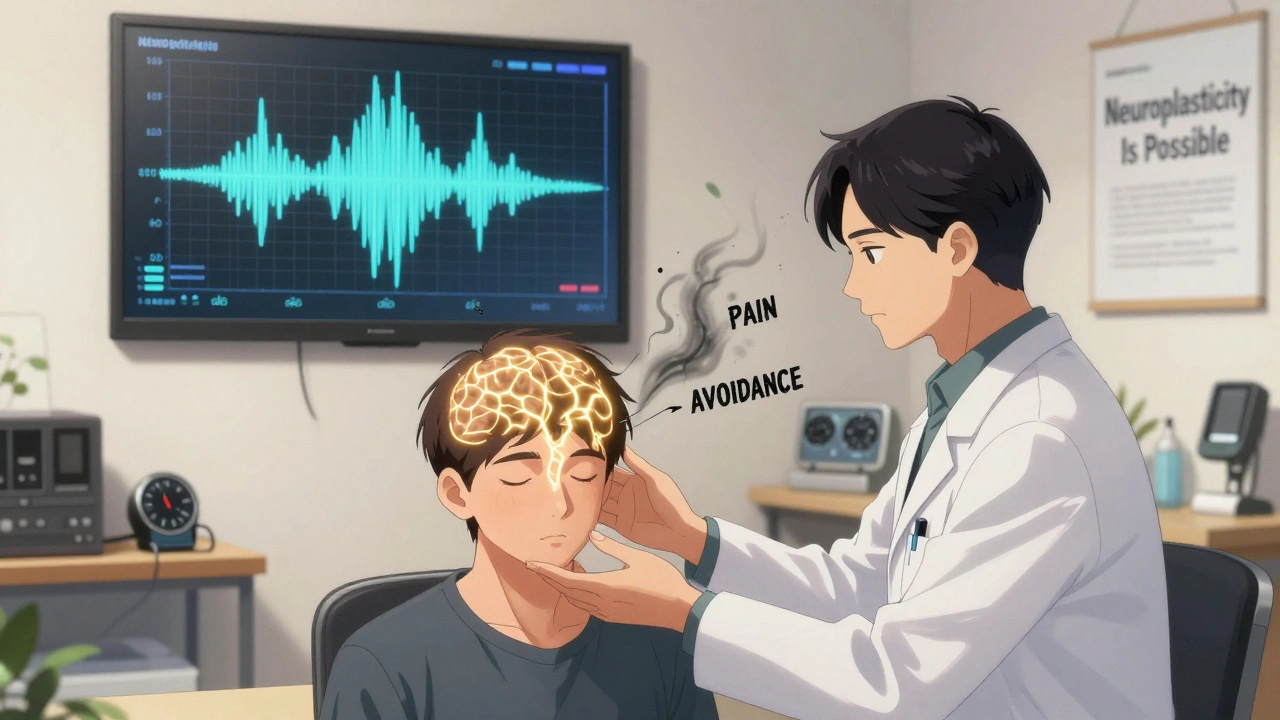
Research points to a shift in the brain’s auditory pathways. Normally, the brain filters out background noise and adjusts how loud things feel. In hyperacusis, that system goes haywire. The limbic system-the part of the brain tied to emotion-gets involved, turning sound into a threat signal. That’s why people with hyperacusis often feel anxious, irritable, or even panicked around noise. It’s not just physical pain-it’s emotional distress too.
One key insight: hyperacusis doesn’t correlate with hearing loss. A 2016 study of 850 people found no link between how well someone hears and how sensitive they are to sound. That means you can have perfect hearing and still be crippled by everyday noise.
What Doesn’t Work
Many people try to protect themselves by wearing earplugs or noise-canceling headphones. But that makes things worse. Avoiding sound doesn’t help-it trains your brain to notice it even more. Studies show that people who isolate themselves from noise see their symptoms increase by 30-40% over time.
Medications like antidepressants or anti-anxiety drugs sometimes help with the emotional side, but they don’t fix the core issue. You might feel calmer, but the sound still hurts. Hearing aids? Most are useless here. They’re built to amplify quiet sounds for people with hearing loss, not to gently retrain an overactive brain.
Even silence isn’t the answer. The more you hide from sound, the more your nervous system becomes wired to react. It’s like holding your breath to avoid a panic attack-it only makes the next one worse.
Desensitization Therapy: The Science Behind the Treatment
The only proven way to reverse hyperacusis is desensitization therapy. Developed in the 1980s by Dr. Pawel Jastreboff, this approach doesn’t block sound-it reintroduces it, slowly and safely, to rewire the brain.
The therapy uses small, controlled sound exposure. Patients wear lightweight sound generators-devices that play low-level broadband noise, like static or soft rain-for 4 to 8 hours a day. The volume starts barely above the person’s hearing threshold, often so quiet they’re not even sure it’s on. From there, the level increases by just 1-2 decibels per week.
This isn’t about getting used to loud noises. It’s about teaching the brain that sound isn’t dangerous. Over months, the brain learns to stop overreacting. The auditory system recalibrates. The emotional response fades. The pain lessens.
Studies show 60-80% of people who stick with the full protocol see major improvement. One 2014 study in the American Journal of Audiology found that after 12 months, most patients could tolerate sounds they once avoided-restaurants, traffic, conversations-without discomfort.
How the Therapy Works Day to Day
It’s not glamorous. It’s slow. It’s frustrating. Most people start at sound levels so low they can barely hear them-sometimes just 10-15 dB above their threshold. That’s quieter than a whisper. They wear the device while doing quiet tasks: reading, working on the computer, or watching TV.
Progress is measured in tiny steps. A 2 dB increase might take weeks. A patient might spend 3 months getting used to 50 dB-the sound of a quiet room-before moving to 60 dB, like a normal conversation. After 6-9 months, many can handle 70 dB, which is a vacuum cleaner or busy street.
The therapy isn’t just about the device. It’s paired with counseling to address fear and anxiety. If your brain thinks a door slam means danger, you need to learn it doesn’t. That’s where cognitive behavioral therapy (CBT) helps. Combining sound therapy with counseling boosts success rates by 35%.
Success stories are real. One Reddit user, SoundSufferer2020, said after 11 months of daily therapy, they could finally go to a grocery store without earplugs. Another, on the Hyperacusis Research forum, said they went from avoiding parties to attending their niece’s wedding.
Who Benefits Most?
Desensitization therapy works best for people with noise-induced hyperacusis-like musicians or factory workers-who developed it after loud exposure. Success rates here are 75-85%. It also helps those with post-acoustic trauma, like from a gunshot or explosion.
But it’s less effective for people with neurological conditions. Those with Ramsay Hunt syndrome, superior canal dehiscence, or severe migraines often don’t respond. And if someone also has misophonia-the intense anger triggered by specific sounds like chewing-the therapy needs to be adjusted. Studies show success drops to around 40% in these cases.
Age doesn’t matter. People from teens to seniors have improved. But motivation does. Only about half of those who start finish the full 12-18 months. The biggest reason? Frustration. Progress is so slow that many quit before they see results.
Common Mistakes That Cause Failure
Most people who fail don’t fail because the therapy doesn’t work. They fail because they do it wrong.
Starting too loud is the #1 mistake. If you begin at a volume that’s even slightly uncomfortable, you’ll worsen your symptoms. One 2021 survey found that 33% of people who quit therapy did so because they started too high.
Another mistake: self-managing without professional help. Audiologists use precise tools to measure your loudness discomfort level (LDL) across frequencies. Without that, you’re guessing. People who work with a certified hyperacusis specialist are nearly twice as likely to finish treatment as those who try on their own.
And skipping the counseling? That’s another red flag. Sound therapy alone works-but combining it with emotional support cuts relapse risk and speeds progress.

Tools and Resources
You don’t need expensive gear. Sound generators cost $200-$800. Some apps claim to help, but most are poorly designed. Look for devices with precise volume control and broadband noise output-not music or tones.
Use a sound level meter app to check real-world noise. A quiet library is 40 dB. A refrigerator hum is 45 dB. A normal talk is 60 dB. Knowing these helps you track progress.
Support matters. Online communities like Tinnitus Talk and the Hyperacusis Research Limited forum have thousands of members sharing sound files, progress trackers, and encouragement. You’re not alone.
What’s New in 2025?
The field is evolving. In 2023, the FDA cleared the Lenire system, which pairs sound with gentle tongue stimulation to calm the brain’s overactive response. Early trials showed 67% improvement. It’s not widely available yet, but it’s a sign of where things are headed.
MIT and other labs are testing AI-driven sound therapy that adapts in real time based on your stress levels. Imagine a device that knows when you’re tense and lowers the volume automatically. Early results show 23% faster progress.
But the core hasn’t changed. The Jastreboff model-developed over 30 years ago-is still the gold standard. It works because it treats the brain, not just the ears.
When to Seek Help
If everyday sounds hurt, if you’re avoiding social events, or if you’ve started wearing earplugs everywhere, it’s time to see an audiologist who specializes in hyperacusis. Most general clinics don’t offer this therapy. You need to find someone trained in desensitization protocols.
Don’t wait. The longer you avoid sound, the harder it gets to reverse. But with the right approach, recovery is possible. You don’t have to live in silence.
Realistic Expectations
This isn’t a quick fix. It takes 9-18 months. There will be days you feel worse. There will be weeks where you see no change. But if you stick with it, the results are lasting.
Success isn’t about hearing everything perfectly. It’s about no longer fearing sound. It’s about going to a café without panic. It’s about sleeping through a dog barking. It’s about reclaiming your life from noise.
Hyperacusis is rare, but it’s real. And it’s treatable.
Can hyperacusis go away on its own?
Rarely. While some mild cases improve slightly over time, most people need active treatment. Avoiding sound makes it worse. Without therapy, the brain keeps reinforcing the fear response to noise. Spontaneous recovery is uncommon and usually incomplete.
Is hyperacusis the same as tinnitus?
No. Tinnitus is hearing ringing, buzzing, or hissing when no external sound is present. Hyperacusis is having real sounds feel painfully loud. Many people have both, but they’re different conditions with different treatments. Tinnitus therapy focuses on masking or habituation to phantom noise. Hyperacusis therapy retrains the brain’s response to actual sound.
Do earplugs help with hyperacusis?
Not long-term. Using earplugs to block noise may feel helpful in the moment, but it trains your brain to become more sensitive. Studies show people who rely on ear protection see their symptoms worsen by 30-40% over time. The goal isn’t to block sound-it’s to safely reintroduce it.
How long does desensitization therapy take?
Most people need 12 to 18 months of daily sound exposure to see major improvement. Some notice small changes after 3-6 months, but full tolerance usually takes longer. The average treatment duration is 12.7 months based on clinical data. Patience and consistency are key.
Can children get hyperacusis?
Yes. Children can develop hyperacusis after ear infections, head injuries, or exposure to loud noises. It’s often overlooked because kids may not describe the pain clearly. Symptoms include covering ears, crying at normal sounds, or avoiding school events. Therapy works for children too, but it requires parental involvement and adjusted protocols.
Is hyperacusis permanent?
No. With proper treatment, most people regain normal sound tolerance. Even those with long-standing cases have improved after years of therapy. The brain’s ability to adapt-neuroplasticity-means recovery is possible at any age. Without treatment, symptoms may persist or worsen, but they’re not irreversible.
What’s the success rate of desensitization therapy?
When done correctly-with professional guidance and consistent daily practice-60-80% of patients report significant improvement. Success is highest for noise-induced cases and lowest for those with neurological conditions. About 20-30% of people quit early due to frustration, but those who complete the full program have lasting results.
9 Responses
Ugh I tried earplugs for months and it just got worse. Finally saw an audiologist who knew what they were doing and now I can actually go to Starbucks without wanting to scream. Still takes work but wow what a difference.
India has no doctors for this shit my cousin got it after a wedding dj and now he cant even watch tv the whole family suffers
no one believes him its just noise why dont he just ignore it
we dont have money for fancy therapy
Typical American medical scam. Back in my day we just toughed it out. No whining. No sound generators. You hear a noise you deal with it. This therapy is just another way to drain your wallet.
The real tragedy isn't the condition itself but how the medical industrial complex turns neuroplasticity into a product. We've reduced healing to a 12-month subscription service
What if the brain isn't broken but screaming for silence in a world that never stops yelling
Desensitization isn't therapy it's surrender to noise
People who quit therapy are just weak. If you can't handle 8 hours of static you don't deserve to live in society. This isn't a sympathy card it's a neurological reset. Stop making excuses.
Important note: the Lenire system isn't FDA-approved for hyperacusis alone-it's cleared for tinnitus with hyperacusis comorbidity. Many clinicians misrepresent this. Also, AI-adaptive systems are still in phase 2 trials. Don't confuse cutting-edge research with clinically available tools. Stick to Jastreboff if you want proven results. And yes, counseling is non-negotiable. The auditory-limbic loop requires dual intervention.
OMG I'm so glad someone finally wrote this!! 🥹 I went from hiding in my room to attending my sister's wedding!! I cried during the first song because it didn't hurt anymore 😭 The therapy is slow but worth it. Also, the sound generators from SoundBridges? Best $300 I ever spent. No more earplugs, no more anxiety. Just peace. 🌿
Respect for the scientific approach outlined. However, in traditional Indian healing, sound is not an enemy but a vibration to be harmonized. Pranayama and mantra repetition have been used for centuries to recalibrate auditory perception. The brain responds to intention as much as decibels. Perhaps integration of ancient wisdom with modern protocols could yield even greater outcomes.
om guru you just made me cry. I tried chanting and it actually helped a little. Not cure but… softer. Maybe we need both.