
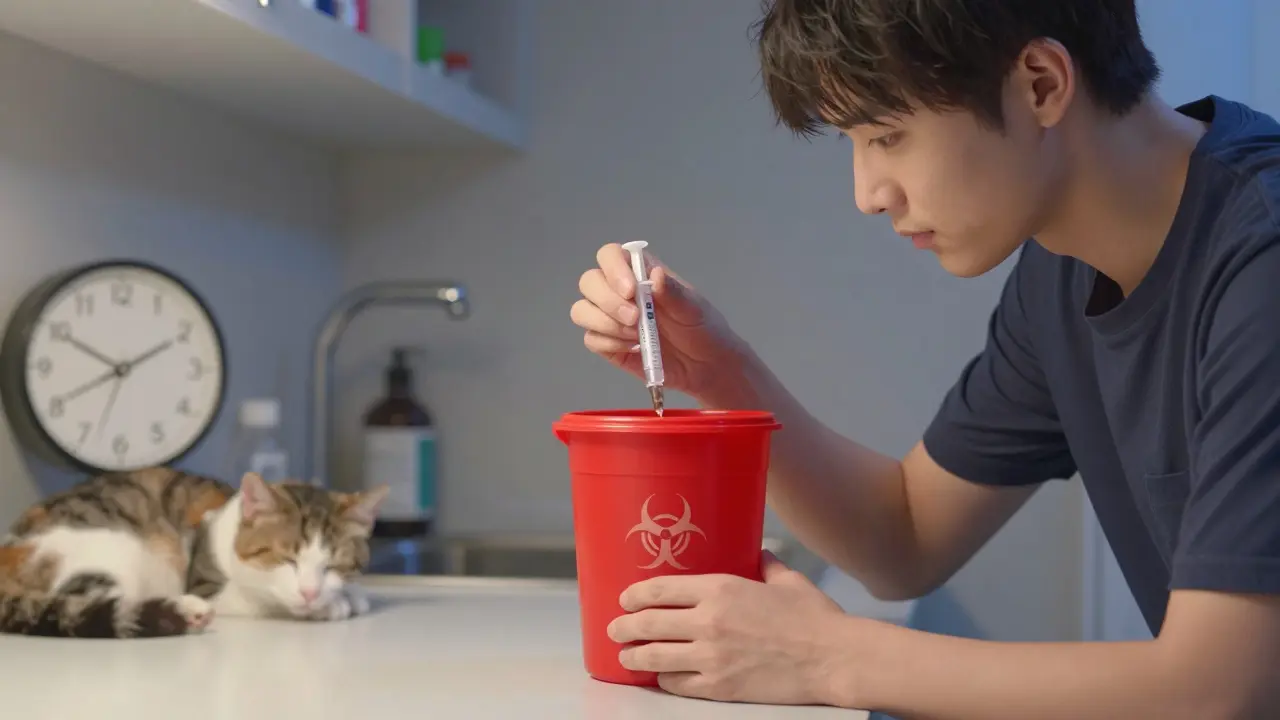
Every year, millions of people in the UK and around the world use injectable medications - insulin, blood thinners, allergy treatments, and more. But what happens after the needle is used? If you toss it in the trash, flush it down the toilet, or stick it in an old soda bottle, you’re putting yourself, your family, and waste workers at serious risk. Sharps disposal isn’t just a good idea - it’s a safety requirement. And it’s easier than you think.
Why Proper Sharps Disposal Matters
A used needle isn’t just trash. It’s a potential carrier of bloodborne pathogens like hepatitis B, hepatitis C, and HIV. The risk isn’t theoretical. In healthcare settings, nearly 400,000 needlestick injuries happen every year in the US alone - and many of those occur because sharps weren’t disposed of properly. At home, the problem is even more common. The FDA reports that 68% of sharps-related injuries in households happen when people try to throw needles in regular bins. That’s not just dangerous - it’s illegal in many places.Even if you’re not a healthcare worker, you’re part of the chain. Trash collectors, sanitation workers, and even your kids could be exposed if a needle ends up in the wrong place. A single needle in a household bin can lead to a lifetime of medical monitoring, anxiety, and potential infection. Proper disposal isn’t about rules - it’s about protecting people you care about.
What Counts as a Sharp?
Not every sharp object is obvious. Here’s what you need to treat as hazardous:- Needles (used with syringes)
- Syringes (even if the needle is removed)
- Lancets (used for blood glucose testing)
- Auto-injectors (like EpiPens after use)
- Insulin pens with attached needles
- Dental needles and scalpels (if used at home)
- IV catheters with sharp ends
Even if the needle is detached, the syringe barrel still counts as a sharp. Don’t assume it’s safe just because you took the needle off. Always treat the whole device as hazardous.
What You Need: FDA-Cleared Sharps Containers
You can’t just use any container. Regular plastic bottles, yogurt tubs, or coffee cans won’t cut it. They can be punctured, crushed, or opened by accident. Only use containers specifically designed and tested for sharps disposal.These containers are:
- Made of thick, puncture-resistant plastic
- Have a tight, locking lid that won’t pop open
- Marked with the universal biohazard symbol
- Designed to stay upright and not tip over
- Rated to hold up to 3/4 full - never overfill
Popular brands like BD Redi-Sharp, Sharps Compliance Safe•Drop, and Stericycle containers are widely available. A small 1.5-gallon countertop container costs between £7 and £10. Wall-mounted versions for home use run £15-£25. Larger 6-gallon units for heavy users are £30-£45.
Why spend the money? Because the average cost of post-exposure treatment after a needlestick injury is over £2,500. The container is cheaper than the risk.
How to Use a Sharps Container
Follow these steps every single time:- Immediately after use, place the entire device - needle, syringe, pen - into the container. Don’t delay.
- Never try to recap, bend, or break the needle. That’s how most injuries happen.
- Keep the container within arm’s reach while injecting - ideally on a table or counter, not on the floor.
- Close the lid firmly after each use.
- Stop filling when the contents reach the 3/4 mark. Even if it looks like there’s space, stop. Overfilling is the #2 cause of injuries.
- Label the container clearly: "Used Sharps - Do Not Recycle"
Store the container in a safe place - out of reach of children and pets. A high cabinet or locked closet works best. Don’t leave it on the bathroom counter.
Where to Dispose of Full Sharps Containers
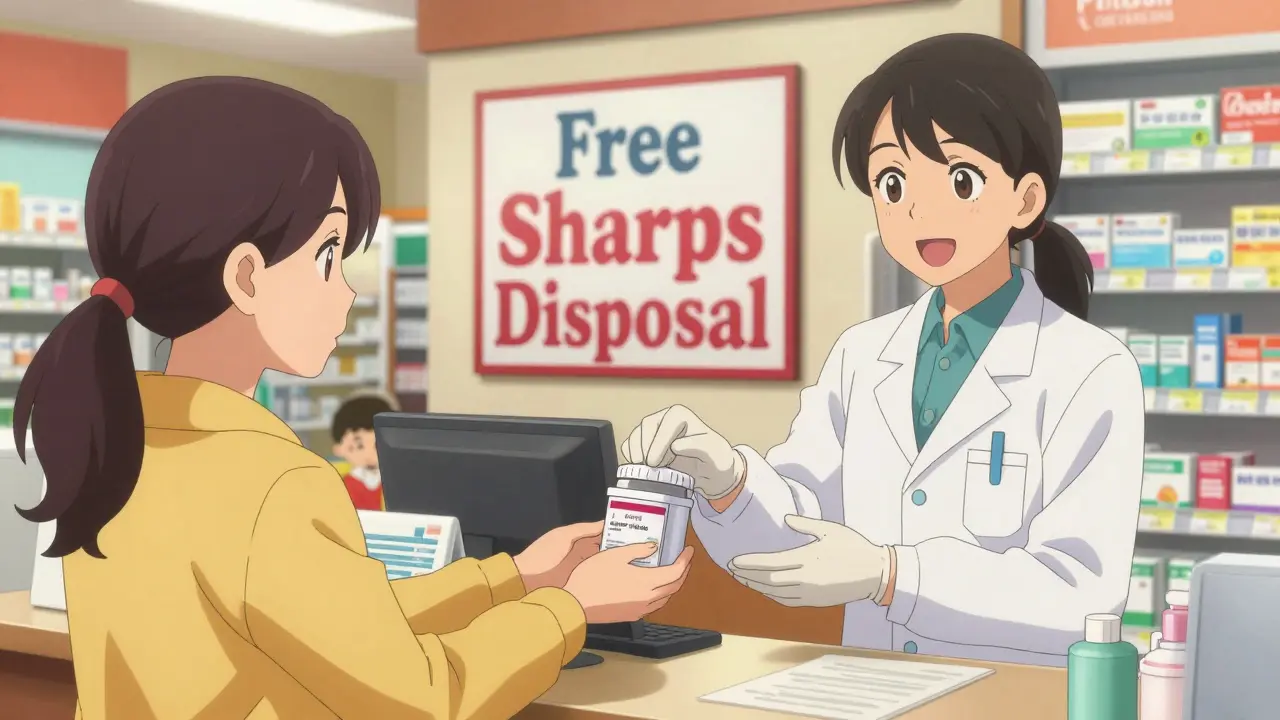
You can’t throw a full sharps container in your regular recycling or trash. But you don’t need to drive miles to find a drop-off point. Here are your options in the UK:- Pharmacies: Most major chains like Boots, Lloyds Pharmacy, and Superdrug offer free sharps disposal drop-off boxes. You bring your sealed container, and they take care of the rest. No appointment needed.
- GP Surgeries: Many local clinics accept sharps containers from patients on long-term injectable therapy. Call ahead to confirm.
- Community Waste Centers: Your local council often runs medical waste collection points. Search your council’s website for "sharps disposal" or "household medical waste".
- Mail-Back Programs: Companies like Sharps Compliance and Stericycle offer prepaid mailers. You seal your container, drop it in the post, and they handle disposal. Cost: around £15-£25 per box.
- Home Healthcare Providers: If you’re on a home care program, your nurse or provider should supply and collect containers as part of your care plan.
Don’t rely on hospitals unless you’re a patient there. Most don’t accept sharps from the public. Stick to pharmacies and council services.
What NOT to Do
Avoid these dangerous mistakes:- Don’t recap needles. Even if you think you’re being careful, 32% of injuries happen during recapping.
- Don’t flush needles. They can clog pipes, damage sewage systems, and end up in rivers or oceans.
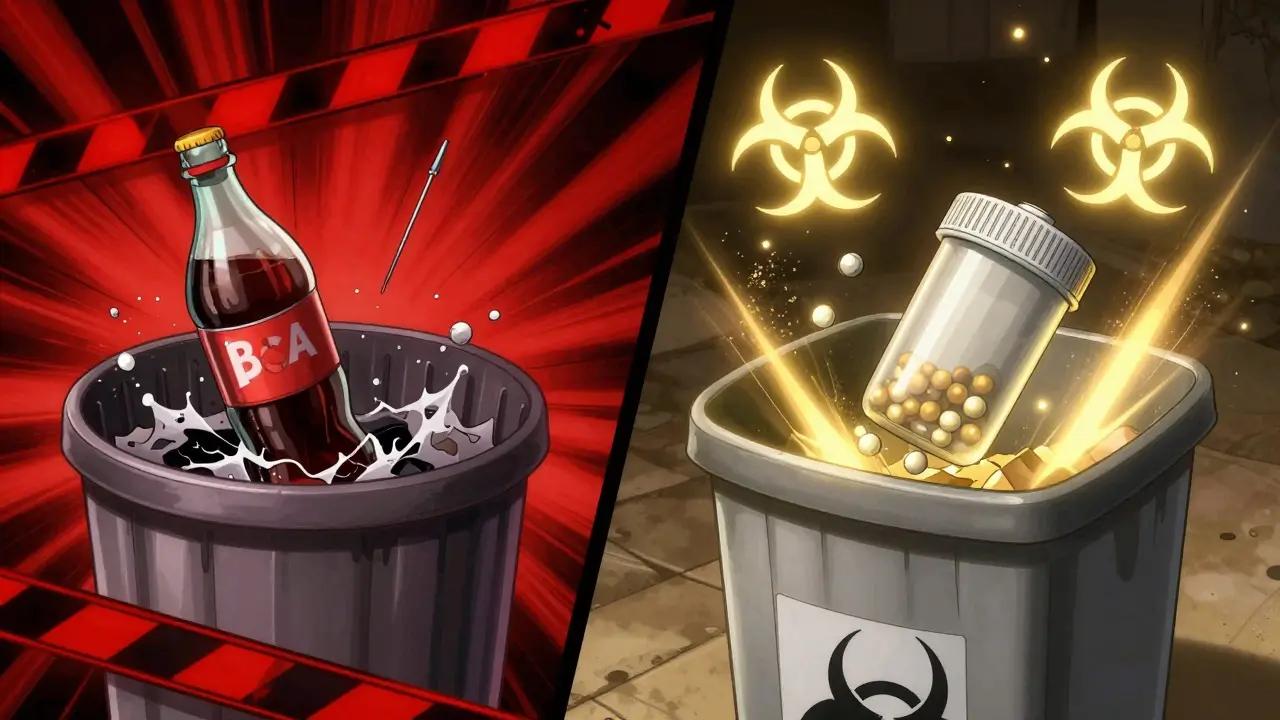
- Don’t use glass jars, plastic bottles, or coffee cans. They break or puncture easily. Even "heavy-duty" containers aren’t designed for sharps.
- Don’t wait until the container is full. If you can see the sharps through the lid or it’s hard to close, it’s time to dispose of it.
- Don’t assume your local recycling bin accepts them. Sharps are hazardous waste - never mixed with household recycling.
Cost and Accessibility: What You Should Know
Yes, sharps containers cost money. But there are ways to reduce the burden:- Many NHS prescriptions for insulin or other injectables include free sharps containers. Ask your pharmacist.
- Charities like Diabetes UK sometimes offer free disposal kits to low-income patients.
- Some local councils provide free or discounted containers to residents on long-term treatment.
- Mail-back programs often have financial assistance options - call their customer service.
If you’re struggling to afford containers, talk to your GP or diabetes nurse. They’ve seen this before. They know the resources.
What’s Changing in 2026?
New rules are coming. By January 2026, the UK is aligning with EU-wide standards for medical waste labeling. All sharps containers must now carry a standardized biohazard symbol and clear disposal instructions. Pharmacies are also expanding their drop-off networks - more locations, longer hours, and better signage.Expect to see more smart containers in the future - ones with fill-level sensors or QR codes that link to disposal instructions. But for now, the basics still work: use the right container, fill it only to the line, and drop it off at a pharmacy.
What to Do If You’re Injured
If you or someone else gets stuck by a used needle:- Wash the area immediately with soap and running water.
- Do not suck or squeeze the wound.
- Go to your nearest A&E or call NHS 111.
- Try to get information about the needle - was it used for insulin? Blood thinner? That helps doctors assess risk.
- Follow up with a blood test. Post-exposure prophylaxis can prevent infection if started quickly.
Don’t wait. Even if you feel fine, infections like hepatitis B can take weeks to show symptoms. Acting fast saves lives.
Can I reuse a sharps container?
No. Sharps containers are single-use only. Even if they look clean, they’re not designed to be sterilized at home. Reusing them increases the risk of punctures and leaks. Always replace your container when it’s full.
Can I dispose of sharps in my household recycling bin?
Never. Sharps are classified as hazardous medical waste. Putting them in recycling bins endangers sorting workers and can contaminate recyclable materials. Always use a designated sharps disposal service.
What if I live in a rural area with no nearby drop-off points?
Mail-back programs are your best option. Companies like Sharps Compliance and Stericycle offer prepaid return envelopes. You seal your full container, drop it in the post, and they handle disposal. Some local councils also offer home collection services for residents on long-term treatment - call your council’s waste department to ask.
Do I need a prescription to get a sharps container?
No. You can buy sharps containers over the counter at pharmacies without a prescription. However, if you’re on an NHS prescription for insulin or another injectable medication, you may be entitled to free containers. Ask your pharmacist or GP.
Can I dispose of sharps from pets at the same drop-off point?
Yes. Most pharmacy and council sharps collection points accept sharps from pets, including insulin needles for diabetic dogs or cats. Treat them the same way - use a proper container, seal it, and drop it off. Never put pet sharps in the trash.
12 Responses
This is life-saving info. I wish more people knew this.
Let’s be real-most people just toss needles in a soda bottle and call it a day. The fact that this even needs an article is embarrassing. You’re not a doctor, you’re not a nurse, you’re just a person who doesn’t want to die because someone else was lazy. And yet here we are.
Thank you for this. 🙏 My aunt’s been on insulin for 15 years and she finally started using a proper container after I showed her this. She says she feels safer now. Small wins, y’know? Also-pet sharps count too! My dog’s diabetic and we drop his needles off at Boots. No one bats an eye. 🐶💉
DO NOT RECAP!!! DO NOT FLUSH!!! DO NOT USE A COFFEE CAN!!! I’ve seen people do all three-and yes, one of them was my cousin’s roommate who thought ‘it’s just one needle’-and then he got a needlestick at a party and spent three weeks in quarantine! PLEASE JUST USE THE CONTAINER!!! IT’S £7!!!
My grandma used to keep her needles in an old Tic Tac container. I thought she was joking. She wasn’t. I had to sit her down with a Redi-Sharp and a cup of tea. Now she says it feels ‘more dignified.’ I cried a little. This stuff matters.
Of course you’re telling people to buy expensive containers. Meanwhile, people in Nigeria are reusing syringes because they can’t afford to throw them away. This is rich. You’re preaching safety to people who are just trying to survive. What about systemic access? What about equity? Or is this just another privileged guilt trip?
It is imperative that you understand, with absolute clarity, that the improper disposal of sharps constitutes a gross violation of public health protocol-regardless of your socioeconomic status, geographic location, or personal convenience. This is not a suggestion. It is a biological imperative. You are not ‘too poor’ to be responsible. You are simply negligent.
why do u need special container? just tape the needle and throw in bin. no one cares. also why so many rules? too much drama.
There’s something quietly beautiful about the idea that caring for someone else’s safety can be as simple as using a plastic box with a lid. We’re taught to be independent, to manage our own care-but this? This is community care. It’s not about rules. It’s about not letting someone else get hurt because you were in a hurry.
I used to think this was overkill until my neighbor’s toddler found a needle in the backyard after someone dumped their old insulin pen in the bushes. That child spent three days in the hospital getting tested for everything. I didn’t even know the neighbor was diabetic. I just thought they were ‘just tossing it.’ Now I carry a sharps container in my car. I leave them at bus stops, in park benches, next to community centers. I’ve handed out over 80 of them. It’s not about being perfect-it’s about being present. And honestly? If you’re reading this and you’ve ever tossed a needle in the trash-you’re not a bad person. You just didn’t know. Now you do. So go get a container. It’s cheaper than a lifetime of what-ifs.
Brilliant, comprehensive guide. 🇬🇧 I’ve worked in community health for 18 years, and this is exactly the clarity we need. Pharmacies in the UK are doing a tremendous job expanding access-Boots now has drop boxes in 98% of their stores. And yes, pet sharps are accepted. I’ve seen diabetic cats in rural Scotland get the same care as humans. That’s progress. Let’s keep pushing for universal access. 💪💉
It is not merely advisable-it is an ethical, legal, and moral obligation-to utilize only FDA-cleared, biohazard-labeled, puncture-resistant, lockable containers for the disposal of any and all sharps-related medical waste. Any deviation from this standard constitutes an act of reckless endangerment, and to suggest otherwise is not only irresponsible-it is indefensible. The fact that this requires explanation in 2026 is a national disgrace.