
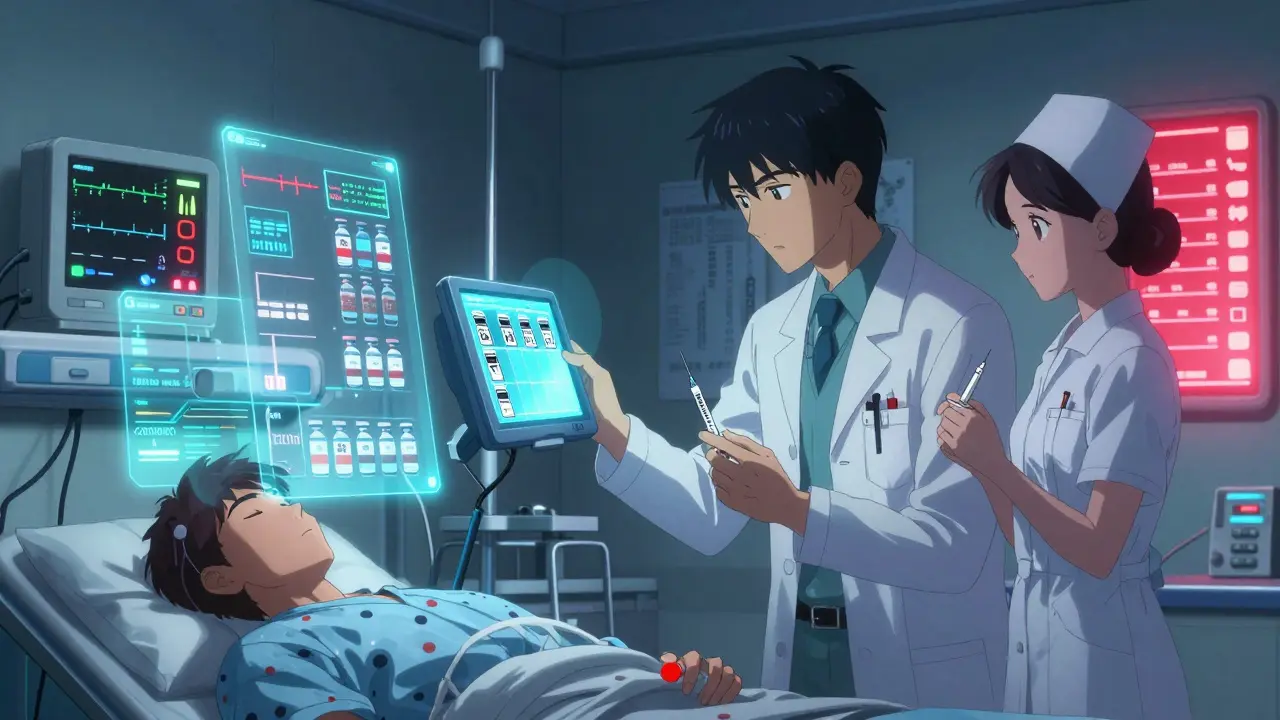
When a critical medication expires, it’s not just a paperwork issue-it’s a patient safety crisis. Imagine a ventilated ICU patient on fentanyl who suddenly needs a new painkiller because the vials are past their date. If you swap it out with the wrong alternative, you could trigger withdrawal, respiratory depression, or even death. This isn’t hypothetical. In 2024, over 42% of drug shortages in U.S. hospitals involved critical care medications, and expired stock makes up a growing share of those cases. The good news? There’s a proven, step-by-step way to handle this without panic.
Start with the Three-Tiered Replacement System
The American Society of Health-System Pharmacists (ASHP) built a clear framework for this exact problem. It’s called the three-tiered system: 1st line, 2nd line, 3rd line. This isn’t just a suggestion-it’s the standard in top hospitals. For example, if your neuromuscular blocker (like cisatracurium) expires, here’s how it breaks down:- 1st line: Cisatracurium (if still available)
- 2nd line: Rocuronium or vecuronium
- 3rd line: Atracurium or pancuronium
Validate Before You Substitute
Before you swap anything, stop. Confirm the expiration. Check the lot number. Verify the quantity. A lot of teams jump to replacement because they assume the med is gone-but sometimes, it’s just mislabeled or stored wrong. One hospital in Ohio found 17 expired vials of midazolam that were actually still stable because they were kept in a cooler than standard storage. Don’t assume. Test. Check your inventory system. Look at the manufacturer’s stability data if you can. The FDA’s 2025 draft guidance on shelf-life extension says many drugs remain effective months past their printed date if stored properly. Don’t throw out meds prematurely.Know Who’s Affected
Not all patients are the same. A 78-year-old with kidney failure on morphine needs a different replacement than a 25-year-old trauma patient on fentanyl. Start by identifying the patient population impacted. Are these ICU patients on continuous infusions? Are they on multiple sedatives? Are they on chronic pain meds that can’t be interrupted? If you replace a chronic medication like metoprolol with a different beta-blocker without adjusting the dose, you could cause bradycardia or heart failure. If you stop a seizure med like levetiracetam and substitute it with phenytoin without monitoring levels, you risk toxicity. Always ask: What happens if this drug is stopped suddenly? Withdrawal, rebound hypertension, seizures-these aren’t side effects. They’re preventable disasters.Use the Seven-Step Process
Top-performing hospitals follow a strict workflow. Here’s what it looks like:- Validate expiration: Confirm the drug is truly expired, not just flagged incorrectly.
- Check remaining stock: How much is left? Is it enough to last until replacement arrives?
- Identify affected patients: List every patient on that med. Don’t guess-pull it from your EHR.
- Select alternatives: Use your tiered list. Don’t improvise. If you don’t have one, build it now.
- Assess cost and supply: Is the alternative affordable? Is it in stock? Will it be available next week?
- Update systems: Change order sets, pharmacy alerts, and barcoding rules. If your system still auto-populates the expired drug, you’re setting up a mistake.
- Monitor closely: Track vital signs, sedation scores (RASS), pain scores, and lab values for 48-72 hours after the switch. Document everything.

Pharmacists Are Your Lifeline
This isn’t a task for nurses or doctors alone. It’s a pharmacist’s job. Critical care pharmacists are trained to understand drug interactions, pharmacokinetics, and therapeutic equivalence. In hospitals with full-time ICU pharmacists, mortality dropped by 18.7% and ICU stays shortened by 2.3 days. Why? Because they catch what others miss. They know that switching from hydromorphone to oxycodone isn’t just a dose change-it’s a whole new absorption profile. They know that switching from propofol to dexmedetomidine requires adjusting sedation goals. If your hospital doesn’t have a pharmacist on the ICU team, push for it. The American College of Clinical Pharmacy says this isn’t optional anymore-it’s the standard of care.What If You Don’t Have a Protocol?
Many community hospitals still don’t have formal replacement guidelines. That’s dangerous. If you’re in one of them, start here:- Build your own tiered list for the top 10 critical meds your unit uses (fentanyl, midazolam, vasopressin, insulin, etc.)
- Use ASHP’s published guidelines as your template
- Get input from your pharmacy team, ICU nurses, and intensivists
- Run a mock drill: pretend your most-used drug just expired. How long does it take to respond?
- Train everyone on the new protocol. Include it in orientation.
Technology Can Help-But Doesn’t Replace Judgment
AI tools are starting to help. CU Anschutz’s pilot system analyzes 147 patient variables-age, kidney function, liver enzymes, current meds, vitals-and suggests the best alternative. It matched expert pharmacist choices 94.7% of the time. But it’s not magic. It needs clean data. If your EHR has wrong allergies or missing labs, the AI will give bad advice. Use tech as a helper, not a crutch. Always double-check.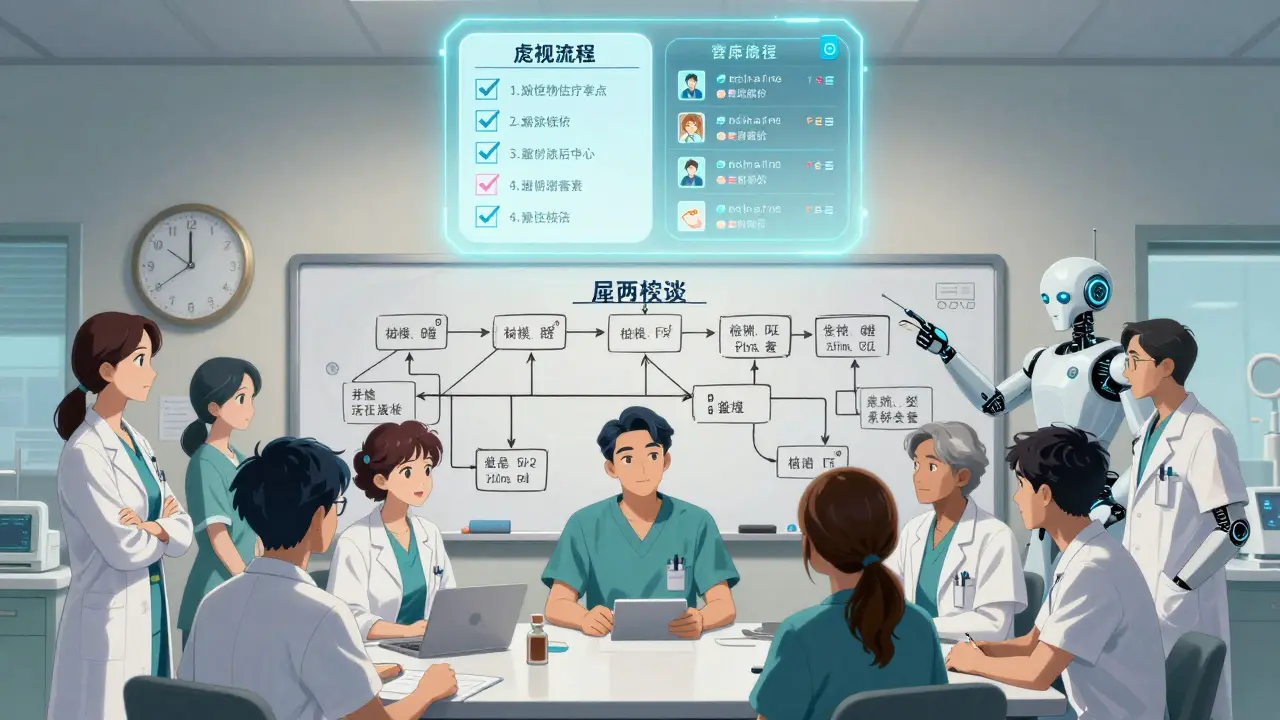
Prevention Is Better Than Replacement
The best way to avoid this whole mess? Prevent expiration in the first place. Top hospitals use automated inventory systems that send 30-day expiration alerts. They rotate stock using FIFO (first in, first out). They track usage patterns so they don’t over-order. One hospital cut expired meds by 89% in 18 months just by using these simple steps. If your pharmacy still uses manual logs or spreadsheets, upgrade. The global medication safety tech market is growing fast-$7.89 billion by 2029. You don’t need a fancy system. Even a simple barcode scanner with expiration tracking cuts errors.Final Rule: Never Guess. Always Verify.
There’s no shortcut. Every time you replace a critical med, ask:- Is this the right drug for this patient?
- Is the dose adjusted?
- Have I checked for interactions?
- Am I monitoring for withdrawal or toxicity?
- Have I documented why I chose this alternative?
What should I do if a critical medication expires and no alternative is available?
If no therapeutic alternative exists, contact your regional poison control center or the FDA’s Drug Shortages hotline immediately. In the meantime, stabilize the patient with supportive care-fluids, oxygen, monitoring. Do not use non-standard or off-label substitutes without explicit guidance from a clinical pharmacist or toxicologist. In extreme cases, hospitals may request emergency compassionate use of a drug from another facility’s inventory under FDA’s expanded access program.
Can expired medications still be used in emergencies?
No. Expired medications are not approved for use, even in emergencies. While some drugs retain potency past their expiration date under ideal storage, there’s no guarantee. The risk of reduced efficacy or harmful degradation outweighs any potential benefit. Regulatory bodies like the FDA and TGA (Australia) strictly prohibit this practice. Always replace expired drugs with approved alternatives.
Why do some hospitals have better replacement protocols than others?
Academic medical centers typically have dedicated pharmacists, automated inventory systems, and formal committees that review medication protocols. Community hospitals often lack these resources. In 2024, 89% of academic hospitals had formal replacement guidelines, but only 42% of community hospitals did. The gap comes down to staffing, funding, and prioritization-not clinical knowledge. Smaller hospitals can build simple, effective protocols using free ASHP templates.
How do I know if an alternative drug is therapeutically equivalent?
Therapeutic equivalence means the alternative produces the same clinical effect with similar safety. Check the ASHP tiered lists, Lexicomp, or Micromedex for published comparisons. Look for data on onset, duration, metabolism, and side effect profiles. For example, morphine and hydromorphone are both opioids, but hydromorphone is 5-7 times more potent. A direct 1:1 swap is dangerous. Always adjust doses based on published conversion tables.
What’s the most common mistake when replacing expired critical meds?
The most common error is assuming dosing is interchangeable. For example, switching from fentanyl to hydromorphone without adjusting for potency leads to underdosing or overdose. Another is failing to monitor for withdrawal after stopping a chronic opioid or benzodiazepine. Patients on long-term sedatives can go into delirium or seizures if stopped abruptly. Always taper or use bridging agents if needed.
How can I convince my hospital to invest in better medication tracking systems?
Use data: Hospitals with automated expiration alerts reduce expired meds by up to 80%. Fewer expired drugs mean fewer errors, shorter stays, and lower readmission rates. CMS penalizes hospitals with medication-related readmissions over 15%. The cost of one preventable error can exceed $50,000. A basic barcode system with expiration alerts costs less than $10,000 and pays for itself in months.
12 Responses
Look, if you’re still using paper logs to track expiration dates in 2025, you’re not just behind-you’re a liability. I’ve seen ICUs where the pharmacy team had to manually cross-reference lot numbers like it’s 1998. The fact that this post even needs to exist is a crime. Automated inventory systems aren’t a luxury-they’re the bare minimum. And if your hospital doesn’t have a critical care pharmacist on rotation? Fire someone. Someone’s got to be accountable.
Really appreciate this breakdown. I work in a small community hospital, and we’ve been scrambling since our fentanyl ran out last month. We didn’t have a tiered list, so we winged it-and one patient had mild withdrawal. I built a draft using ASHP’s template and ran it by our pharmacy tech. She cried. Not because she was upset-because she’d been begging for this for two years. Small wins matter. Let’s stop pretending ‘we’re too busy’ to be safe.
So let me get this straight-we’re all now required to be clinical pharmacists on top of our actual jobs? 😅 I mean, I get it, I really do. But if I have to memorize 147 patient variables just to swap out a vial of midazolam, I’m gonna start carrying a pocket calculator and a PhD in pharmacokinetics. Just kidding. Sort of. Can we please automate the damn thing before I start dreaming in Lexicomp?
AMERICA IS DYING BECAUSE OF LAZY HOSPITALS!!! 🇺🇸💀 This isn’t just about meds-it’s about the collapse of the American healthcare system! We used to be the best! Now we’re letting expired fentanyl kill people because some nurse ‘forgot’ to check the shelf? I’ve had enough! If you don’t have a pharmacist on staff, you’re not a hospital-you’re a death trap! #AmericaFirst #NoMoreExpiredDrugs #FixHealthcareOrDie
This is all just overcomplicating things. Just use whatever’s on the shelf. If the patient dies, it’s not your fault. The drug company should’ve made it last longer. Also, why are pharmacists even involved? Nurses have been doing this for decades. Stop making everything so dramatic.
There’s a critical flaw in the tiered replacement logic: it assumes therapeutic equivalence is binary, when in reality, pharmacodynamic variability across patient phenotypes-especially those with CYP450 polymorphisms or renal/hepatic impairment-is rarely accounted for in ASHP’s generalized schemas. The 94.7% AI match rate cited? That’s only valid under ideal EHR conditions. In real-world settings with missing labs, incomplete med histories, and polypharmacy, the error rate balloons to 28-34%. You need pharmacogenomic integration, not just tiered lists.
Oh my gosh. Oh my gosh. Oh my gosh. I just read this entire thing, and I’m literally shaking. I’ve been in the ICU for 17 years, and I’ve seen so many near-misses-so many! One time, we switched from hydromorphone to morphine without adjusting the dose, and the patient coded. We got lucky. We got lucky. And this post? This post is the reason I still believe in this job. Every single step here? It’s the difference between life and death. I’m printing this out. I’m laminating it. I’m putting it on every nurse’s station. We can’t keep doing this half-heartedly. We owe our patients better.
Bro, in India we don’t even have this problem because we use generics and rotate stock like crazy. Also, we don’t have 147 variables to check-just one: is the patient breathing? If yes, keep going. If no, call the doctor. Simple. Maybe you guys need less tech and more common sense.
This whole thing is a liberal waste of time. We don’t need 7-step processes. We need more American-made drugs. If your hospital can’t keep up, maybe you shouldn’t be in healthcare. The real problem? China. They control the supply chain. We’re letting them poison our patients with expired meds because we’re too weak to make our own. Build the factories. Stop the imports. End the crisis.
While I appreciate the comprehensive nature of the framework presented, I must respectfully note that in low-resource settings, the implementation of such protocols is often constrained by infrastructural deficits, including unreliable electricity, absence of barcode scanners, and limited access to clinical decision support systems. The proposed solutions, while ideal, may inadvertently exacerbate disparities between academic and community hospitals unless accompanied by scalable, low-cost adaptations.
Hey, I’m a nurse in rural Nebraska. We don’t have a pharmacist on staff. We have one pharmacy tech who works 3 days a week. We’ve been using expired midazolam because it’s the only thing we had. I know it’s wrong. But what am I supposed to do? Call the FDA? We don’t even have internet that works. I just want to help people. Can someone tell me what to do without all the fancy words?
Wait-so you’re telling me that the entire medical community has been doing this wrong for decades, and now you’ve got this 7-step, AI-enhanced, pharmacist-dependent, FDA-compliant, ASHP-certified, EHR-integrated, barcode-scanned, 48-hour-monitoring protocol that somehow didn’t exist before 2025? That’s not a solution-it’s a confession that the system was broken all along. And now you’re making it a performance art piece? I’m not impressed. I’m exhausted. Also, why does every hospital need its own tiered list? Can’t we just… standardize? Like, nationally? Oh wait-we can’t. Because capitalism.