
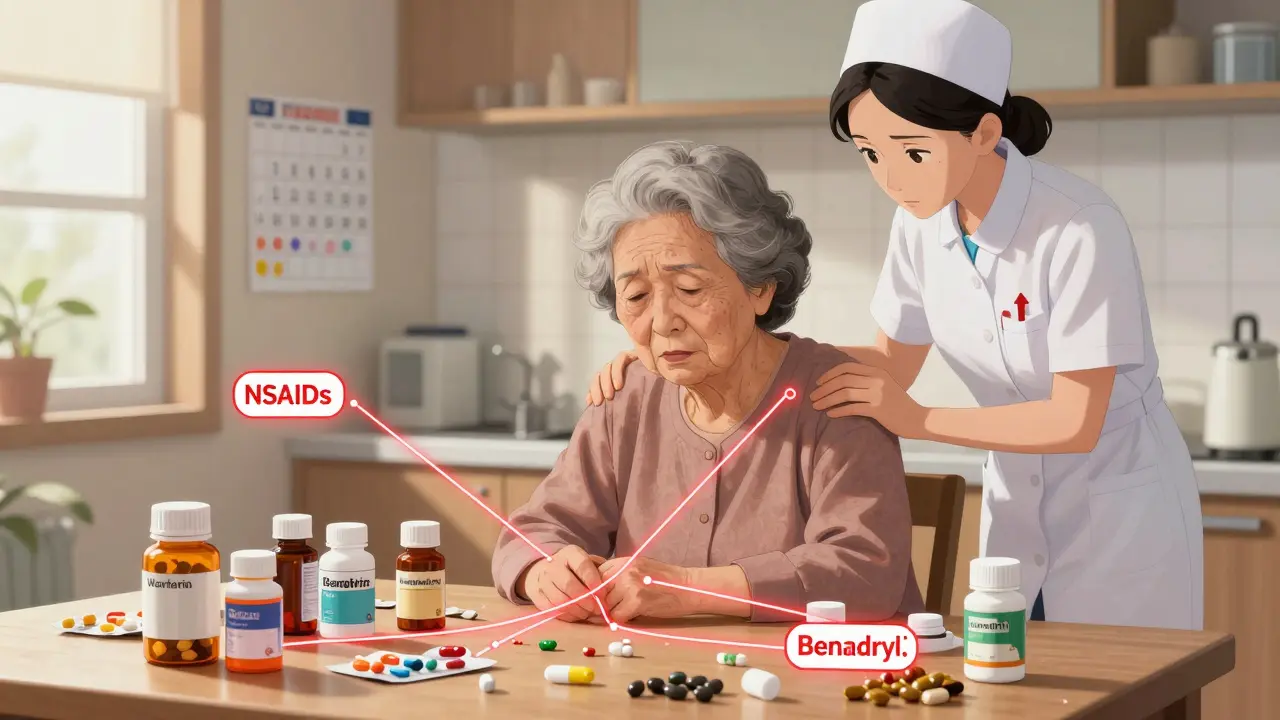
Older adults are at a higher risk of dangerous drug-drug interactions than any other age group. It’s not just about taking more pills-it’s about how the body changes with age, how care gets fragmented, and how little we actually know about what happens when multiple drugs meet in an elderly system. By 2030, one in five Americans will be over 65. Right now, 40% of seniors take five or more medications daily. That’s a recipe for trouble if no one is watching what’s happening between those pills.
Why Elderly Patients Are So Vulnerable
Your body doesn’t process drugs the same way at 75 as it did at 45. Liver enzymes that break down medications slow down. Kidneys filter less efficiently. Fat increases and muscle mass drops, changing how drugs spread through the body. These changes make seniors up to 50% more likely to have an adverse reaction to a drug-even if the dose is "correct." The biggest problem? Polypharmacy. Taking five or more medications isn’t rare-it’s normal. Many seniors see multiple doctors for different conditions: a cardiologist for blood pressure, a rheumatologist for arthritis, a neurologist for memory issues. Each doctor prescribes what they think is best, but rarely talks to the others. One doctor prescribes a blood thinner. Another adds an NSAID for pain. Together, they increase bleeding risk. No one connected the dots.Top Culprits: Which Drugs Cause the Most Harm
Not all medications are equal in risk. The most dangerous interactions happen with drugs that affect the heart and brain. According to research from the PMC, nearly 39% of serious drug interactions involve cardiovascular drugs like warfarin, digoxin, or beta-blockers. Another 29% involve central nervous system drugs like benzodiazepines, antipsychotics, or antidepressants. The American Geriatrics Society’s 2023 Beers Criteria lists 30 drug classes that should be avoided or used with extreme caution in older adults. These include:- Nonsteroidal anti-inflammatory drugs (NSAIDs) like ibuprofen and naproxen-high risk of kidney damage and bleeding
- Anticholinergics such as diphenhydramine (Benadryl) and oxybutynin-linked to confusion, memory loss, and falls
- Benzodiazepines like lorazepam and diazepam-increase fall risk by over 50%
- Long-acting sulfonylureas like glyburide-cause dangerous low blood sugar
- Meperidine (Demerol)-can trigger seizures in seniors due to toxic metabolite buildup
Tools That Actually Work: STOPP and Beers Criteria
There are two proven tools doctors can use to catch risky prescriptions before they cause harm: the Beers Criteria and the STOPP criteria. The Beers Criteria is updated every two years by the American Geriatrics Society. It doesn’t just list bad drugs-it gives clear guidance on when to reduce doses based on kidney function. For example, metformin may need a lower dose if a patient’s creatinine clearance falls below 45 mL/min. A 2022 JAMA Internal Medicine study showed hospitals using Beers Criteria reduced preventable hospitalizations by 17.3%. STOPP (Screening Tool of Older Persons’ Potentially Inappropriate Prescriptions) goes deeper. It’s not just about the drug-it’s about the combination. STOPP identifies 114 specific inappropriate prescribing patterns. Examples:- Prescribing a proton pump inhibitor (PPI) long-term without checking for vitamin B12 or magnesium deficiency
- Using an antipsychotic for behavioral symptoms in dementia without trying non-drug options first
- Giving two drugs that both prolong the QT interval (like amiodarone and ciprofloxacin)-risk of deadly heart rhythm
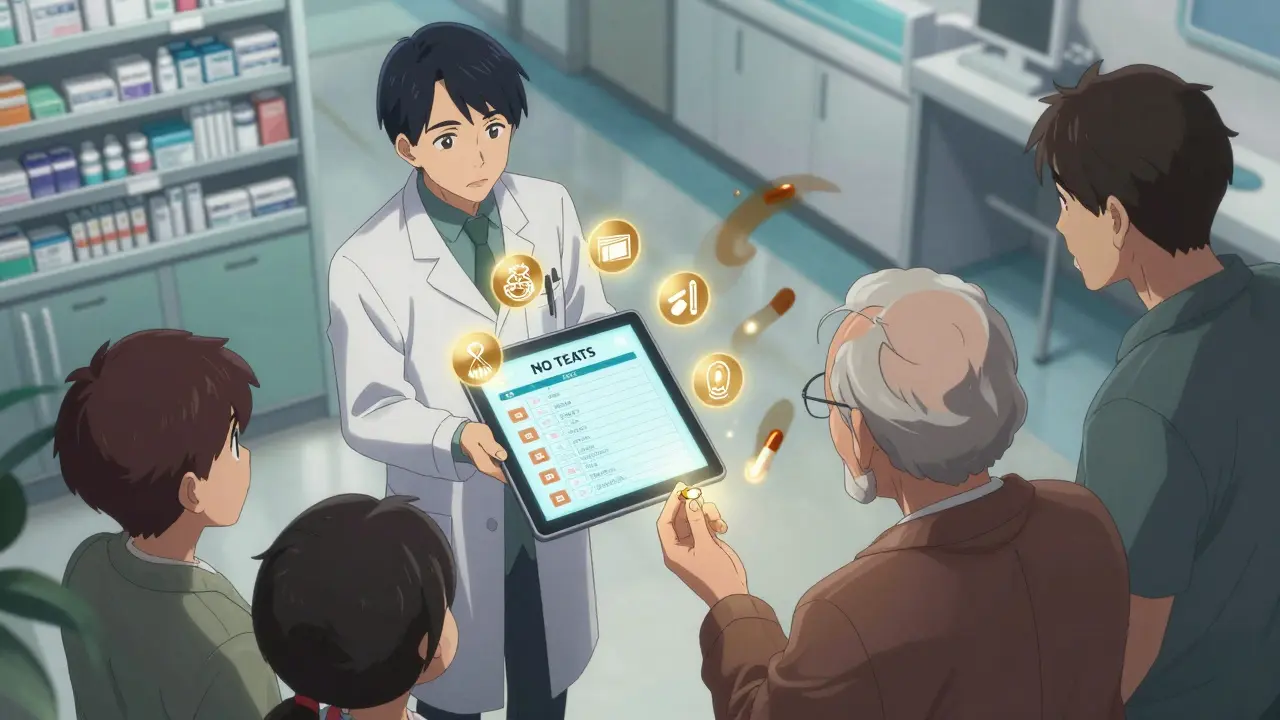
The NO TEARS Framework: A Simple Way to Review Meds
Doctors don’t need fancy software to start making safer decisions. The NO TEARS tool gives a clear checklist anyone can use in five minutes:- Need-is this medication still necessary? Many seniors stay on drugs they were started on years ago for conditions that have since improved.
- Optimization-is the dose right? Many seniors take adult doses even when their kidneys can’t handle it.
- Trade-offs-do the benefits outweigh the risks? Is that statin worth the muscle pain and increased diabetes risk?
- Economics-can the patient afford it? Skipping doses because of cost is a silent killer.
- Administration-is the patient taking it correctly? Pill organizers, vision problems, and confusion make this harder than you think.
- Reduction-can we stop one or more? Often, the safest move is to take something away.
- Self-management-does the patient understand why they’re taking each pill? If not, adherence drops fast.
Communication Breakdowns Are the Real Problem
The biggest cause of dangerous interactions isn’t bad science-it’s bad coordination. More than two-thirds of seniors see multiple doctors and use different pharmacies. One pharmacy may flag a drug interaction. Another won’t. A patient might get a new prescription from an urgent care clinic that has no access to their main doctor’s records. Dr. Darryl R. Richman of the Merck Manual says 42% of preventable adverse events happen during care transitions-like moving from hospital to home, or switching doctors. That’s why medication reconciliation at discharge is critical. Every time a senior is discharged, their full medication list should be reviewed, compared to pre-admission meds, and sent to their primary care provider. The American Academy of Family Physicians recommends spending at least 15 minutes per visit just reviewing medications for patients on five or more drugs. For those on seven or more? Add 25% more time. That’s not extra-it’s essential.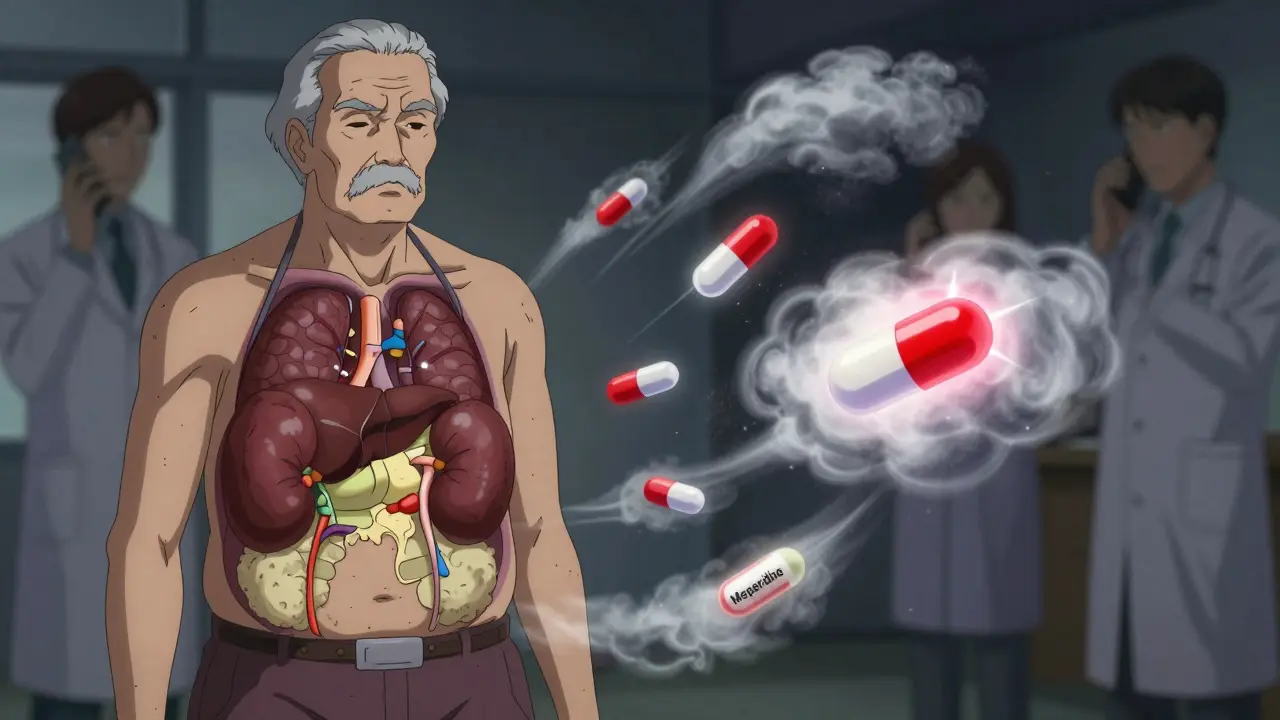
What’s Missing: The Data Gap
Here’s the uncomfortable truth: we don’t really know how most drugs behave in older adults. Clinical trials almost never include them. A 2023 study in the Journal of Clinical Pharmacology found that only 18% of new drug applications between 2018 and 2022 included dedicated pharmacokinetic data for people over 65. Yet seniors make up 40% of users for many drugs. This means we’re guessing. We assume a 70-year-old metabolizes a drug the same way a 35-year-old does. But their liver enzymes are slower. Their kidneys are weaker. Their body fat is higher. That’s not a minor adjustment-it’s a whole different pharmacology. The FDA’s 2022 guidance pushes for more geriatric data in trials, but adoption is slow. And without that data, tools like Beers and STOPP can only do so much. We’re managing risk with incomplete information.What Can You Do?
If you’re caring for an older adult, here’s what works:- Keep a written, up-to-date list of every medication-prescription, OTC, supplement, cream, patch. Bring it to every appointment.
- Ask: "Is this still needed?" and "Can we try stopping one?" Don’t be afraid to challenge the script.
- Use one pharmacy. It helps them track interactions.
- Ask about generic alternatives. They’re often cheaper and just as safe.
- Watch for signs of trouble: confusion, dizziness, falls, nausea, unusual fatigue. These aren’t just "getting older." They might be drug reactions.
- Ask for a medication review. Many Medicare Advantage plans offer free Medication Therapy Management (MTM) services. In 2022, 11.2 million beneficiaries used it-and saw a 15.3% drop in hospitalizations.
The Future: AI and Better Guidelines
The good news? Change is coming. AI-powered clinical decision tools are now in 47% of U.S. hospitals-up from 22% in 2020. These systems can scan a patient’s full medication list and flag dangerous combinations in seconds, even if the drugs come from different providers. The 2025 update to the Beers Criteria will include more drug-disease interactions and 15 new renal dosing adjustments. Medical schools are finally adding geriatric pharmacology to their curriculum-by 2026, 65% of U.S. med schools will require it, up from just 38% today. But technology alone won’t fix this. It takes a person-doctor, nurse, pharmacist, caregiver-to ask the hard questions. To listen. To pause. To say: "Let’s take one away." Because sometimes, the safest medicine is no medicine at all.What are the most common drug-drug interactions in elderly patients?
The most common and dangerous interactions involve drugs that affect the heart and brain. These include blood thinners like warfarin combined with NSAIDs (increasing bleeding risk), benzodiazepines paired with opioids (causing dangerous sedation), and anticholinergics like diphenhydramine used with other anticholinergic drugs (leading to confusion, dry mouth, and urinary retention). Another frequent issue is combining multiple drugs that prolong the QT interval, which can trigger life-threatening heart rhythms.
How does polypharmacy increase the risk of drug interactions?
Polypharmacy-taking five or more medications-multiplies the chance of harmful interactions. Each additional drug adds more pathways for competition in the liver and kidneys. For example, if two drugs are metabolized by the same liver enzyme (like CYP3A4), one can block the other’s breakdown, causing toxic buildup. With six or more drugs, the risk of at least one interaction rises sharply. Studies show seniors on six or more medications have a 50% higher chance of an adverse event than those on fewer.
Can over-the-counter medications cause dangerous interactions?
Yes. Common OTC products like ibuprofen, naproxen, antihistamines (Benadryl), and herbal supplements (St. John’s wort, ginkgo, garlic) can interfere with prescription drugs. Ibuprofen can increase bleeding risk when taken with blood thinners. St. John’s wort can reduce the effectiveness of antidepressants, statins, and even birth control. Ginkgo biloba can increase bleeding when combined with aspirin or warfarin. Many seniors don’t realize these are medications too.
What is the NO TEARS tool and how does it help?
NO TEARS is a seven-step framework for reviewing medications in older adults. It stands for Need, Optimization, Trade-offs, Economics, Administration, Reduction, and Self-management. It helps clinicians systematically evaluate whether each drug is still necessary, properly dosed, affordable, and understood by the patient. It’s designed to make medication reviews faster and more thorough, and has been shown to help reduce unnecessary prescriptions by nearly 30% in clinical settings.
How can families help prevent dangerous interactions?
Families play a crucial role. Keep a current list of all medications-including doses and reasons for use. Bring this list to every appointment, even if the doctor says they have records. Ask questions: "Why is this prescribed?" "Can we try stopping one?" "Are there cheaper or safer alternatives?" Encourage using one pharmacy. Watch for side effects like confusion, dizziness, or falls, and report them immediately. Often, the safest choice is to stop a drug, not add another.