
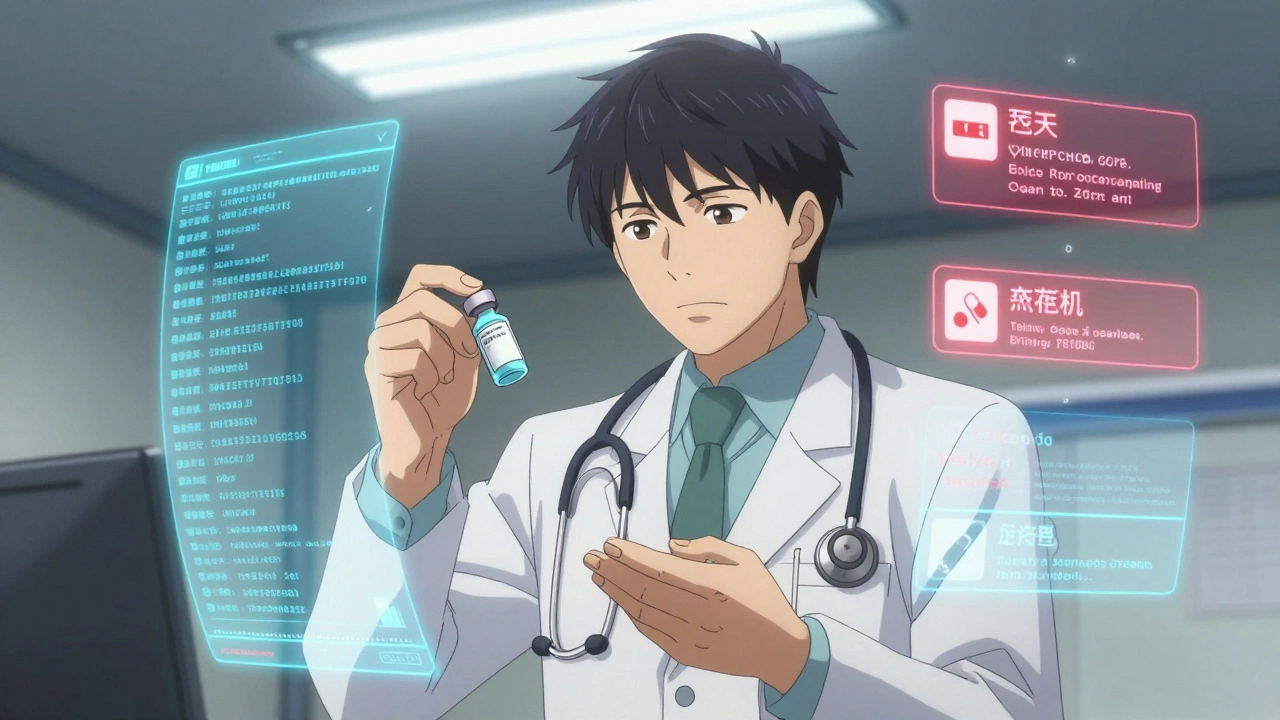
Every year, over a million people in the U.S. are harmed by mistakes in their prescriptions. Many of these errors never reach the patient-not because the system is perfect, but because a pharmacist caught them. That pharmacist didn’t just fill a bottle. They stopped a life-threatening overdose, a dangerous drug interaction, or a dosage mistake that could have sent someone to the ER. This isn’t rare. It’s routine.
The Final Check That Saves Lives
Pharmacists are the last person to review a prescription before it goes to a patient. That means they’re the final line of defense. A doctor might miss a drug interaction. A nurse might misread a handwritten note. A computer system might flag a warning but let it slide. But when a pharmacist looks at that prescription, they’re trained to see what others overlook.
Studies show pharmacists catch about 1 in 4 potentially harmful errors that would’ve gone unnoticed. In one hospital study, clinical pharmacists found 112 errors among just 861 patients. Most of those errors came from doctors or nurses-not patients. One patient in Melbourne got a warfarin script for 10 times the normal dose. The pharmacist noticed. The patient didn’t even know they’d been saved.
How Pharmacists Spot Errors
It’s not guesswork. Pharmacists use proven systems to catch mistakes. They run electronic drug utilization reviews (DUR), which scan a patient’s full medical history for red flags: allergies, kidney problems, other meds they’re taking, or duplicate prescriptions. These systems catch 85-90% of possible interactions, but they’re not perfect. That’s where the pharmacist comes in.
Take insulin, for example. It’s a high-alert medication. A tiny mistake can kill. In hospitals, pharmacists require an independent double-check before dispensing it. One person prepares it. Another verifies it. That simple step cuts errors by 42%. In community pharmacies, technicians often do the first review-checking the National Drug Code against the prescription, looking for confusing names like “Hydralazine” vs. “Hydroxyzine.” They catch 78% of errors before the pharmacist even sees the script.
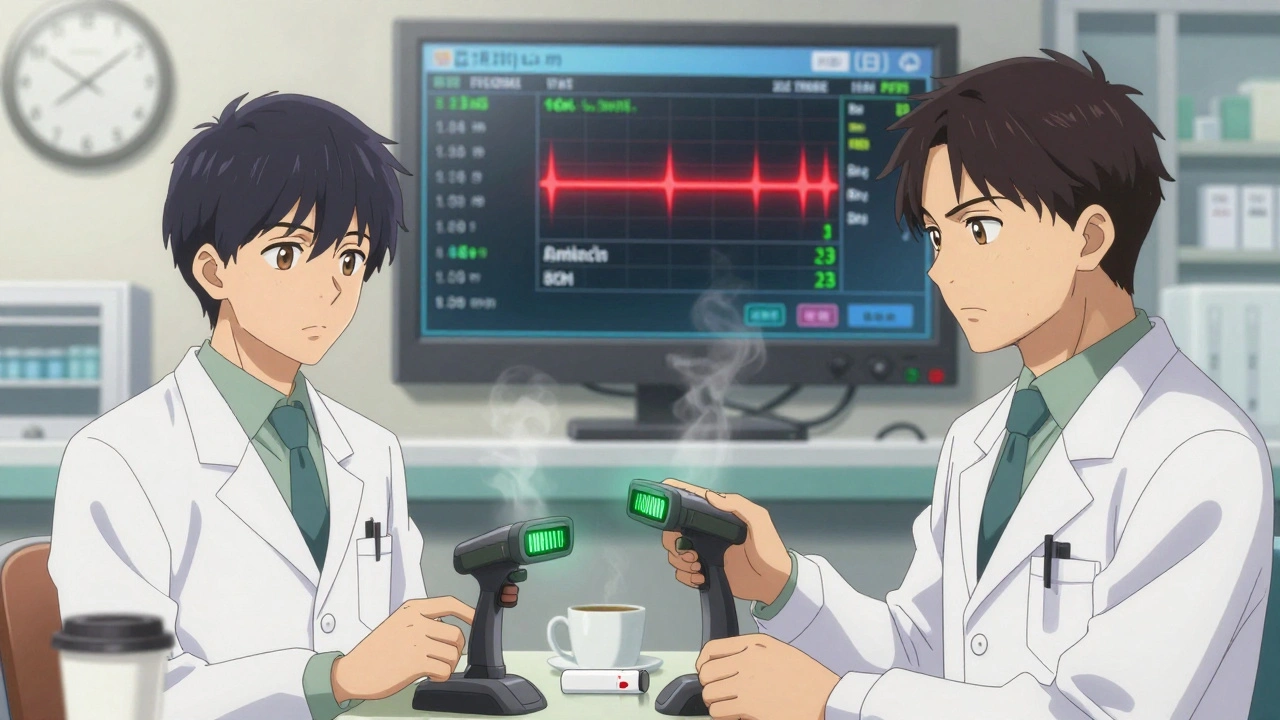
Barcode scanning is another tool. When a pharmacist scans the medication and the patient’s wristband, the system confirms: Is this the right drug? Right dose? Right patient? This reduces dispensing errors by over half. Automated cabinets do the same thing behind the scenes. But no system replaces human judgment. A computer might not know a patient just had kidney surgery. A pharmacist does.
Technology Helps, But People Still Matter
Electronic prescribing cut handwriting errors by 95%. Computerized order systems reduced overall errors by 17-25%. But when you add a pharmacist into the mix, error detection jumps to 45-65%. That’s not a small gain. That’s the difference between a patient going home safely and ending up in intensive care.
Still, technology has flaws. Pharmacists get overwhelmed by alerts. One study found they ignore nearly half of drug interaction warnings because too many are low-risk or irrelevant. That’s called alert fatigue. The solution? Tiered alerts. Only the most dangerous interactions-like mixing blood thinners with NSAIDs in elderly patients-trigger loud, mandatory reviews. That cut override rates from 49% down to 28%.
And here’s the truth: technology can’t replace a pharmacist’s training. A machine can’t know that a patient is on a strict low-sodium diet because of heart failure. It can’t ask, “Did you mean 5 mg or 50 mg?” It can’t call the doctor to clarify. Only a pharmacist can.
The Hidden Work: Medication Reconciliation
One of the most overlooked roles is medication reconciliation. That’s when a pharmacist sits down with a patient being admitted to the hospital and asks: “What are you really taking?” Not what the chart says. Not what the pharmacy sent. What’s actually in their medicine cabinet.
Studies show patients have an average of 2.3 medication discrepancies when they enter the hospital. Maybe they stopped their blood pressure pill because it made them dizzy. Maybe their cousin gave them leftover antibiotics. Maybe their daughter filled a new script but didn’t tell the doctor. Pharmacists catch all of it. In one trial, reconciliation by pharmacists prevented 37% of medication errors during hospital transfers.
This isn’t just paperwork. It’s life-or-death. A patient on warfarin who accidentally got a new statin might bleed internally. A diabetic who missed their metformin for a week could go into ketoacidosis. Pharmacists don’t just fix mistakes-they prevent them before they start.
Where the System Falls Short
Pharmacists aren’t superheroes. They’re overworked. In community pharmacies, some handle 300-400 prescriptions a day. That’s one every 2-3 minutes. In low-income areas, one pharmacist might be responsible for 500 patients. No human can stay sharp under that pressure.
Reddit threads from pharmacy techs reveal a troubling pattern: “I see 3-4 serious errors a week that slip past because the pharmacist is rushing.” One tech described a script for amoxicillin that was written for a child but labeled for an adult. The dose was 10 times too high. The technician caught it. The pharmacist didn’t even see it.
Documentation is another gap. Hospitals have strong error-reporting systems. Community pharmacies? Not so much. Many don’t track what errors they catch. That means we don’t know how many lives are saved outside hospitals.
And then there’s the “last line of defense” myth. Harvard’s Dr. David Bates warns: “Relying only on pharmacists creates system vulnerability.” The real fix? Fix the whole chain-better prescribing, clearer labels, smarter tech, and enough staff to do the job right.
The Bigger Picture: Cost, Impact, and Growth
Every error a pharmacist stops saves an average of $13,847 in hospital costs. In 2023, pharmacist interventions saved the U.S. healthcare system $2.7 billion. That’s not a number. That’s thousands of avoided ICU stays, emergency visits, and long-term complications.
And demand is rising. The medication safety tech market hit $3.8 billion in 2022. Over 90% of U.S. hospitals now have clinical pharmacists on staff. Twenty-seven states now let pharmacists adjust medications under collaborative agreements-no doctor needed. That’s a big shift. It means pharmacists aren’t just catching errors anymore. They’re actively managing care.
By 2027, experts predict pharmacists will prevent 4.3 million medication errors annually-up 31% from today. But that growth depends on one thing: enough pharmacists. The U.S. faces a shortage of 15,000 pharmacists by 2025. Without more people in the field, even the best systems will fail.
What Patients Can Do
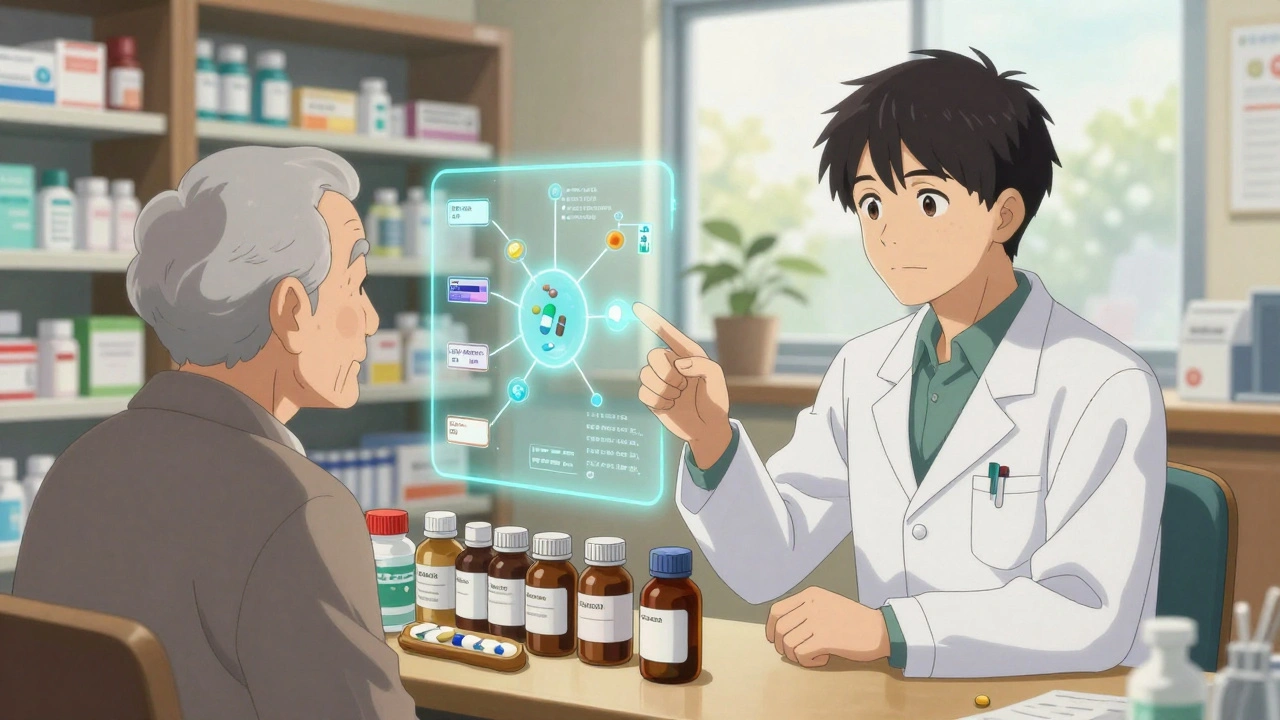
You don’t have to wait for a pharmacist to save you. Ask questions. Bring a list of every pill, vitamin, and supplement you take to every appointment. Say: “Is this the right dose? Could it interact with anything else I’m on?”
If you’re on a high-risk drug like blood thinners, insulin, or seizure meds, ask if your pharmacy does double-checks. If they don’t, ask why. You have a right to safety.
And if you ever feel rushed or brushed off? Walk out. Go to another pharmacy. The right pharmacist will take the time. Because they know: this isn’t just a prescription. It’s someone’s life.
9 Responses
I had a pharmacist catch my insulin dose being doubled once. I didn't even know I was in danger. They just looked at me and said 'this ain't right'. Simple. No drama. Just saved my life.
Pharmacists don't save lives they just clean up the mess doctors make. Why are we praising the cleanup crew instead of fixing the broken system? This whole post is just a distraction from the real problem: lazy MDs and profit-driven hospitals.
Let's be clear: The U.S. healthcare system is a disaster. And now we're glorifying pharmacists as heroes? That's not heroism-that's systemic failure. We're paying billions to fix mistakes that should never have happened in the first place. This isn't a win. It's a national shame.
you know what i think? the feds are using pharmacists as a cover-up. they dont want you to know that the meds are being poisoned on purpose. the barcode scanners? fake. the 'double check'? just a show. the real truth? the big pharma robots are controlling the scripts from space. i saw it on tiktok.
I get where Jerry's coming from but I also see the human side here. These folks are working insane hours just to keep people alive. I don't think we need to tear down the system to appreciate the people holding it together. Maybe we just need to give them more support.
The real tragedy isn't the errors-it's the moral decay of a society that outsources its responsibility to overworked professionals. We've turned healthcare into a transactional commodity, then expected the pharmacist to be the moral compass. This isn't compassion-it's exploitation dressed up as gratitude. You don't thank a firefighter for putting out a fire you started with a match and called it 'convenient'.
The data on DUR systems and error reduction is robust, but the cognitive load on pharmacists remains under-measured. The alert fatigue phenomenon is a classic case of poor human-machine interface design. We need tiered, context-aware decision support-not just more noise.
I'm tired of this narrative. You think pharmacists are saving lives? They're just the last line of a broken chain. And if you're not demanding better from your doctor, you're part of the problem. 🤷♂️ I've seen people die because they trusted the system instead of asking questions. Wake up. This isn't magic. It's negligence with a Band-Aid.
I work in a pharmacy and I can say this: the techs are the real unsung heroes. They catch 78% of errors before the pharmacist even sees it. They're the ones doing the grunt work, the double-checks, the barcode scans, the calls to doctors. We need to pay them better and give them more respect. 🙌 This isn't just about pharmacists-it's about the whole team.