
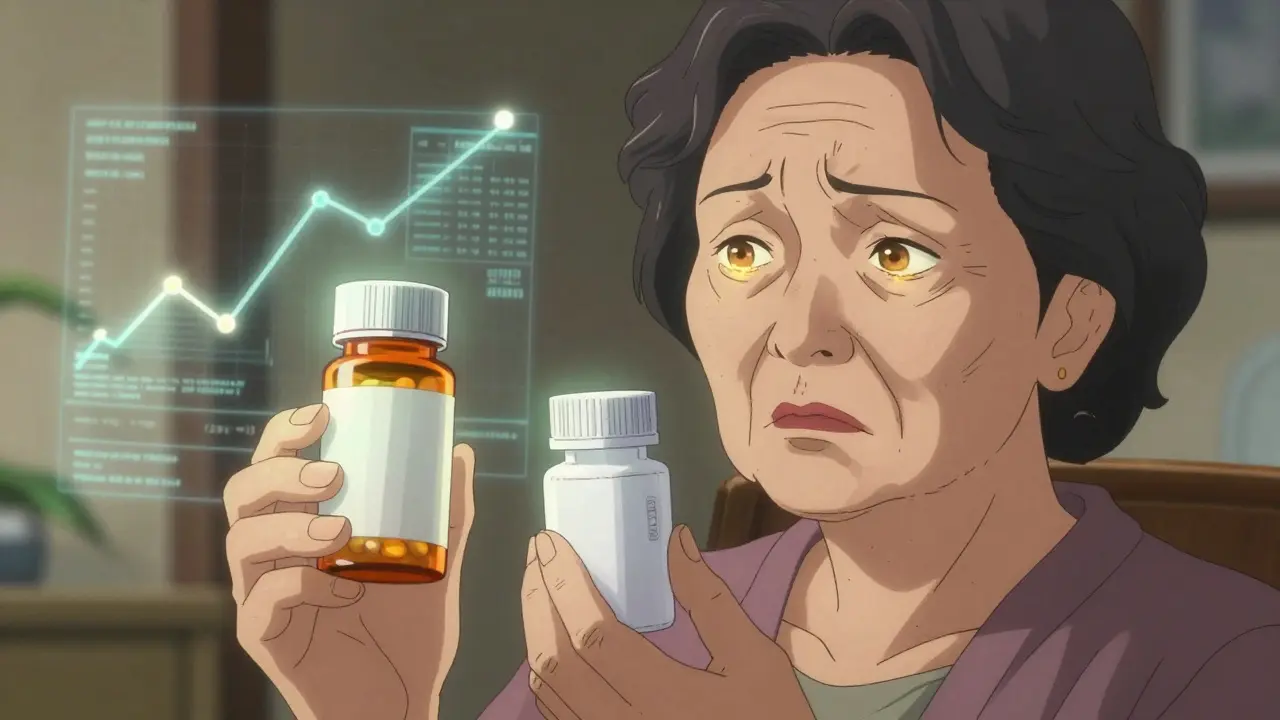
Ever picked up a prescription and noticed the pill looks completely different from what you used to take? Maybe it’s smaller, cheaper, or even a different color. If you’ve ever thought, "This can’t be the same," you’re not alone. But here’s the truth: generic medications are not knockoffs. They’re legally required to have the exact same active ingredients, strength, dosage form, and performance as their brand-name cousins. So why do so many people - especially older adults - still feel uneasy about them?
The answer isn’t about science. It’s about psychology. And it changes with age.
Why Generations See Generics Differently
Think about your first experience with medication. For Baby Boomers (born 1946-1964), it might’ve been a shiny bottle with a familiar logo - Tylenol, Advil, Lipitor - advertised on TV for years. Those brands became part of their health identity. For Gen Z (born 1997-2012), generics are just… normal. They’ve grown up with pharmacy apps, price comparisons, and insurance forms that push them toward cheaper options. That’s not a coincidence. It’s generational conditioning.
A 2023 FDA report shows generics make up 90% of all prescriptions filled in the U.S. by volume. Yet they only account for 23% of total drug spending. Why? Because they’re cheaper - often 80-85% cheaper than brand names. But here’s the twist: 35.6% of patients still believe generics are less effective, even when they know the science says otherwise. And that belief isn’t spread evenly across age groups.
Boomers: Trusting the Brand, Not the Bioequivalence
Many Baby Boomers remember when generic drugs were rare. When they first started taking medication, the only option was the branded version. Over time, those brands became symbols of reliability. A pill with a name they recognized meant safety. A pill with a strange label? Suspicious.
Studies show that older adults are more likely to report side effects from generics - even when the drug is identical. In one study, patients switched from brand-name Prozac to its generic version and still said they felt "worse" or "more anxious." The active ingredient didn’t change. But their expectations did. This is called the nocebo effect: when you expect something to fail, your body reacts as if it has.
Boomers also tend to have higher subjective knowledge - they think they know how drugs work because they’ve used them for decades. But their objective knowledge? Often outdated. They may not know that the FDA now requires generics to match brand drugs within 80-125% of the same absorption rate. Or that manufacturers must prove consistency across batches. That gap between what they think they know and what’s actually true makes them more vulnerable to fear-based messaging.
Gen X: The Skeptical Middle
Gen X (born 1965-1980) grew up with the rise of direct-to-consumer drug ads. They saw commercials for brand-name drugs promising miracles - while also seeing their parents struggle with high co-pays. This generation is caught between two worlds.
On one hand, they’ve seen the cost of healthcare skyrocket. Many have switched to generics out of necessity. On the other, they’re the most likely to ask their doctor: "Is this really the same?" They’re more likely to research online, check reviews, or ask pharmacists. And here’s the kicker: they’re also the most likely to be told by their doctor, "It’s fine," but still leave unconvinced.
One 2022 study found Gen X patients were twice as likely as Millennials to request a brand-name drug when a generic was available - not because they thought it worked better, but because they didn’t trust the system. "Who made this?" they ask. "Where’s it from?" They don’t trust the label. They trust the brand.
Millennials and Gen Z: The Practical Switchers
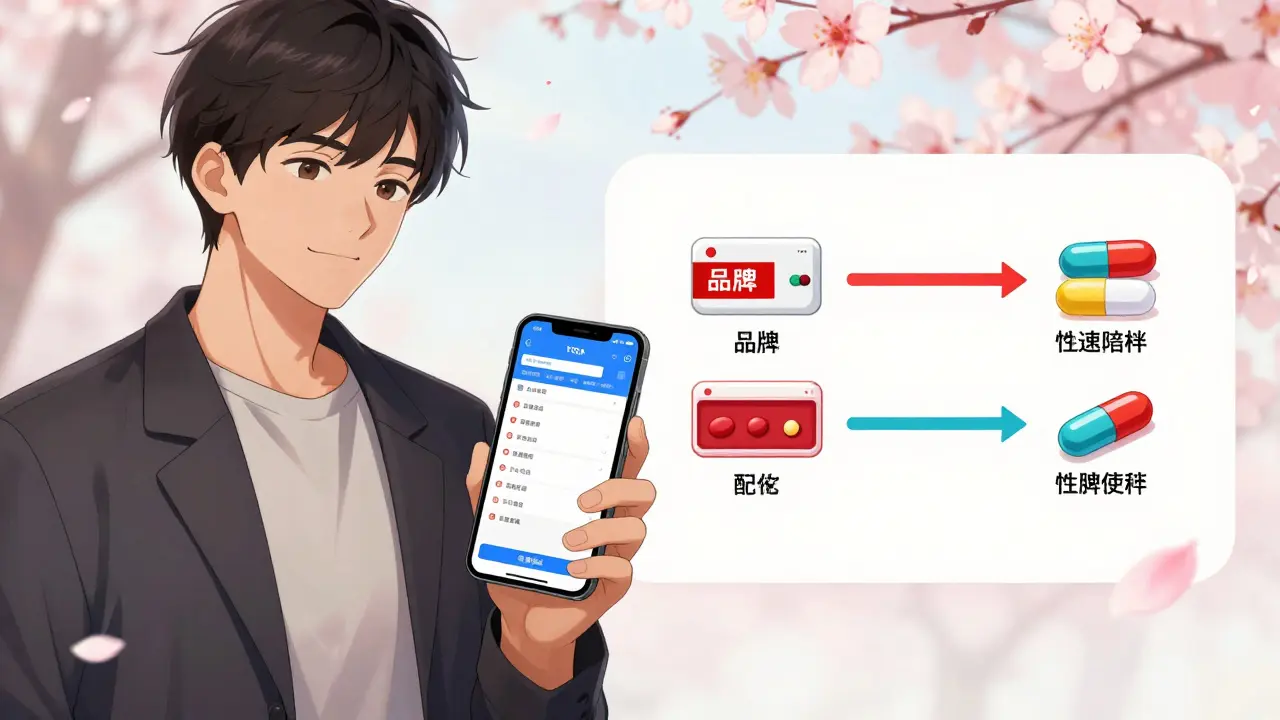
Millennials (born 1981-1996) and Gen Z don’t have the same emotional ties to drug brands. For them, medication is a transaction. They use apps like GoodRx to compare prices. They’ve seen TikTok videos explaining how generics work. They’ve paid $400 for a brand-name pill and $12 for the generic - and they’ve lived.
These younger generations are more likely to have accurate objective knowledge. They’ve been taught in school how drugs are tested. They’ve seen regulatory agencies like the FDA and EMA explain bioequivalence in simple terms. And they’re more comfortable with data than with logos.
One 2023 survey found that 78% of Gen Z respondents said they’d choose a generic without hesitation - even if it was from a company they’d never heard of. Why? Because they’ve been exposed to transparency. They’ve seen how generics are approved, tested, and monitored. They don’t need a brand name to feel safe.
Why Health Literacy Matters More Than You Think
It’s not just about age. It’s about exposure. Health literacy - the ability to understand medical information - varies dramatically across generations.
Boomers often learned about drugs from TV ads or their doctor’s verbal explanation. Gen X got brochures. Millennials and Gen Z get YouTube explainers, Reddit threads, and FDA webinars. That difference in access changes everything.
Research shows that when people understand how generics are tested - for example, that they must deliver the same amount of medicine into the bloodstream within 90 minutes - their trust increases. But that understanding doesn’t come naturally. It has to be taught.
And here’s the problem: most healthcare providers still don’t explain it. They say, "It’s the same." That’s not enough. People need to know how it’s the same. The FDA requires bioequivalence studies with 24-36 healthy volunteers. The drug must absorb within a narrow range. The manufacturer must pass inspections. These aren’t just words - they’re rules. And younger generations are more likely to have seen those rules explained.
What This Means for Prescribers and Pharmacies
If you’re a doctor or pharmacist, you can’t treat all patients the same. A one-size-fits-all approach to generics won’t work.
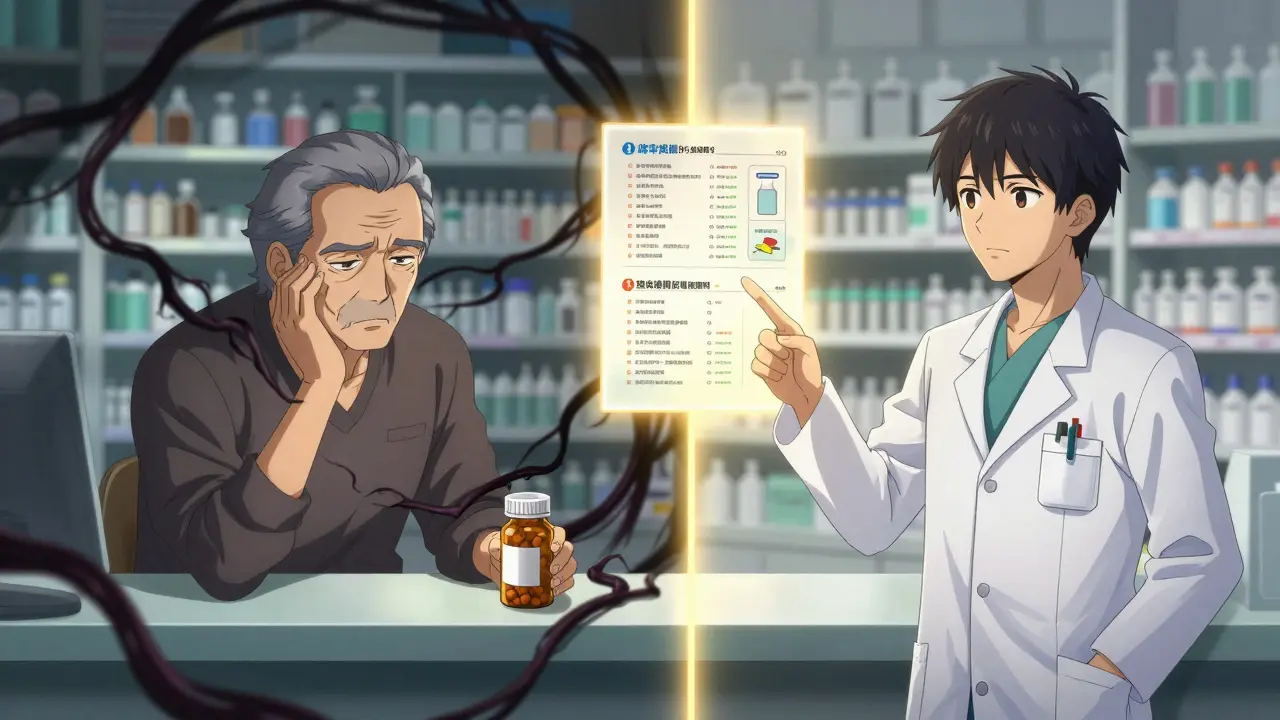
For older patients, don’t just say, "It’s cheaper." Say: "This generic has been tested in 12 clinical trials with over 2,000 people. It delivers the same amount of medicine into your blood as the brand name. The FDA checks every batch. It’s not a copy - it’s a match."
For Gen X, acknowledge the skepticism. Say: "I get why you’re unsure. I’ve seen patients worry about this too. Let me show you the data from the FDA’s bioequivalence report."
For younger patients, give them tools. Link them to the FDA’s generic drug database. Show them how to check the manufacturer. Let them see the approval numbers. They’ll appreciate the transparency.
Pharmacies that offer printed handouts explaining how generics are approved - with real images of testing procedures - see higher acceptance rates across all age groups. Simple visuals beat complex jargon every time.
The Bigger Picture: Cost vs. Perception
Generics save the U.S. healthcare system over $1 trillion every decade. That’s not a small number. But if people don’t trust them, they won’t use them - even when it’s the only option they can afford.
That’s why this isn’t just about pills. It’s about trust. And trust is built through experience, education, and communication - not marketing.
Imagine two patients: one is a 72-year-old woman who’s been on the same blood pressure pill for 20 years. The other is a 24-year-old man who just got his first prescription. The older one fears the unknown. The younger one doesn’t even know there’s an unknown to fear.
The system needs to speak to both - differently.
What You Can Do Today
If you’re taking a generic:
- Check the FDA’s Orange Book online - it lists approved generics and their brand equivalents.
- Ask your pharmacist: "Can you show me the bioequivalence data?" Most will have it.
- Don’t assume a change in pill shape means a change in effect. Manufacturers switch colors and sizes all the time - even for brand names.
If you’re prescribing or advising:
- Don’t say, "It’s the same." Say, "It’s tested to deliver the same amount of medicine in the same way."
- Use visuals. A simple diagram of blood absorption rates helps more than a paragraph of text.
- For older patients, validate their concerns. Say: "It’s smart to ask this. Many people do. Here’s what the data shows."
Generics aren’t a compromise. They’re a science-backed solution. But science doesn’t change minds - communication does. And communication must be tailored to the generation you’re talking to.
Are generic medications really as effective as brand-name drugs?
Yes. The U.S. Food and Drug Administration (FDA) requires generics to have the same active ingredients, strength, dosage form, and route of administration as the brand-name drug. They must also prove bioequivalence - meaning they deliver the same amount of medicine into the bloodstream at the same rate. This is tested in clinical trials with healthy volunteers. Over 90% of prescriptions filled in the U.S. are generics - and they work just as well.
Why do some people feel worse after switching to a generic?
This is usually not because the drug is different - it’s because of expectations. If someone believes a generic is inferior, their brain may interpret normal side effects as "worse" - a phenomenon called the nocebo effect. In rare cases, inactive ingredients (like fillers or dyes) may cause mild reactions in sensitive individuals, but these are not related to effectiveness. If symptoms persist, consult your doctor - but don’t assume the generic is the problem.
Do older adults trust generics less than younger people?
Yes. Studies show that older adults, especially Baby Boomers, are more likely to distrust generics due to long-standing brand loyalty and less exposure to modern drug approval standards. Younger generations, raised with online access to regulatory data and price transparency, are more likely to accept generics without hesitation.
Can a pharmacy switch my generic without telling me?
In most cases, yes - but only if the generic is FDA-approved and interchangeable. Pharmacists can substitute generics unless the prescription says "dispense as written" or the patient refuses. However, they are required to inform you if the medication changes. Always check the label and ask if you’re unsure.
Is it true that generics are made in different countries - and is that safe?
Many generics are manufactured overseas - including in the U.S., India, and China - but they must meet the same strict standards as brand-name drugs. The FDA inspects foreign manufacturing facilities just as rigorously as domestic ones. In fact, over half of all FDA-approved drug facilities are located outside the U.S. The country of origin doesn’t determine safety - the regulatory oversight does.
9 Responses
Generics aren’t just chemically identical-they’re legally bound to perform identically. The FDA doesn’t approve them based on trust. It’s based on pharmacokinetic data from human trials. If your blood doesn’t absorb the same amount of active ingredient within a 90-minute window, it doesn’t get approved. Period. No brand-name company has a monopoly on efficacy. The system works. It’s just that people confuse familiarity with reliability.
The nocebo effect is a well-documented phenomenon in clinical psychopharmacology, particularly in SSRI transitions. The bioequivalence threshold of 80-125% AUC and Cmax is statistically robust, with intra-subject variability typically under 10%. When patients report deterioration post-switch, it’s rarely pharmacodynamic-it’s cognitive dissonance amplified by marketing-driven brand equity. The real issue isn’t the drug-it’s the narrative.
I come from India, where generics are the norm. We don’t have the luxury of brand loyalty. But even here, elders worry about color changes. I showed my grandmother the FDA’s bioequivalence chart-how the absorption curves overlap. She still hesitated. Then I told her: "The same factory that makes the brand also makes the generic. Only the label changes." She took it without another word. Sometimes, simplicity beats science.
My mom switched to generic Lipitor and started having panic attacks. She swore it wasn’t working. We went back to the brand. She felt better immediately. Coincidence? I don’t think so. The system doesn’t care about how people feel. But people aren’t data points. They’re scared. And if they feel worse, they’re worse. End of story.
Let’s be real: this whole discussion is a distraction. The real problem is that pharmaceutical companies design drugs to be non-interchangeable. Same active ingredient? Sure. But change the filler, the coating, the release profile slightly-enough to trigger a placebo/nocebo response-and they profit. The FDA’s 80-125% range is a loophole. It’s not precision-it’s tolerance. And manufacturers exploit it. Generics aren’t the enemy. The profit-driven opacity of the entire supply chain is. We’re not talking about science. We’re talking about corporate engineering of perception. And it’s working.
Why do you think the same company that makes Advil also makes the generic ibuprofen? Same pill. Different label. Same factory. Different price tag. The system is rigged to make you doubt the cheap version-even when it’s identical. It’s not ignorance. It’s manipulation.
My uncle in Delhi takes a generic blood pressure med. He’s 78. He doesn’t know what bioequivalence means. But he trusts his pharmacist-because that pharmacist takes time to explain, in Hindi, how the tablet is made. He shows him the batch number. Lets him see the inspection report. That’s all it takes. Trust isn’t built with FDA websites. It’s built with human connection. Maybe we’re overcomplicating this.
Why are we even having this conversation? If you can’t afford the brand, take the generic. Stop whining. America’s healthcare system is broken because people think they deserve luxury pills. Your body doesn’t care if it’s branded. It only cares if the molecule works. Grow up.
I’ve worked in community pharmacy for 15 years. I’ve seen the fear. The hesitation. The silent panic when the pill looks different. I don’t just hand over the generic. I say: "I know this looks different. Let me show you why it’s safe." I pull up the FDA’s database on the screen. I show them the approval number. I say: "This one was tested on 300 people. Same results as the brand. I’ve given this to 200 patients. No one had issues." That’s all it takes. People aren’t resistant to generics. They’re resistant to being ignored.
It’s fascinating how this mirrors broader cultural shifts in epistemology. Older generations rely on institutional authority (doctor, brand, FDA as monolithic entity). Younger generations rely on distributed, algorithmic validation-Reddit, YouTube, GoodRx reviews. The former trusts hierarchy. The latter trusts aggregation. Neither is inherently more accurate. But the latter is more resilient to misinformation because it’s decentralized. The problem isn’t generational ignorance. It’s the collapse of monolithic trust in institutions. And generics are just the symptom.