
Going out to eat shouldn’t mean giving up control over your blood sugar. With diabetes, dining at a restaurant can feel like walking a tightrope-too much pasta, too much sauce, too much of everything. But it doesn’t have to be that way. The truth is, you can enjoy a meal out without crashing your glucose levels. It’s not about saying no. It’s about knowing what to choose, how much to take, and how to ask for it.
Use the Plate Method-No Math Needed
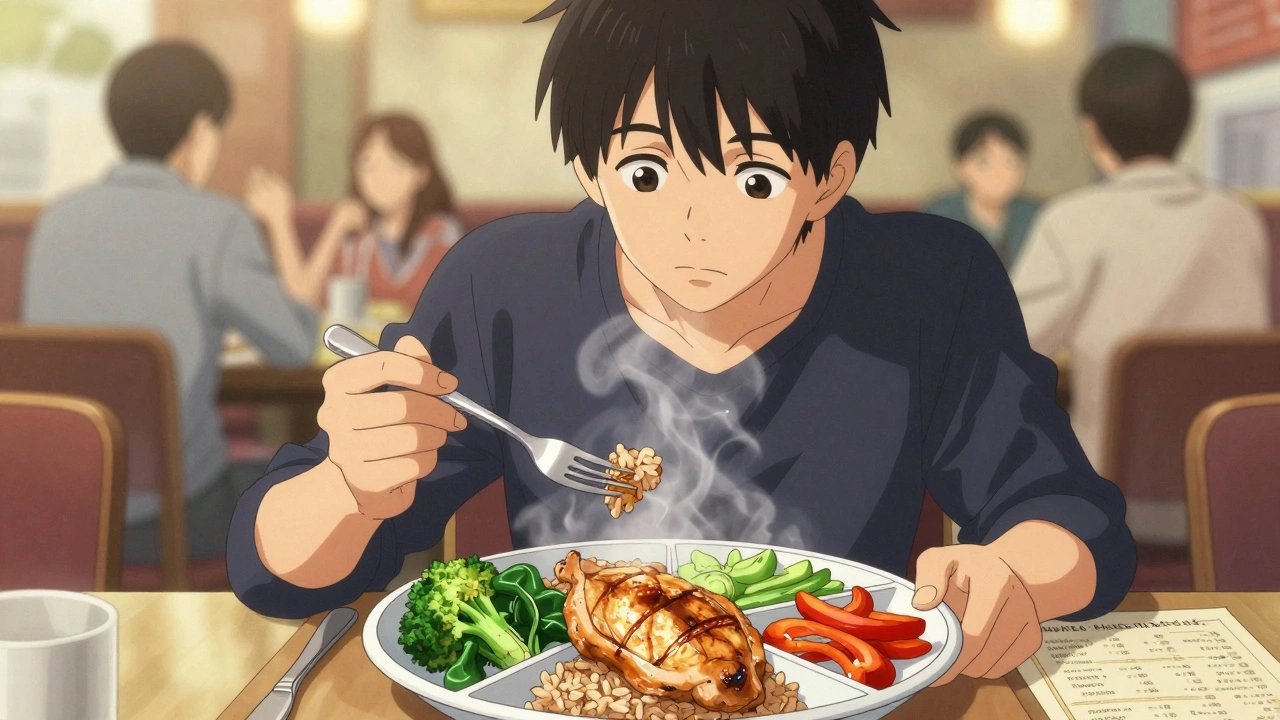
Forget counting every gram of carb unless you’re on insulin and need precision. For most people, the Diabetes Plate Method works better than spreadsheets. Here’s how it works: grab a normal dinner plate-about nine inches wide. Fill half with non-starchy vegetables: broccoli, spinach, peppers, zucchini, asparagus. These won’t spike your blood sugar. Then, split the other half: one quarter for lean protein like grilled chicken, fish, or tofu. The last quarter? That’s your carb zone. Stick to 15-30 grams of carbs here. That’s about half a cup of rice, a small potato, or one slice of whole-grain bread. Restaurants serve huge portions. A typical plate of pasta might have three cups. That’s 90 grams of carbs. Just one serving. With the plate method, you’re automatically cutting that down to a manageable level. And if they bring you a giant pile of mashed potatoes? Ask for half to be boxed up before you even start eating. You’ll still have leftovers for lunch tomorrow.Watch Out for Hidden Carbs
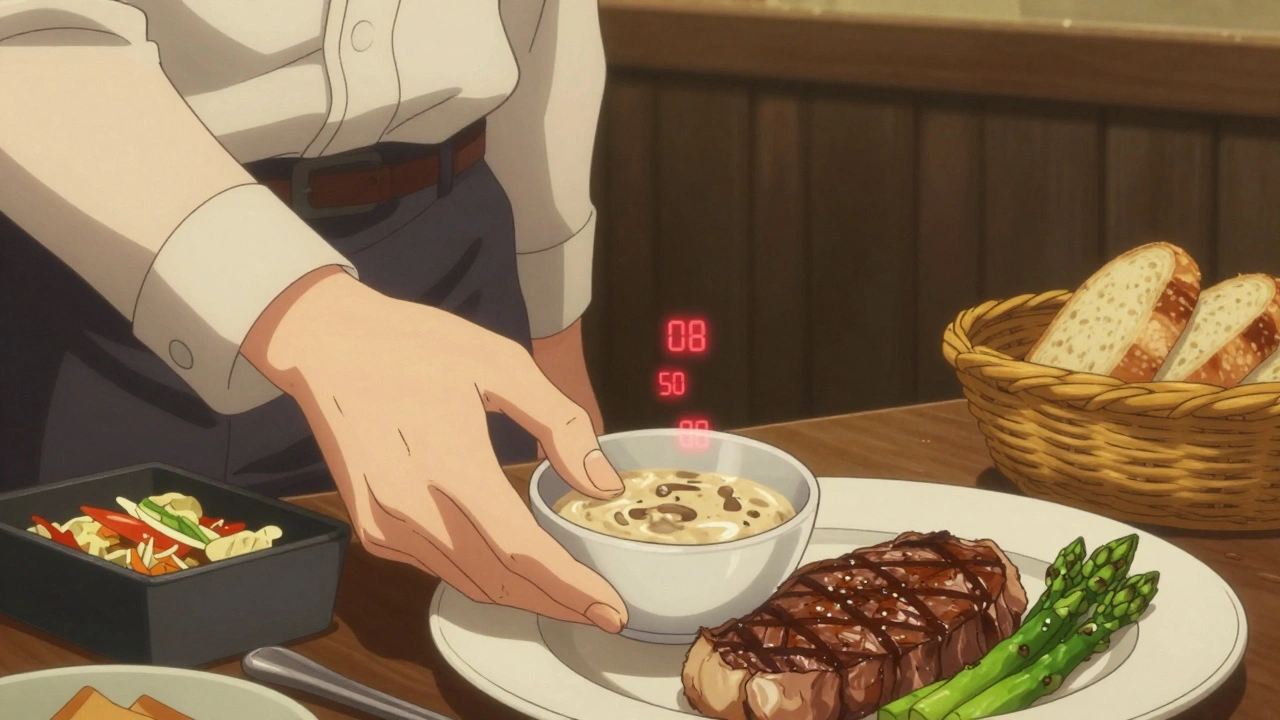
The biggest trap isn’t the obvious stuff. It’s the sauces, dressings, and sides you don’t even think about. A tablespoon of teriyaki sauce? That’s 10 grams of carbs. Creamy mushroom sauce on steak? Another 8-12 grams. Even "healthy" salads can turn into carb bombs with bottled dressings, croutons, dried fruit, or sweetened nuts. Always ask for dressings and sauces on the side. Use no more than two tablespoons. Skip the bread basket entirely. If you really want something starchy, pick one thing and make it count. A small order of sweet potato fries? Fine. But don’t also get rice and a roll. Choose one. Look out for words like "crispy," "breaded," "creamed," "au gratin," or "glazed." These usually mean breading, butter, sugar, or thick sauces. A grilled chicken breast is safe. A chicken parmesan? That’s breaded, cheese-covered, and smothered in pasta sauce-often 65 grams of carbs in one serving. Same goes for Asian dishes. "Stir-fry" sounds healthy, but the sauce? Loaded with sugar. Ask for it on the side or request "light sauce, no sugar."Portion Control Is Your Secret Weapon
Restaurant portions are not meant for one person. They’re meant to be shared-or to leave you full for days. Studies show the average entrée at a sit-down restaurant has 1,200 calories and 80-100 grams of carbs. Your goal? 500-600 calories and 45-60 grams of carbs per meal. Here’s how to shrink your plate without sounding rude:- Ask for a half portion of starches (rice, pasta, potatoes). Most places will do it.
- Share your main course with someone. Splitting a meal cuts carbs and calories in half.
- Order an appetizer as your main. Grilled shrimp skewers, a side salad with grilled chicken, or a bowl of vegetable soup can be perfect.
- Ask for your meal to be boxed up before it comes to the table. That way, you’re not tempted to finish everything just because it’s there.
Fast Food? It’s Possible-But Be Strategic
Fast food isn’t the enemy. It’s just high-risk. A Big Mac has 46 grams of carbs. A chicken sandwich? Around 50. But you can still make better choices:- Go for grilled chicken wraps-but remove the tortilla. Wrap the filling in lettuce instead.
- Choose a side salad with vinaigrette (on the side) instead of fries.
- Order a burger without the bun. Add extra lettuce, tomato, and pickles.
- Skip the sugary drinks. Stick to water, unsweetened iced tea, or diet soda.
Buffets Are the Worst-Avoid Them If You Can
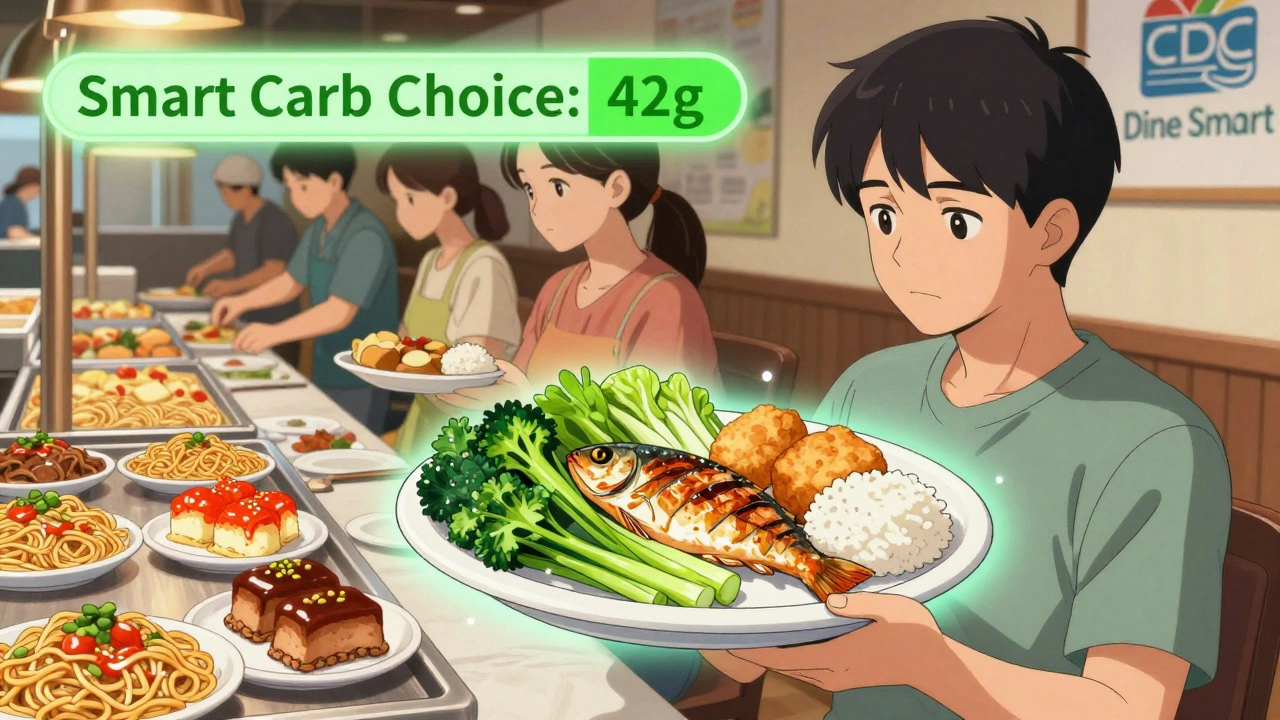
Buffets are designed to make you eat more than you planned. Unlimited access means unlimited temptation. Research shows blood sugar spikes 65 mg/dL higher after buffet meals than after plated restaurant meals. Why? You’re not just eating one portion-you’re sampling ten. And you don’t stop until you’re stuffed. If you must go, make a plan before you even get to the line:- Start with a big plate of raw or steamed vegetables.
- Then add a small portion of lean protein-grilled fish, chicken, or tofu.
- Only after that, pick one carb item: maybe a small scoop of rice or one slice of whole-grain bread.
- Never go back for seconds. Walk away after your first plate.
Plan Ahead-It Makes All the Difference
The most successful people with diabetes who eat out don’t wing it. They prepare. Research the menu online before you leave the house. Look for dishes with "grilled," "baked," or "steamed." Avoid anything with "fried," "smothered," or "in sauce." A 2022 study found that people who checked the menu ahead of time were 42% more likely to stick to their carb goals. Why? Because when you’re hungry and the server’s standing there, you won’t choose the chicken alfredo just because it sounds good. You’ll know exactly what to order. Also, don’t show up starving. Going in with a growling stomach makes you more likely to grab the first carb-heavy thing you see. Have a small snack before you go-like a handful of almonds or a hard-boiled egg. That way, you’re not desperate.Bring Your Tools
If you take insulin or medications that can cause low blood sugar, always carry:- A glucose meter
- Fast-acting glucose tablets (15 grams of carbs)
- A snack with protein and fat (like a protein bar or nuts) for lows that don’t respond to sugar alone
What About Dessert?
You don’t have to give it up. But you do need to be smart. Ask for a small portion. Share a slice of cake with the table. Choose fruit-based desserts over creamy or chocolate ones. A small bowl of berries with whipped cream? That’s 10-15 grams of carbs. A slice of cheesecake? 40-50 grams. Pick your battle. Some restaurants now offer sugar-free or low-carb desserts. Check the menu or ask. If they don’t have any, ask if they can bring you a side of fresh fruit instead.It Gets Easier
At first, asking for sauce on the side or skipping the bread feels awkward. You might worry people think you’re being picky. But here’s the thing: most people don’t care. And those who do? They’ll respect you more for knowing what you need. The first few times, it’s okay to feel unsure. You might miscount carbs. You might overeat. That’s normal. The goal isn’t perfection. It’s progress. After three to five meals using these strategies, you’ll start recognizing patterns. You’ll know which restaurants are easier. Which dishes are safe. Which servers will help you out. One patient I know reduced her HbA1c by 1% in six months just by applying these rules every time she ate out. Not because she ate perfectly. But because she made better choices most of the time.What’s Changing in 2025
More restaurants are starting to label meals with carb counts. The CDC’s "Dine Smart" program now works with 20 major chains to mark meals with 45 grams of carbs or less. Apps like the ADA’s "Restaurant Ready" give you verified carb counts for over 15,000 menu items. And some hospitals are testing tools that sync your glucose monitor with your restaurant order-giving real-time feedback on how a meal will affect your blood sugar. But here’s the truth: technology helps. But your choices still matter. No app can replace knowing how to read a menu, how to ask for what you need, and how to say no when you’ve had enough. You don’t have to give up eating out. You just have to eat smarter.Can I still eat pasta when I have diabetes?
Yes, but in small amounts. Stick to half a cup of whole-grain pasta, which has about 20 grams of carbs. Pair it with a large portion of vegetables and lean protein. Avoid creamy sauces-they add hidden carbs and fat. If you’re on insulin, you may need to adjust your dose based on the carb count.
Is it better to eat at a fast-food place or a sit-down restaurant?
Sit-down restaurants usually offer more customization. You can ask for substitutions, sauces on the side, and smaller portions. Fast food is quicker but often has more hidden carbs and larger portions. That said, many fast-food chains now list carb counts online. If you plan ahead, you can make a safe choice anywhere.
How do I know if a dish has hidden carbs?
Look for words like "glazed," "creamed," "breaded," "au gratin," or "in sauce." These usually mean added sugar, flour, or butter. Ask the server what’s in the sauce or how it’s prepared. If they’re unsure, assume it has extra carbs and ask for it on the side-or skip it.
Should I avoid alcohol when eating out?
You don’t have to avoid it, but be careful. Beer and sweet cocktails can spike blood sugar quickly. Dry wine, light beer, or spirits with soda water are better choices. Always eat food with alcohol-never drink on an empty stomach. Alcohol can also mask low blood sugar symptoms, so check your levels before and after.
What if I don’t have time to check the menu ahead of time?
Stick to the basics: grilled protein, steamed vegetables, and a small side of starch. Skip anything breaded or saucy. Ask for sauces on the side. Order a salad with dressing on the side. If you’re unsure, go with the simplest option. Sometimes, the least fancy dish is the safest.
14 Responses
So let me get this straight-I’m supposed to ask for my sauce on the side like I’m ordering a coffee at a hipster café? And if I want bread? No thanks, I’ll just stare longingly at the basket like it’s my ex’s Instagram.
Real talk: I’ve done this. I’ve boxed up half my pasta before the server even walked away. No one bats an eye. They think I’m saving it. I’m just saving my A1C.
Let’s be real-this isn’t about diabetes. It’s about reclaiming agency in a world that treats food like a moral test.
Restaurants don’t serve food. They serve temptation wrapped in butter and marketing.
The plate method? It’s not a diet. It’s a quiet rebellion. You’re not denying yourself-you’re refusing to be manipulated by portion sizes designed to make you feel guilty for being alive.
And yes, buffets are psychological warfare. They’re the casino of carbs. The slot machines are labeled ‘risotto’ and ‘mashed potatoes.’ You pull the lever, and your pancreas screams.
But here’s the secret: the moment you stop apologizing for asking for no sauce, no bread, no ‘specialty glaze,’ you stop being a patient and become a person.
People think you’re picky. You’re not. You’re just not playing their game anymore.
And that’s not just smart. It’s sacred.
I came from India where we eat with our hands and love rich curries-but even I learned to say no to the ‘light’ coconut milk that’s actually 12 grams of sugar per spoon.
My aunt still thinks I’m being dramatic when I ask for steamed veggies instead of dal fry.
But when she saw my A1C drop from 8.2 to 6.7? She started asking me how to do it.
It’s not about being perfect. It’s about being present.
And yes, I cried the first time I ordered a salad with dressing on the side in a fancy restaurant.
But then I ate it. Slowly. And I didn’t feel like garbage afterward.
That’s worth every awkward moment.
Okay, I need to say this with all the warmth of a hug from your favorite grandma: YOU ARE NOT BROKEN.
Diabetes doesn’t make you less of a food lover-it makes you more of a strategist.
That burger without the bun? That’s not a sacrifice. That’s a masterpiece.
That salad with grilled shrimp and vinaigrette on the side? That’s not a diet meal. That’s a celebration of flavor, control, and self-respect.
And yes, I’ve ordered appetizers as mains at five-star restaurants. No one judged me. The waiter actually smiled and said, ‘Good choice.’
It’s not about deprivation. It’s about discernment.
Every time you choose a grilled chicken over a breaded one, you’re not just managing blood sugar-you’re rewriting your relationship with food.
And that’s the most powerful thing you can do.
So go ahead. Ask for the sauce on the side. Box up half. Skip the bread.
You’re not being difficult.
You’re being brilliant.
Guys, I just had the most amazing dinner last night at this little Thai place near my office-ordered the pad see ew, asked for light sauce, no sugar, and got half the rice replaced with stir-fried bok choy.
My glucose was 122 two hours later. 🤩
And yes, I did it without looking at the menu beforehand-I just used the plate method in my head.
Also, I shared my dessert with my friend because I didn’t want to waste it, but I only ate one bite. She was like, ‘Why are you so weird?’ I said, ‘Because I’m still alive.’ 😎
Pro tip: if you’re gonna eat carbs, make them whole grain and pair them with protein. It’s science, not magic.
And buffets? NEVER. I once ate at one and my sugar went to 280. I cried in the parking lot. Don’t be me.
Also, ask for extra veggies. They’re free. Servers love you for it. They think you’re healthy. You are. You’re a warrior. 🙌
This is all just corporate wellness propaganda.
They want you to think you can eat out with diabetes so you don’t complain about insulin prices.
Meanwhile, the real problem is that Big Pharma and Big Food are colluding to keep you dependent.
You think asking for sauce on the side changes anything?
It doesn’t. You’re still buying into the system.
And if you’re using apps to track carbs? You’re already brainwashed.
Real people eat food. They don’t calculate it.
Stop pretending you’re in control. You’re just being manipulated by a different kind of diet cult.
There is a grammatical error in the article: ‘Fill half with non-starchy vegetables: broccoli, spinach, peppers, zucchini, asparagus. These won’t spike your blood sugar.’
The colon should be followed by a complete sentence or properly punctuated list.
Also, ‘one slice of whole-grain bread’ is not 15-30 grams of carbs. It’s approximately 12-15 grams.
And ‘half a cup of rice’ varies wildly by type-brown vs. white, short vs. long grain.
These inaccuracies undermine the credibility of an otherwise useful guide.
Fix it.
Americans think they invented portion control. In India, we’ve been eating small portions for centuries-because we couldn’t afford more.
Now you’re telling me to ‘box up half’ like it’s some revolutionary hack?
My grandmother ate one chapati with a spoonful of dal and called it dinner.
You don’t need apps. You don’t need plates. You need discipline.
And if you can’t handle a restaurant without a spreadsheet, maybe you shouldn’t be eating out at all.
This isn’t a lifestyle. It’s a privilege.
Just wanted to say this article saved my life.
I used to avoid restaurants completely because I was scared.
Now I go out twice a week and I’m using the plate method like a pro.
I even convinced my whole family to try it-we all eat the same way now.
My mom asked for sauce on the side at her birthday dinner last week and the waiter gave her a free dessert for being ‘so thoughtful.’
It’s not just about diabetes-it’s about confidence.
Thank you for writing this. Seriously.
And if you’re reading this and feeling overwhelmed? Start with one meal. One plate. One choice.
You got this.
Let me tell you something-this isn’t just advice. This is freedom.
Before I learned this, I was a walking glucose rollercoaster.
Now? I eat at my favorite Italian place every Friday.
Half a cup of whole-grain pasta. Two cups of roasted veggies. Grilled chicken. Sauce on the side. One glass of red wine.
My numbers are stable. My mood is better. My friends don’t even notice I’m ‘eating different.’
They just say, ‘You look amazing.’
And here’s the kicker-I didn’t give up anything.
I just got smarter.
Food is still joy. It’s just no longer a gamble.
And that? That’s the real win.
The plate method is useless. You’re just delaying the inevitable. Insulin resistance doesn’t care how you arrange your food on a plate. The system is rigged. You’re losing.
Did you know the ADA has been pushing this ‘plate method’ since 2013? Coincidentally, that’s right after the FDA approved a new insulin formulation that costs $300 a vial.
They want you to think you can ‘manage’ this with portion control so you don’t ask why your meds cost more than your rent.
And don’t get me started on those ‘carb-counting apps’-they’re all owned by Big Pharma.
They’re not helping you. They’re keeping you compliant.
Real solution? Get off insulin. Go keto. Or don’t eat out at all.
This whole article is a distraction.
The advice is sound. The tone is condescending. The structure is chaotic. Fix the formatting.
Someone said the plate method is a distraction? Nah.
That’s like saying ‘wear a seatbelt’ is a distraction from the fact that car companies don’t make safe cars.
Yes, the system’s broken.
But I’m not waiting for someone else to fix it.
I’m wearing my seatbelt.
I’m asking for sauce on the side.
I’m boxing up half my pasta.
And I’m still alive.
And I’m still eating.
And I’m still happy.
That’s not distraction.
That’s defiance.
And I’m not sorry.