
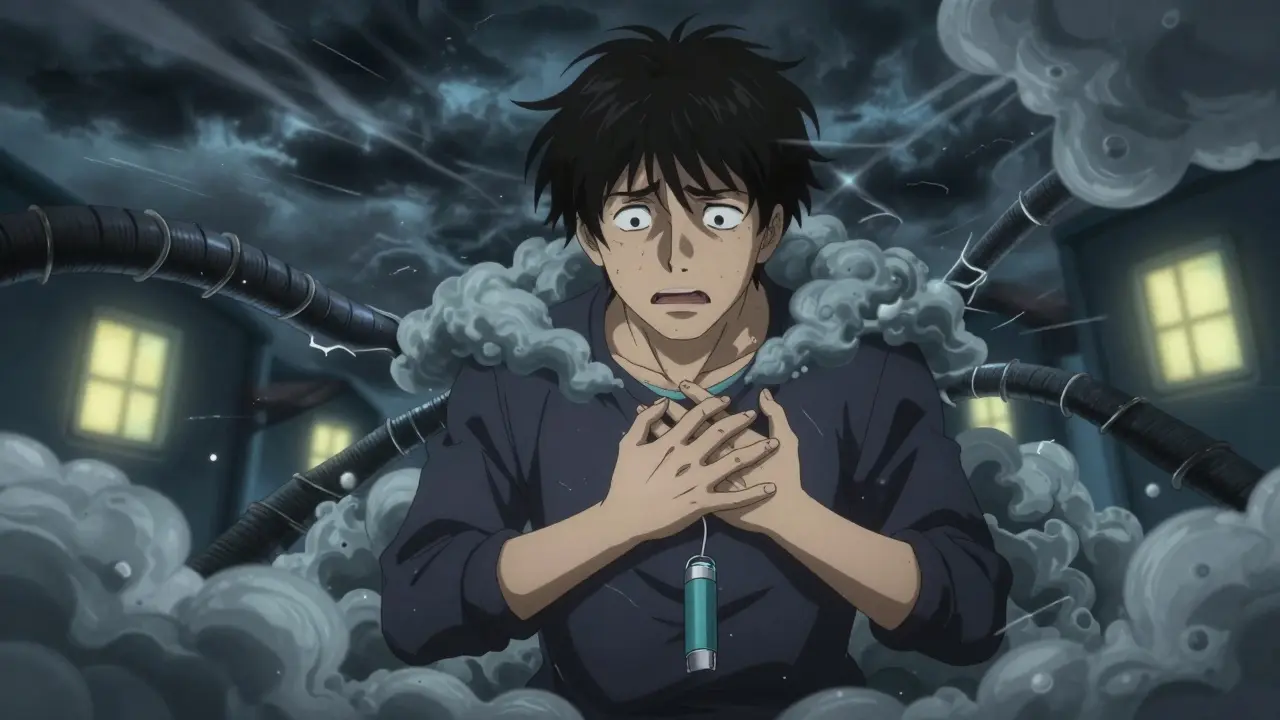
What Is a COPD Exacerbation?
A COPD exacerbation isn’t just a bad day. It’s when your breathing suddenly gets much worse - so much that you might need emergency care. For people with chronic obstructive pulmonary disease, this means coughing harder, feeling more winded, and producing more phlegm than usual. These flare-ups don’t fade in a few hours. They last days, sometimes weeks, and each one can leave permanent damage to your lungs.
Think of your airways like a garden hose that’s been crushed over time. During a flare-up, it gets even tighter. Swelling, extra mucus, and muscle spasms block airflow. You’re not just feeling tired - your body is struggling to get enough oxygen. That’s why some people end up in the hospital. In the U.S., more than 10 million doctor visits each year are because of COPD flare-ups.
What Triggers a COPD Flare-Up?
Most COPD exacerbations don’t come out of nowhere. They’re usually caused by something you’ve been exposed to. About 75% of flare-ups are linked to infections. The rest? Environmental irritants.
- Viral infections: Rhinovirus (common cold), flu, RSV, and even coronaviruses can trigger flare-ups. You don’t need to be sick with a full-blown illness - a mild cold can be enough.
- Bacterial infections: Haemophilus influenzae, Streptococcus pneumoniae, and Pseudomonas aeruginosa are common culprits. These often show up when mucus turns green or yellow and you start running a fever.
- Air pollution: Smog, smoke from fireplaces, industrial fumes, and even strong cleaning chemicals can set off symptoms.
- Cold, dry air: Breathing in chilly air makes your airways tighten up. This is why many people with COPD struggle more in winter.
- Smoking or secondhand smoke: Even if you quit, exposure to smoke from others can still cause problems.
Here’s something important: if you’re on inhaled COPD medications - like bronchodilators or steroids - those drugs might actually help protect you during infections like COVID-19. Studies show people using these regularly had less severe outcomes during the pandemic. That’s not a reason to skip your meds. It’s a reason to take them every day.
How to Spot a Flare-Up Early
Knowing your normal is the first step to catching a flare-up before it turns dangerous.
On a good day, you might have a mild cough, a little wheezing, or feel slightly out of breath climbing stairs. But when a flare-up starts, things change:
- Your cough gets worse - more frequent, more forceful
- Phlegm increases in amount, turns yellow, green, or even streaked with blood
- You feel more short of breath, even at rest
- You wheeze more than usual
- You feel unusually tired or weak
- You have trouble sleeping because you can’t catch your breath
- You develop a fever or chills
If these symptoms last more than two days, it’s not just a bad morning. It’s a flare-up. And the longer you wait, the harder it becomes to recover. Many people don’t realize their lung function may never fully bounce back - even after eight weeks.
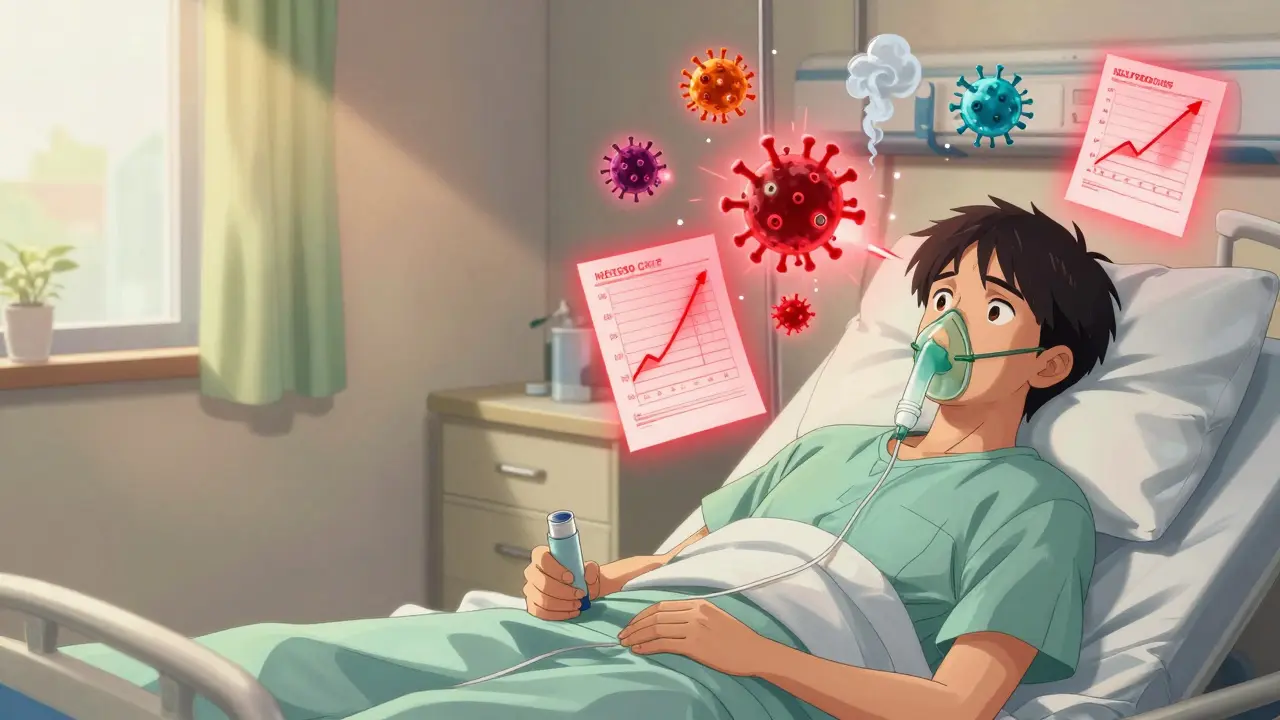
What to Do When a Flare-Up Hits
Don’t wait. Don’t hope it goes away. Act fast.
Start with your personal COPD action plan - if you don’t have one, ask your doctor for one now. It should include:
- Use your rescue inhaler: If you have albuterol or similar, take your prescribed dose. Don’t wait until you’re gasping.
- Start oral steroids: If your plan includes prednisone or methylprednisolone, begin the course as directed. These reduce airway swelling.
- Take antibiotics only if prescribed: Don’t self-medicate. Antibiotics work only if bacteria are the cause. Signs? Green/yellow mucus, fever, worsening symptoms for more than 48 hours.
- Use supplemental oxygen: If you’re on home oxygen, increase your flow rate as your doctor advised. If you’re not on oxygen but feel dizzy or blue around the lips, call 999 immediately.
If you’ve done all this and you’re still struggling to breathe, or your oxygen level (if you have a pulse oximeter) drops below 90%, get to an emergency department. Don’t drive yourself. Call an ambulance. Low oxygen isn’t something you can tough out.
When to Go to the Emergency Room
Some signs mean you need help right now:
- Your lips or fingernails turn blue or gray
- You’re too out of breath to speak in full sentences
- You feel confused, drowsy, or can’t stay awake
- Your heart is racing or pounding irregularly
- Your oxygen saturation is below 88% (if you’re using a monitor)
- You’re using your neck or stomach muscles to breathe
These aren’t just uncomfortable - they’re life-threatening. Emergency teams will give you oxygen, steroids, antibiotics if needed, and sometimes non-invasive ventilation to help you breathe while your body recovers. Hospital stays for severe flare-ups average 5-7 days. But the real cost? Each hospitalization raises your risk of another one - and more permanent lung damage.
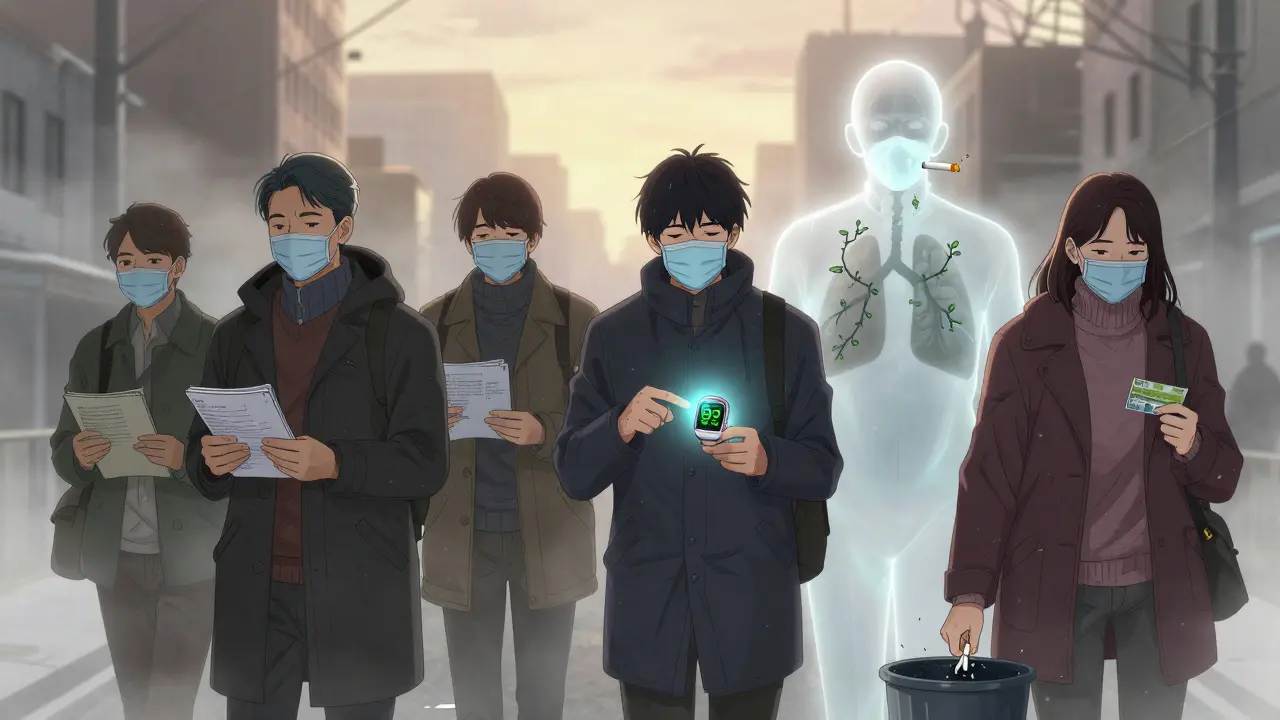
How to Prevent Future Flare-Ups
Prevention isn’t optional. It’s the best treatment you can give yourself.
- Get vaccinated: Annual flu shot and pneumococcal vaccine (PCV20 or PPSV23) are non-negotiable. These cut your risk of infection-related flare-ups by up to 50%.
- Take your daily meds: Long-acting inhalers (like tiotropium or fluticasone/salmeterol) keep your airways open and reduce inflammation. Skipping them makes flare-ups more likely.
- Avoid triggers: Wear a mask in cold weather or polluted areas. Use air purifiers indoors. Don’t use strong perfumes or scented candles. Stay away from smoke - even secondhand.
- Wash your hands: Simple, but effective. Germs spread fast. Wash often, especially before eating or touching your face.
- Track your symptoms: Keep a daily log. Note your cough, mucus, breathing, and energy. This helps you and your doctor spot patterns before things get bad.
And yes - quitting smoking, if you haven’t already, is the single most effective thing you can do. It won’t reverse damage, but it slows decline. Studies show people who quit after diagnosis live longer and have fewer flare-ups.
The Bigger Picture: Why This Matters
COPD is the fourth leading cause of death in the U.S. and rising globally. But it’s not just about lungs. During a flare-up, your whole body goes into stress mode. Inflammation spikes - markers like CRP and fibrinogen rise, increasing your risk of heart attack or stroke. That’s why COPD isn’t just a lung disease. It’s a systemic condition.
Each flare-up chips away at your lung function. You might feel fine after a week, but your FEV1 (a key measure of lung capacity) may never return to what it was before. Over time, that adds up. More hospital stays. Less mobility. Less independence.
But here’s the good news: you have control. Knowing the signs. Taking your meds. Getting vaccinated. Acting fast. These aren’t just medical advice - they’re tools to protect your life.
14 Responses
This post is basically a glorified drug ad. My uncle had COPD and they pumped him full of steroids until his face swelled like a balloon. Then he died anyway. Thanks for the reassurance, docs.
The metaphor of the garden hose is surprisingly apt. Our airways aren't just damaged-they're grieving. Every flare-up is a slow erosion of autonomy, a quiet theft of breath that no pill can fully restore. We don't just manage COPD; we learn to live alongside its quiet, relentless presence. It's not about fighting it-it's about listening to what it's trying to tell us about our bodies, our habits, our fragility.
I’ve been living with this for 12 years. The moment I started taking my inhalers like clockwork-no skipping days, no "I feel fine" excuses-I stopped ending up in the ER. It’s not glamorous, but it works. Also, humidifiers are a miracle. Don’t sleep without one in winter.
Vaccines save lives. Do them.
i just wanted to say thank you for this post. my mom has copd and i’ve been trying to learn how to help her. i didn’t know about the oxygen levels or the fact that green mucus means bacteria. i’ll print this out and leave it on the fridge. thanks again :)
Oh wow, another "follow your doctor's advice" pamphlet. Because clearly, the real issue here is that people just don't read well enough. Meanwhile, my cousin in Delhi gets his meds from a roadside pharmacy and still breathes better than half the people in your fancy clinics. Maybe the problem isn't compliance-it's the system.
If you're not taking your inhalers, you're basically signing up for a slow-motion suicide. 🤦♀️ I mean, come on. It's not rocket science. You have a device that keeps you alive and you treat it like an optional Spotify subscription? 😒
Just a quick note-my GP told me to use a saline nasal rinse before bed if I'm feeling stuffy. It's not in the big guides but it helped me cut down on infections. Also, don't forget to clean your inhaler spacer every week! Mine got moldy once and I didn't realize until I started wheezing worse. 🙈
I’m from India and we don’t have access to all these fancy inhalers or pulse oximeters. But we do have turmeric milk, steam inhalation with eucalyptus, and walking slowly in the morning air. I’ve seen people live for decades with COPD without ever seeing a doctor. Maybe we don’t need all this tech-maybe we need community, patience, and respect for our bodies.
COPD is just capitalism's way of selling you more inhalers. The real trigger? Living in a world that treats lungs like disposable filters. Also, your "action plan" is just a corporate checklist designed to make you feel in control while the air gets worse.
I'm American and I've seen this before. People in other countries get sick because they don't have our medicine. We have the best healthcare in the world and people still don't follow basic instructions? That's not a medical problem. That's a moral failure.
Every breath you take is a rebellion against entropy. Every inhaler you use is a quiet act of defiance against the void. When you wake up and choose to breathe-really breathe-you're not just managing a disease. You're reclaiming your soul from the machinery of decay. This isn't medicine. This is poetry written in oxygen.
In South Africa, we have a word: ubuntu. It means I am because we are. You think COPD is just about your lungs? No. It’s about the family who carries you to the clinic. The neighbor who brings you soup. The child who reads to you when you can’t speak. Your action plan should include love. Not just albuterol.
idk man i think the real issue is that we all just forget we're gonna die someday. like why are we so surprised when our lungs give out? we're just meat with lungs. we eat bad food, smoke, sit too much... and then we get mad when the machine breaks. maybe we should stop treating our bodies like smartphones and start treating them like... i dunno... animals?