

When you hear "liver damage from alcohol," you might picture someone who drinks heavily every day. But the truth is, alcoholic liver disease doesn’t wait for decades to strike. It starts quietly, often without symptoms, and progresses in clear stages - each one more dangerous than the last. And here’s the hard part: if you catch it early, you can reverse it. If you don’t, it can kill you - even if you’re not what most people think of as a "problem drinker." The medical community now calls this condition alcohol-associated liver disease (ALD), not "alcoholic" anymore. It’s a small change in words, but a big shift in thinking: it’s not about addiction, it’s about the liver’s reaction to alcohol. And that reaction follows a predictable path - three stages, each with its own risks, symptoms, and chances for recovery.
Stage 1: Fatty Liver (Steatosis)
This is where it all begins. If you regularly drink more than 3-4 units of alcohol a day - that’s about two pints of beer or two small glasses of wine - your liver starts storing fat. Not because you’re overweight, not because of poor diet, but because alcohol disrupts how your liver processes fats. Within just 72 hours of heavy drinking, fat begins to accumulate. After 3-5 days of consistent drinking, nearly 90% of people show signs of fatty liver. Here’s the good news: at this stage, there’s usually no pain, no jaundice, no fatigue. Most people feel fine. Liver enzymes might be slightly elevated, but even that’s not always obvious. A routine blood test could be the only clue. And here’s the critical part: if you stop drinking completely for 4-6 weeks, the fat disappears. In clinical studies, 85% of people who quit alcohol at this stage see their liver return to normal. No scarring. No damage left behind. But if you keep drinking? You’re rolling the dice. One in three people who continue will move to the next stage.Stage 2: Alcoholic Hepatitis (Alcohol-Associated Hepatitis)
This is where things get serious. Alcoholic hepatitis isn’t just more fat - it’s inflammation. Your liver cells are dying. Your immune system is attacking them. And your liver is trying to heal itself, but it’s overwhelmed. Symptoms start showing up now. Jaundice - yellow skin and eyes - is the most common sign. Fatigue, nausea, fever, loss of appetite, and abdominal pain follow. Some people develop fluid in the belly (ascites). A small number even show confusion or drowsiness - early signs of brain toxicity from liver failure. This stage can develop slowly over years of heavy drinking - typically 5 to 10 years at 60-80 grams of alcohol daily. Or it can hit suddenly after a binge of 100 grams or more in one day (that’s about 8 standard drinks). Women are at higher risk: they develop hepatitis after drinking less than men, because their bodies process alcohol differently. Doctors use a score called the Maddrey Discriminant Function (mDF) to measure severity. If your score is 32 or higher, you have severe alcoholic hepatitis. The 30-day death rate? 30-40%. That’s not a guess. That’s data from real hospital outcomes. Treatment? First, stop drinking - completely. No exceptions. Second, if your case is severe, you’ll get steroids like prednisolone. The STOPAH trial showed steroids cut 28-day death rates from 20% to 18%. It’s not a miracle, but it’s a chance. And only 40% of patients respond at all. The key takeaway? Alcoholic hepatitis can be reversed - if you stop drinking early. But once inflammation sets in, your liver’s ability to heal drops fast. Delay by even a few months, and you’re moving toward permanent damage.Stage 3: Cirrhosis
Cirrhosis is the point of no return - not because the liver is dead, but because it’s scarred beyond repair. More than 75% of healthy liver tissue is replaced by tough, inflexible scar tissue. The liver can still work - for a while - but it’s like a heart with blocked arteries. It’s struggling. This stage develops in 10-20% of heavy drinkers over time. It’s not inevitable, but it’s common enough to be a major public health crisis. In the U.S., alcohol-associated cirrhosis causes 22,000 deaths a year. It’s responsible for 45% of all cirrhosis cases. Symptoms get worse. Swelling in the legs and belly. Vomiting blood from burst veins in the esophagus. Mental confusion, forgetfulness, slurred speech - that’s hepatic encephalopathy, caused by toxins the liver can’t filter. Your kidneys start to fail. Your risk of liver cancer jumps. The good news? Cirrhosis isn’t always a death sentence. If you’ve reached this stage but you’re still drinking, your life expectancy is about 1.8 years. If you quit? Your survival jumps to 12+ years. Studies show 50-60% of people with early cirrhosis stabilize - their liver stops getting worse. They live longer. They avoid transplants. But if you’re in decompensated cirrhosis - meaning you’ve had ascites, bleeding, or encephalopathy - your odds drop fast. Half of these patients die within two years without a liver transplant.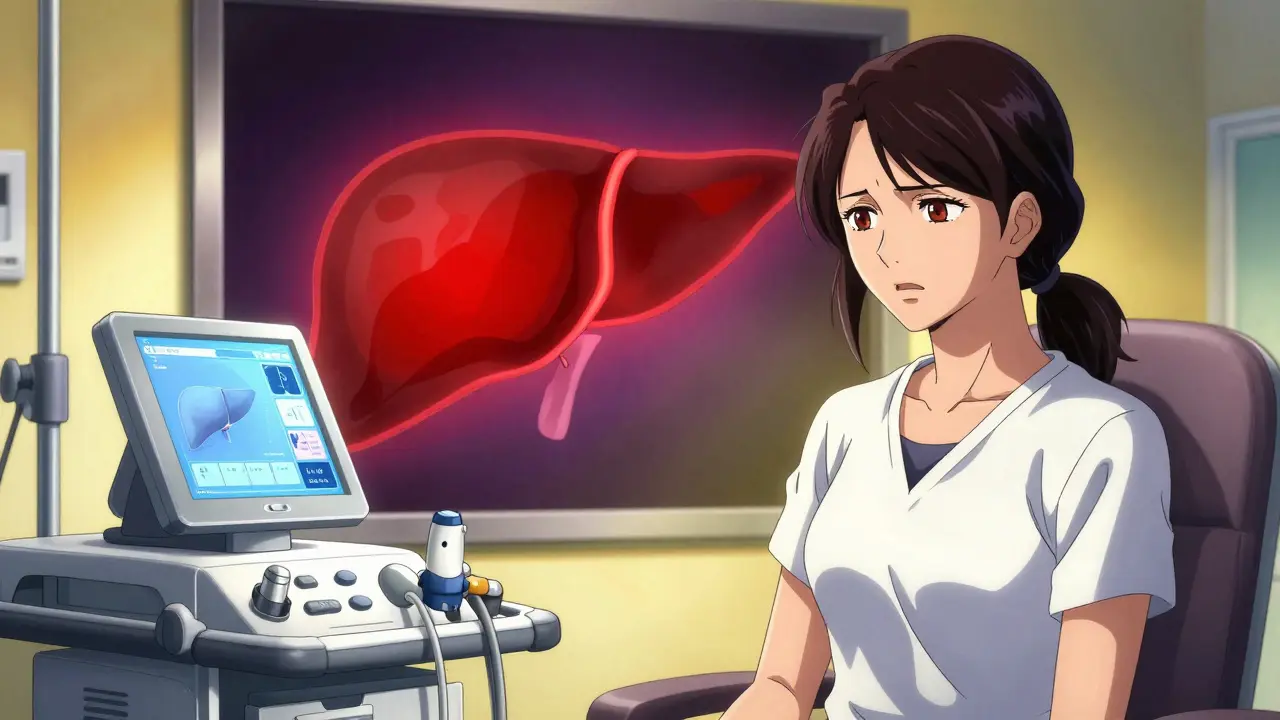
What Makes Progression Worse?
Not everyone who drinks gets ALD. Why? Genetics. Gender. Other health problems. Women are 2-3 times more likely to develop liver damage at lower alcohol levels. If you have a gene variant like PNPLA3 or TM6SF2, your risk jumps. If you’re overweight or have diabetes - which affects 30-40% of ALD patients - your liver gets hit harder. And if you also have hepatitis B or C? The damage multiplies. Even moderate drinking - just 20-40 grams a day - speeds up scarring if you already have fatty liver from other causes. Alcohol doesn’t just hurt the liver. It teams up with other problems to make them worse.How Is It Diagnosed?
No one waits for symptoms. Doctors use tools to catch ALD before it’s too late. A simple blood test can show elevated liver enzymes - especially if AST is more than twice ALT. That ratio is a red flag. Ultrasound finds fat in the liver. But it can’t tell if there’s scarring. That’s where FibroScan comes in. This non-invasive device measures liver stiffness. It’s 85-90% accurate at spotting moderate to severe fibrosis. No needle. No hospital stay. Just a quick scan. Liver biopsy used to be the gold standard. Now, it’s only used when the diagnosis is unclear. Most cases are caught early with imaging and blood work.Can It Be Treated?
Yes - but only if you stop drinking. There’s no magic pill. No supplement. No detox tea. The only proven treatment for every stage of ALD is complete and permanent alcohol abstinence. For fatty liver: 4-6 weeks without alcohol = full recovery. For hepatitis: steroids + abstinence = better survival. For cirrhosis: abstinence = doubled life expectancy. And if you’re at the end stage? A liver transplant can save you. But most centers require 6 months of verified sobriety before even putting you on the list. Why? Because people who relapse after transplant have a 70% chance of dying within 5 years. New treatments are coming. Fecal transplants to fix gut bacteria. Drugs to reduce liver inflammation. Early trials show promise. But none of them work without sobriety.
What Happens If You Don’t Stop?
The data is brutal. A patient in a Manchester clinic told her doctor she "only had a few drinks a night." She was 42, had no symptoms, and thought she was fine. Her FibroScan showed F3 fibrosis - almost cirrhosis. She refused to quit. Two years later, she was in the ICU with bleeding varices. She didn’t survive. Another man, 51, was diagnosed with fatty liver after a routine check-up. He cut back - but didn’t quit. He kept drinking 3-4 beers every night. Five years later, he had cirrhosis and needed a transplant. He was too sick to qualify. These aren’t rare cases. They’re the norm. A 2023 study found that 65% of ALD patients didn’t seek help until they were already in crisis. Many didn’t connect their fatigue, bloating, or nausea to alcohol. Some doctors didn’t ask. Others assumed they were "just lazy." The stigma is real. 45% of patients say healthcare workers judged them instead of helping them. That stops people from coming in. And that kills.When Should You Get Checked?
If you drink regularly - even if you think it’s "moderate" - and you’re over 30, get tested. Ask for: - A liver enzyme panel (ALT, AST, GGT) - A FibroScan or ultrasound - A discussion about your drinking habits Don’t wait for jaundice. Don’t wait for swelling. Don’t wait for confusion. The liver doesn’t complain until it’s too late.What’s the Bottom Line?
Alcohol-associated liver disease isn’t a moral failure. It’s a medical condition with clear stages, clear risks, and a clear cure: stopping drinking. The earlier you act, the better your chances. Fatty liver? Quit for 6 weeks - your liver heals. Hepatitis? Quit now - you might survive. Cirrhosis? Quit - you might live 12 more years. Keep drinking? You’re gambling with your life. And the odds are stacked against you. This isn’t about willpower. It’s about biology. Your liver doesn’t care how much you drink. It only cares if you stop. And it can still save you - if you let it.Can you reverse alcoholic liver disease?
Yes - but only if you stop drinking completely. In the earliest stage - fatty liver - abstinence for 4-6 weeks can fully reverse the condition in 85% of cases. In alcoholic hepatitis, stopping alcohol can prevent progression and improve survival, especially if treated with steroids. In cirrhosis, while scar tissue doesn’t disappear, stopping alcohol can stabilize the disease and extend life by more than a decade. The liver has a remarkable ability to heal - but only if you stop the damage.
How much alcohol causes liver damage?
There’s no single safe amount, but damage can begin with as little as 3-4 units of alcohol per day (about 2-3 standard drinks). Around 90% of people who drink more than 40-80 grams of alcohol daily (3-6 drinks) develop fatty liver within days to weeks. Women are more vulnerable - they can develop liver injury after consuming less than men. Chronic heavy drinking (60-80g/day for 5-10 years) significantly increases the risk of hepatitis and cirrhosis.
Can you have liver disease without drinking heavily?
Yes. While heavy drinking is the main cause, some people develop alcohol-associated liver disease after drinking less than what’s considered "heavy." Genetics, gender, obesity, and coexisting conditions like viral hepatitis or diabetes can make the liver more sensitive. Even moderate drinking (20-40g/day) can speed up scarring in people with existing fatty liver from other causes.
Is cirrhosis always fatal?
No. Cirrhosis is permanent scarring, but it doesn’t mean immediate death. With complete alcohol abstinence, about half of people with early cirrhosis stabilize and live for many years. Those who continue drinking have a median survival of just 1.8 years. A liver transplant can cure end-stage cirrhosis, with 70-75% surviving at least 5 years after the procedure - if they stay sober.
Do liver enzymes always show liver damage from alcohol?
Not always. In early fatty liver, enzymes may be normal or only slightly elevated. In alcoholic hepatitis, AST is usually more than twice ALT, and GGT is often high. But some people have normal enzyme levels despite significant scarring. That’s why imaging like FibroScan is now preferred over blood tests alone - it detects structural damage before enzymes rise.
Can you drink occasionally after being diagnosed with ALD?
No. Even small amounts of alcohol can restart or worsen liver damage. Studies show that any drinking after diagnosis increases the risk of progression to cirrhosis and death. There is no safe threshold for alcohol in someone with existing liver injury. Abstinence is the only proven strategy to halt or reverse damage.
Why is the term "alcoholic liver disease" being replaced?
The term "alcoholic" carries stigma and implies addiction, which isn’t always the case. Many people with alcohol-associated liver disease aren’t dependent on alcohol - they just drink regularly. The American Association for the Study of Liver Diseases updated the terminology to "alcohol-associated" in 2019 to focus on the cause (alcohol) rather than the person’s behavior. This shift helps reduce judgment, encourages people to seek help, and improves care outcomes.
What are the signs that ALD is getting worse?
Key warning signs include yellowing of the skin or eyes (jaundice), swelling in the abdomen or legs, confusion or forgetfulness, vomiting blood, dark urine, extreme fatigue, and loss of appetite. These indicate progression from fatty liver to hepatitis or cirrhosis. If you have a history of drinking and notice any of these, get checked immediately - don’t wait.
11 Responses
Look, I’ve been there - two glasses of wine every night, "just to unwind." Then one day, my AST was double my ALT, and my doctor didn’t even look me in the eye. Just handed me a pamphlet like I was a drunk. But here’s the thing: my liver didn’t care if I was "responsible" or "functional." It just saw ethanol. And guess what? I quit. Six weeks later, my FibroScan was clean. No scarring. No drama. Just a liver that remembered how to breathe. If you’re reading this and you’re still sipping "moderate" - stop. Your liver isn’t asking for permission. It’s just waiting.
okay so like… i just read this and im like… wow. i mean, like, the word "alcoholic" is sooo loaded, right? like, why do we still use that word? its so… 1980s? and the fact that women get damaged faster? that’s wild. i had a cousin who drank 1 glass of wine a night and got cirrhosis. like, what even is this? the liver is a silent assassin??
Let’s be brutally honest - this post is dangerously oversimplified. You cite 85% recovery from fatty liver, but you omit that this figure comes from a 2018 cohort study with strict inclusion criteria - people who were otherwise healthy, under 50, no metabolic syndrome. The real-world numbers? More like 40-50%. And you say "abstinence reverses cirrhosis" - no, it doesn’t. It halts progression. Scar tissue doesn’t vanish. That’s not a cure, it’s damage control. Also, the Maddrey score? Only validated in inpatient settings. Outpatient patients with mild hepatitis? You’re misrepresenting risk. This isn’t medical advice - it’s motivational pamphlet literature dressed in jargon.
Who really controls the liver data? I’ve been researching this for years. The pharmaceutical industry funds 80% of liver studies. They want you to think quitting alcohol is the only solution - because drugs are profitable. But what about the mold in your tap water? The glyphosate in your beer? The EMF radiation from your phone? Your liver is being poisoned by a thousand silent toxins - alcohol is just the scapegoat. They don’t want you to know this. They want you to feel guilty so you’ll keep paying for "treatments." I quit alcohol and still got cirrhosis. Coincidence? I think not.
You’re not alone 💪 I was in stage 1 and thought I was fine too… until I read this. I quit cold turkey. No wine, no beer, no "just one" - and honestly? My energy shot up. My skin cleared. I didn’t even miss it. If you’re scared to quit - start with 7 days. Just 7. Then 14. Then 30. Your liver will thank you. I’m rooting for you. You got this. 🌱❤️
Wait… so if you stop drinking, your liver heals? 😳 But what if you didn’t drink at all and still got liver damage? I’ve been reading about this for months - it’s not the alcohol. It’s the vaccines. They inject heavy metals into your liver through the mRNA. Then they blame alcohol. They want you to think you’re the problem so you don’t ask questions about the 5G towers that make your liver leak. I’ve been detoxing with cilantro and bentonite clay. It’s working. 🌿
I read this… and I wept. Not because I’m dramatic - though I am - but because I watched my mother die from this. She wasn’t a "drunk." She was a widow who drank two glasses of chardonnay every night to silence the silence. She didn’t binge. She didn’t scream. She just… sipped. And the liver - oh God, the liver - doesn’t scream either. It just… stops. One day, it’s working. The next, it’s a stone. And the doctors? They say "quit." But they don’t say how to live without the thing that made the pain go quiet. I wish they had a pill for grief. Or at least… a hug.
Stop drinking. That’s it. No more excuses. This isn’t a debate. It’s biology. If you can’t quit, you’re weak. Get help. Or get out of the way.
My uncle in India drank daily. Never got sick. He is 80. Still drinks. So why blame alcohol? Maybe it is not alcohol. Maybe it is stress. Or genetics. Or government poison. This article is Western propaganda.
What struck me most wasn’t the stats - it was the part about doctors assuming people were "just lazy." That hit me. I’ve been that person. Tired. Bloated. Nauseous. I thought I was just aging. I didn’t connect it to wine. I didn’t want to. But this article… it didn’t shame me. It just showed me the path. And now I’m getting tested. Not because I’m afraid - but because I care. Thank you for writing this. Not everyone gets a second chance. I’m grateful I’m still in time.
This is one of the clearest, most urgent breakdowns of ALD I’ve seen. You nailed the progression. But I want to add one thing: the window for reversal isn’t just about time - it’s about intention. People who quit because they’re scared? They relapse. People who quit because they finally saw their liver as a partner - not a machine - they heal. I’ve coached dozens through this. The ones who write down why they’re quitting - not just "to be healthy," but "to hold my daughter’s hand again," "to sleep without nausea," "to taste food again" - those are the ones who stay sober. Your liver doesn’t care about willpower. It cares about love. Show it that.